Français · English · Español · Català
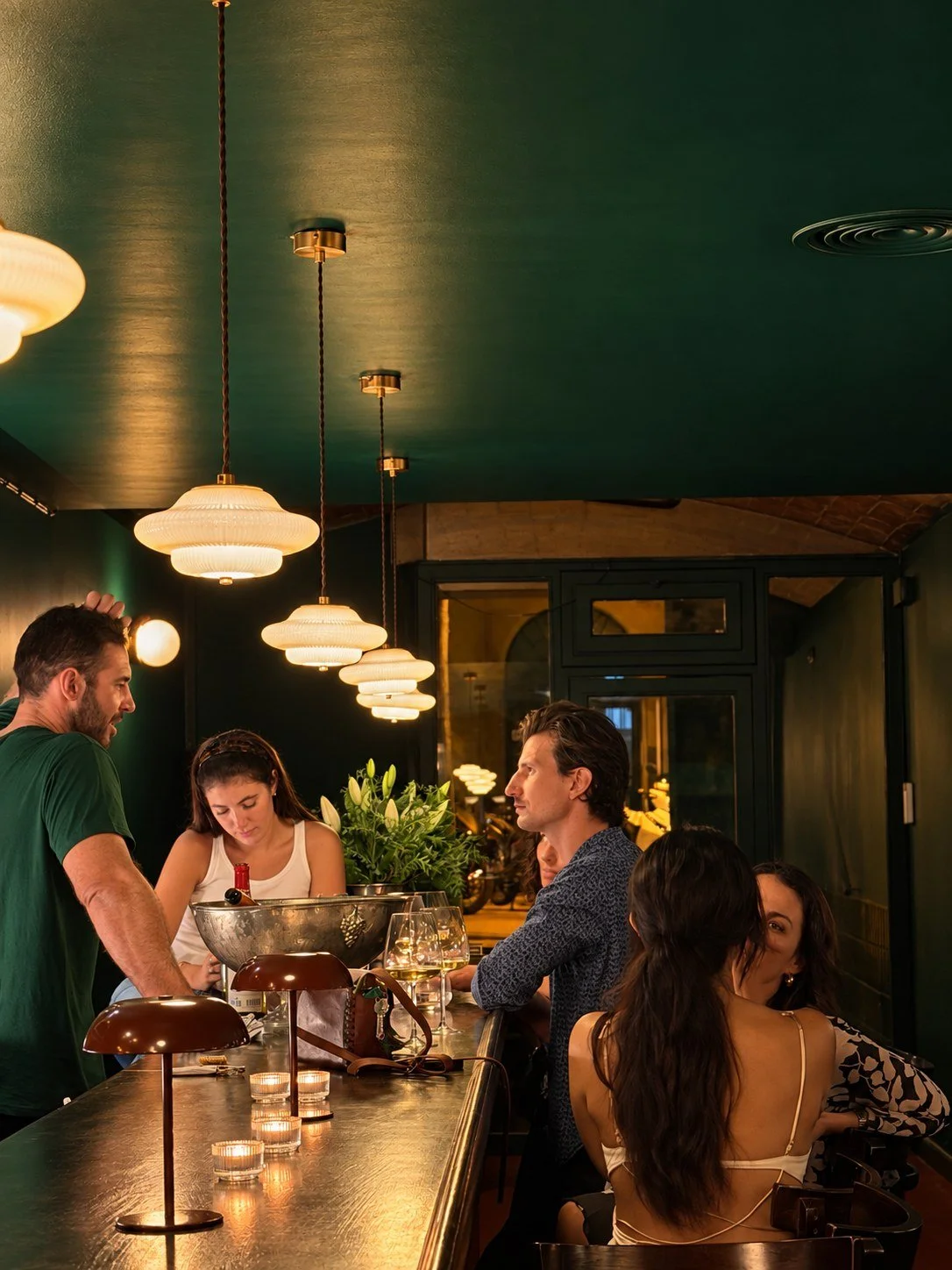
For tuna tartare in Barcelona, browse Brigitte’s current menu. The Parisian bar at 91 Carrer d’Enric Granados offers a French setting for planning dinner before requesting a table.
Looking for tuna tartare in Barcelona for your next dinner? The choice already says something about your appetite: raw fish, a preparation where texture matters and a dish you would like to enjoy in a setting that appeals to you. It does not yet explain how you want to spend the evening. Perhaps you are coming as a couple, meeting a friend or welcoming visitors to the city. The right restaurant needs to answer two questions: does the dish interest you, and does the place fit the time you are hoping to share?
At Brigitte, tuna tartare belongs to a French menu within a Parisian bar setting. You can consider it as your own main choice or alongside other wishes at the table. Hand-cut beef tartare offers another raw preparation; duck confit parmentier and ham and truffle coquillettes point towards cooked dishes. Browse the current menu to see what is being offered. This first look helps you prepare dinner around the group's actual preferences before requesting a reservation. One person's interest in fish can become the starting point for an evening that still leaves other guests free to choose.
Choose tuna because it is what you fancy
You do not have to select fish as part of a prescribed dining sequence. You may simply prefer tuna that evening, want a different texture or feel like returning to a preparation you enjoy. A useful menu lets you begin with that preference without needing a lengthy explanation. The practical questions are what the proposed tartare contains, how it is presented and whether that sounds like something you would like to eat. Your appetite is a better starting point than a rule about what a French meal should include.
Tartare does not describe one universal seasoning. Two restaurants can use the same dish name while offering different experiences. If a flavour or ingredient matters to you, ask rather than assuming it is included or absent. Explain what you like in ordinary language. The team can tell you about the current preparation and whether it meets your request. That makes the decision about the actual dish at Brigitte, instead of a mental picture borrowed from another dinner. A short conversation can clarify enough to let you choose confidently and enjoy discovering something new.
Meet the dish in Brigitte's setting
Coming to Brigitte is about more than locating the name of a speciality on a list. The venue brings French food together with a Parisian atmosphere. Photographs of the counter and room show bottle green, dark wood and mirrors that contribute to that identity. They give context to the idea of your meal, your companions and the kind of evening you want. Food and setting are often chosen together, even when a particular craving starts the search. Looking at genuine images helps connect the dish with the experience around the table.
You might be planning a straightforward evening after work, a catch-up with someone you do not see enough or dinner with friends visiting Barcelona. In each case, consider how many people are coming and when they can realistically arrive. A small amount of preparation usually helps: choose a time, browse the menu and share the confirmed details. It is easier to enjoy discovering tuna tartare when practical arrangements are not still taking up the entire conversation. The aim is to make the arrival clear enough that dinner can begin with food and company rather than coordination.
Give tuna tartare a place in the whole meal
Think about the complete dinner before ordering. Would you like a first plate, your tartare and dessert? Would you rather share several dishes and decide later whether you are still hungry? Neither approach is compulsory, but distinguishing between them makes the order clearer. Serving formats on the menu and the team's advice help with quantities. A dish name alone cannot tell you how many portions suit a group with different appetites. Explain the meal you want to have so that any advice starts from the way you actually intend to eat.
If you would like several people to taste the tartare, say so when choosing. Sharing is enjoyable when it fits the format and everyone understands the plan. It should not disappoint someone who thought the order was an individual dish. Equally, guests can choose separate main plates while sharing something at the beginning. Keep that distinction clear. A few words about what is communal and what belongs to each person's order can prevent repeated discussions over portions. Dinner remains flexible while the people at the table understand what they are ordering together.
Begin with a French speciality if you wish
Eggs mimosa and mini truffle croques suggest two ways into the menu, depending on availability. You may want one first plate before tuna tartare, or prefer the fish dish to be your first step. You do not need to order many references to enjoy French cooking. Choose what creates a genuine appetite and keep a pace that lets you appreciate it. Several tempting dishes do not all need to be ordered at once. Looking at the meal as a whole can make the eventual choices more satisfying for the people who will eat them.
Homemade foie gras may interest other guests when it is on the current menu. Check availability if it matters to the plan. Choosing tuna tartare does not oblige the whole table to follow an exclusively fish-based dinner. Different preferences can meet in the same evening. The connection between dishes can be the pleasure of discovering the menu and spending time together, rather than a rigid sequence every guest must follow. This freedom is useful when a group includes both enthusiastic explorers and people who prefer ordering something familiar they already know they enjoy.
Choose a drink without a compulsory pairing
Start with what you enjoy drinking and how you intend to order. A bottle shared by several guests and a glass chosen for your own dish serve different needs. Brigitte's current wine list gives references and prices. Ask for guidance while explaining your preferences and the other food being ordered. Without knowing the preparation and available wines, naming one appellation as the perfect match is less helpful than a straightforward discussion. You can make an informed choice without turning the decision into a technical exercise or following a pairing you would not otherwise enjoy.
You can also choose something other than wine. A French evening does not require a particular drink to be successful. If you are organising, leave each guest free to select from the available options. When costs are shared, agree the basic approach before ordering: a bottle between some people, individual glasses or another arrangement accepted by the group and venue. Choices are easier when everyone understands them. Nobody needs to be drawn into an option that does not suit their tastes or budget simply because the meal began with the idea of a French speciality.
Leave alternatives for guests who do not eat raw fish
Tuna tartare appeals to people who enjoy raw fish, but it does not suit every preference. If someone does not want it, help them find another possibility on the menu. They do not need to share your dish to share the evening. Brigitte's cooked options offer a different introduction to French food. To know what will be available during your visit, consult the current menu and ask any essential questions before booking. This makes selecting a venue easier for a group whose preferences include more than the dish that first caught your attention.
Allergies and dietary requirements need a direct conversation about ingredients and possibilities before ordering. A photograph or dish name is not enough to answer a specific question. Mentioning the need in advance helps obtain relevant information without making assumptions about what the kitchen might do. The same applies to a requested change: it needs explicit agreement. Dinner is more comfortable when guests arrive with confirmed expectations rather than adaptations imagined during planning. You can still keep the arrangements simple while ensuring the people concerned receive an answer relevant to their actual situation.
Finish according to your appetite
The end of dinner can take several directions. Cheese lovers can explore the French selection or Saint-Marcellin, depending on the current menu. Guests who prefer something sweet may look towards chocolate mousse or caramel brioche. These ideas are not a required sequence of courses. They help you identify what appeals and decide whether to keep room for a particular last dish. A dinner can end in different ways for different people without losing its shared atmosphere. What matters is that the choices still feel enjoyable when the time comes to order.
Discussing this early can help when several plates are being shared. If some guests are especially looking forward to dessert, the group can account for that in the first quantities. If others want to stop after tartare, that is fine too. A pleasant table leaves room for those differences. Success does not depend on every person eating exactly the same number of courses. It depends on guests finding a way to enjoy the menu and one another's company at a pace that works for them, without turning personal appetite into a group obligation.
Request a booking that matches the occasion
Decide the date, arrival time and exact number of guests before submitting the request. For a birthday or business event, explain the occasion and any important needs. An ordinary dinner table and private hire are different projects. If you want a particular arrangement or a menu agreed in advance, discuss it with the team. A speciality appearing on the individual menu does not guarantee it can be offered in every event format. Distinguishing those requests makes the conversation clearer and avoids promises to guests that have not been confirmed by the venue.
Read the booking conditions displayed on the website and wait for confirmation. If tuna tartare availability determines your decision to come, ask explicitly. You can then give companions the validated information: date, time and relevant details for joining the evening. This avoids conflicting messages and last-minute changes based on misunderstandings. The preparation can be brief while still giving dinner a clear framework. Once it is settled, everyone can arrive knowing what has genuinely been arranged and leave the remaining choices to the pleasurable task of reading the menu together.
Discover tuna tartare at Brigitte
For your next tuna tartare in Barcelona, explore Brigitte's current menu and genuine venue photographs. See how the dish fits into an evening of French cooking while leaving other guests free to select different plates. Identify what attracts you most: the tartare itself, something to share at the start, a dessert or the chance to discover a Parisian setting with people you want to see. Connecting those wishes makes the choice of restaurant more useful than finding a speciality in isolation from the rest of the evening you would like to organise.
Send your request through the reservation page on Brigitte's official website. Include essential questions and wait for answers before treating particular arrangements as final. Once the table is confirmed, you can focus on the enjoyable part: arriving, meeting your guests and choosing dinner. Tuna tartare becomes more than a search result. It takes its place within an evening prepared around your own preferences, in Barcelona, with Brigitte's French menu and Parisian character giving the meal a setting. The practical plan is settled enough to let the food and conversation take centre stage.
Plan your visit
Brigitte welcomes members and their guests aged 18 and over at 91 carrer d’Enric Granados, Barcelona. Stated hours are Tuesday to Saturday, 6 pm to 2 am. Check current arrangements and wait for your reservation confirmation.