
Where to have an aperitif on a terrace in Barcelona
Discover Brigitte’s small terrace in Barcelona for an aperitif. Browse the French menu and ask about outdoor seating for your preferred date and guest count.
Français · English · Español · Català
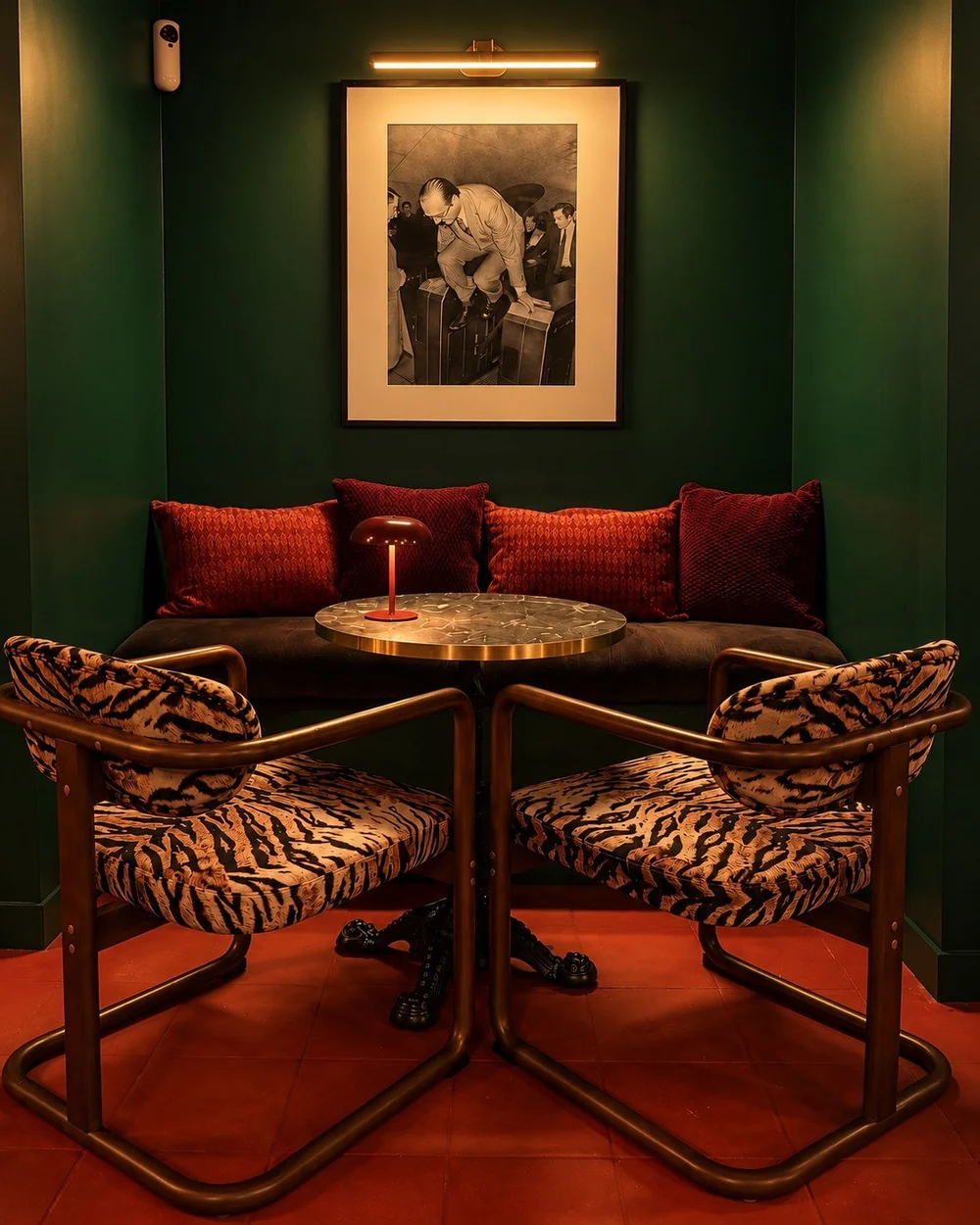
For an aperitif on a terrace in Barcelona, discover Brigitte, a Parisian bar at 91 carrer d’Enric Granados. Its small terrace offers a possibility to consider for meeting outside, with drinks and food from the current menu. The outdoor space has four tables and eight chairs: ask the team directly about your preferred date and guest count. A wish to sit outside should be stated clearly and confirmed. You can then prepare the gathering around the accepted arrangements and choose what appeals when you arrive, using the menu as a starting point for the evening.
An aperitif is often the moment when a day changes pace. You might meet someone after work, welcome a visiting friend or make time to talk before dinner. Choosing an address helps with that transition: everyone knows where to go, and you have a concrete suggestion to share. At Brigitte, French cooking offers a direction for opening dishes and the bar a drinks selection to explore. The format depends on your preferences, outdoor availability and the arrangements confirmed for the visit. Straightforward preparation then leaves space for conversation and the pleasure of seeing the people you have invited.
Consider the small terrace for a specific gathering
Capacity is a useful reference when choosing the format. Four tables and eight chairs describe a small outdoor space, whose possibilities should be discussed with the team for your guest count. The number does not establish a particular layout for every group. State how many people are coming and ask what can be arranged. Meeting as a pair and gathering several friends may call for different responses. You will have relevant information before sending the invitation, rather than announcing an outdoor table whose availability or arrangement has not been confirmed for the people you expect to join you.
When requesting a reservation, explain that sitting outside matters to the plan. Ask how that preference is handled and what conditions apply. A general booking confirmation should be understood alongside the answers concerning your preferred position. If you would also be happy indoors, say so, giving the team a clear picture of the alternatives that suit you. This creates a reliable basis for the gathering. The invitation can then reflect what has actually been accepted, with a date, time and meeting place everyone understands. Clear information is more useful than an unstated expectation about where you will be seated.
Give the aperitif a format that suits you
Start with what you want to share. A first drink before another commitment, a catch-up with friends and the beginning of dinner require different planning. The format helps you choose a time, orders and a duration. You can suggest Brigitte for its French identity and leave menu decisions open. Your companion mainly needs to understand the general idea. They can tell whether they are coming for drinks and conversation or whether you hope to build a meal from the venue’s proposals afterwards. A clear intention makes the invitation easier to answer and the occasion simpler to prepare together.
Give arrival times straightforward attention when people are leaving work. Request a slot that fits their journeys and the possibilities confirmed by Brigitte. Send the venue name and 91 carrer d’Enric Granados in the same message. If someone is likely to arrive later, explain that while organising the reservation. The team can respond about the arrangements applicable to the visit. Reliable information helps everyone arrive with the same reference points. You can keep the opening minutes for greetings and discovering the menu, with practical questions already understood rather than competing with the first conversations of your gathering outside.
Opening dishes from Brigitte’s French menu
Eggs mimosa and mini truffle croques offer ideas for discovering the French cooking. Browse current proposals and ask what can be ordered within the arrangement planned for your terrace visit. Quantities should reflect appetite and the rest of your evening. If dinner follows, you may want a limited first selection; if the gathering is your meal, the approach will differ. Something shared can give you a subject to discuss and introduce your companion’s preferences, provided everyone wants to share. The first order becomes a choice based on actual appetite rather than an assumption about how an aperitif must be served.
French cheeses provide another direction for guests who enjoy them. The menu distinguishes small and large cheeseboards, with Saint-Marcellin as a separate reference. Explore the proposals and ask for guidance about your intended selection. House-made foie gras may also interest some guests when available; establish its presence before making it the sole reason for your invitation. Compose the aperitif from what appeals and what the menu offers for the visit. Clear orders suited to your group help you enjoy the food while leaving room for personal tastes, later plans and whatever you would like to discover together at the table.
Choose drinks according to personal preferences
The French wine selection can give your aperitif a direction. Explain the styles you enjoy, your budget and preferred serving format. You can ask for advice without knowing the details of regions or grape varieties. A simply stated preference already opens a useful conversation. Check the chosen reference’s service format: Petit Chablis is offered by the bottle in the menu defined for Brigitte. To order by the glass, browse the corresponding selection. If several friends are coming, establish who wants to share a bottle and who prefers an individual order before deciding what will be brought to the table.
Cocktails and other drinks should be explored among the options actually offered. Guests who do not consume alcohol can consider menu choices that suit them. The gathering benefits from space for individual preferences within a shared wish to spend time together. If some orders are common and others separate, explain that principle at the beginning. You will have fewer decisions to revisit later. The aperitif can stay focused on company, first impressions and conversation, while drinks accompany the rhythm you have chosen within the agreed framework. The same occasion can comfortably bring different tastes and habits around one table outside.
Connect the terrace with your evening plans
If you want the aperitif to lead into dinner at Brigitte, explain that sequence in the enquiry. Ask about possibilities, the length of the slot and the arrangements concerning your table or a possible move indoors. The team can then respond to the actual plan. Outdoor availability for one part does not automatically establish a reserved place for every later stage. The answer helps you build a coherent evening. Food choices can remain open while you understand how its different parts are organised. Clear expectations are especially useful when your invitation includes both a first drink and a meal afterwards.
For dinner, hand-cut beef tartare, tuna tartare, duck confit parmentier and coquillettes with ham, Emmental and truffle offer ideas according to the current menu. These references introduce French cooking that may encourage further discovery. If you instead have another commitment after the aperitif, keep that timing in mind and explain the relevant format. The meeting may be brief or become the beginning of a meal, with expectations understood by everyone and compatible with the agreed arrangements. What matters is that the evening fits the people attending, the time they have available and the possibilities confirmed for the venue that day.
Practical details for enjoying an outdoor visit
An outdoor gathering also depends on the conditions of the day. Consider what makes sitting outside comfortable for you and ask how seating possibilities are handled when conditions change. An indoor alternative needs confirmation; terrace capacity and availability in the dining room cannot be inferred from each other. Relevant information helps keep the plan realistic. You do not need to decide every detail, but it is useful to understand the elements determining whether the terrace fits the occasion you want. You can then invite companions with a clear framework and make personal preparations appropriate to the visit you are planning.
If someone has an allergy or dietary requirement, ask about actual preparations before selecting food. Possible sharing makes it important to know which choices suit each person. Send an essential question beforehand if the answer affects your venue choice. Other preferences can be discussed straightforwardly at the table. An enjoyable aperitif grows from concrete attention: listening to wishes, understanding formats, respecting requirements and choosing food people genuinely want. The outdoor space provides a setting, while the quality of the time together also comes from what you enjoy sharing. Clear choices leave more attention for the people you have come to meet.
Discover Brigitte and request an outdoor table
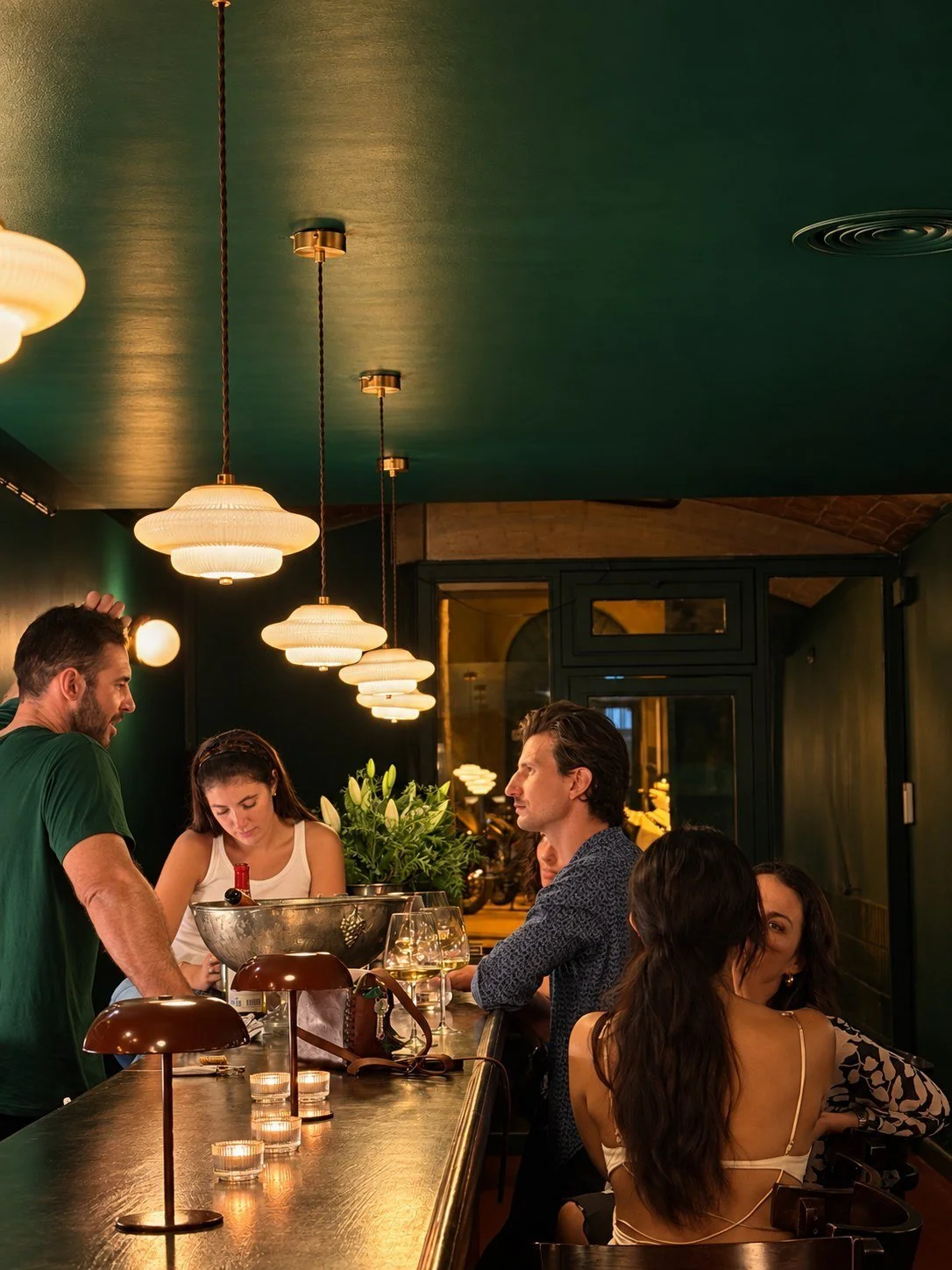
Real photographs and the menu introduce Brigitte before your visit. The bottle-green interior, dark wood and mirrors show the house’s Parisian identity. For outside seating, request precise information about places and possibilities for your preferred slot. Images help you understand the venue’s character; the team’s response establishes the arrangements for your arrival. Together they let you suggest the address with a fair impression of what appeals and what has been confirmed. You can explain the occasion using concrete details, leaving companions room to explore the current menu and decide what they might like once the gathering has been agreed.
Submit your enquiry through the official website’s reservation page with the date, time, guest count and terrace preference. Read the conditions and await confirmation, particularly concerning the elements important to your format. Then share reliable details with your companions. An aperitif on a terrace in Barcelona can begin with light organisation: a clear address, a confirmed small outdoor table, menu choices you enjoy and time to meet the people with whom you want to share the start of the evening. Brigitte’s French and Parisian setting provides the context, and your preferences give the visit its own shape and character together.
Plan your visit
Brigitte welcomes members and their guests aged 18 and over at 91 carrer d’Enric Granados, Barcelona. Stated hours are Tuesday to Saturday, 6 pm to 2 am. Check current arrangements and wait for your reservation confirmation.
Related reading
Group dinner in Barcelona: how to plan your evening at Brigitte
Plan a group dinner in Barcelona at Brigitte, with French food and a Parisian setting. Prepare your date, guest count and budget, then request your table.
Français · English · Español · Català
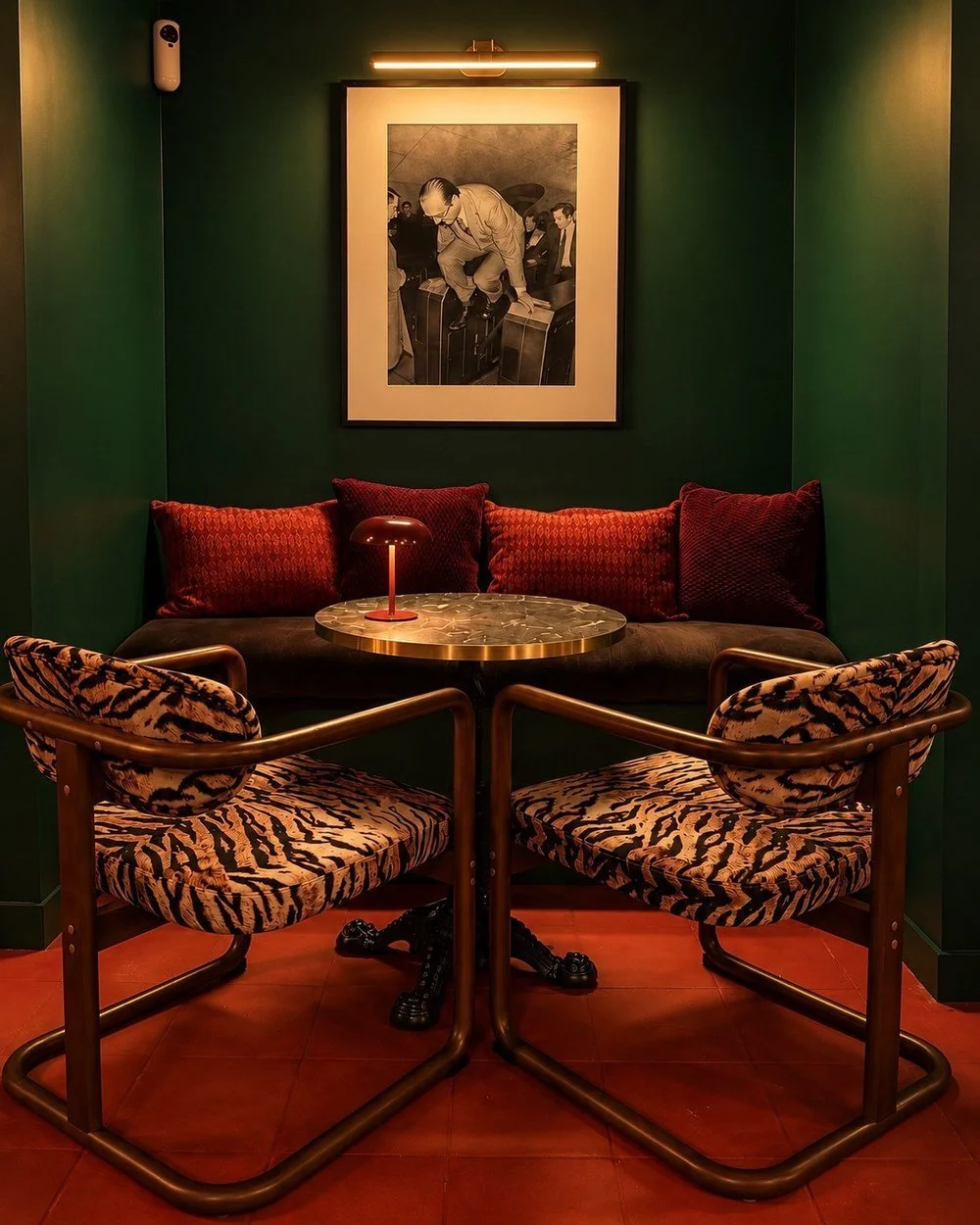
For a group dinner in Barcelona, discover Brigitte, a Parisian bar at 91 Carrer d’Enric Granados. French food and the room's character give you an idea to share with friends or colleagues. Gather five details before requesting a booking: date, arrival time, guest count, meal format and budget. The team can then study the request and confirm possibilities for the group. A clear first message gives the conversation a practical basis rather than leaving everyone to interpret a broad idea of dinner that has not yet been defined.
Organising sometimes seems harder than the meal itself. Several conversations run at once, preferences differ and nobody knows which version is current. Reduce common decisions to what matters. Choose a venue, date and way of dining, then clarify details with the team. A useful plan does not control everything. It tells guests enough to reach the same place with understood expectations and lets the evening develop around the table. Practical clarity supports freedom once people arrive, because the essential arrangements no longer need to be negotiated throughout the meal or repeated separately to every participant.
Nominate one booking contact
Begin with one person gathering responses and communicating with Brigitte. This does not mean deciding everything alone, but keeping the request clear. Others can explain constraints without sending separate instructions. The contact knows the date, confirmed guests and outstanding questions. This simple role helps friends and colleagues alike avoid contradictory messages. It gives the venue one actual project to answer. Suggestions can still be welcome, but the information becomes easier to use when somebody brings them together and distinguishes what has been agreed from ideas the group has not yet decided to follow.
Use the same approach for changes. One person asks, waits for the response and passes on the approved update. Requesting a modification does not automatically establish agreement. This avoids someone treating a new arrival time as confirmed before acceptance. Complex tools are unnecessary: a readable list and recap can be enough. The aim is knowing where reliable information sits, so practical exchanges remain short. Everybody can participate without the preparation becoming an endless thread of corrections, and the organiser can focus on gathering friends rather than repeatedly explaining which older message should no longer be used.
Agree a useful date and guest count
Offer a preferred date and, if genuinely possible, an alternative. A few concrete choices make replies easier. Wait for venue availability before calling the plan final. Distinguish confirmed attendees from those still undecided. Requests for ten, twelve or twenty guests differ from a small dinner, but no number guarantees a particular arrangement by itself. Explain the need and ask when final numbers are required. This makes discussion realistic without pretending every invitation has already been accepted or keeping the venue unaware of uncertainty that may affect the project it is studying for your group.
The time should match actual arrivals too. A team finishing work may need something different from visitors already free. Agree a plausible meeting time and read the reservation's duration conditions. Tell the team about guests expecting to arrive later rather than assuming it makes no difference. You can then send accurate information. Dinner begins more comfortably when people know which time to follow instead of trying to establish the correct message while travelling. A clear start also helps the group enjoy its shared time rather than beginning with avoidable confusion over who was expected and when.
Define spending before orders begin
Discuss the budget before food and drinks accumulate. Decide what it covers: meal, drinks, an organiser-hosted part or another agreed arrangement. Guests should understand it before participating. One clear sentence can prevent different spending expectations without a long document. Once the principle is understood, people have more freedom to choose comfortably. This is particularly useful when friends know one another differently or colleagues are unsure whether the dinner is hosted. Accuracy about costs makes the welcome easier rather than more formal, because nobody has to guess the rule while making their first choice.
Use the current menu as an initial reference and ask about particular proposals if needed. A total does not explain every inclusion. Check food, drinks and decisions that might create additional orders. Supply billing details for a company before payment time. Among friends, ask about the accepted payment arrangements rather than assuming them. Simple preparation helps the end remain pleasant instead of turning the last minutes into a discussion about expectations never expressed. The practical agreement should support the evening, leaving guests free to enjoy food and company within a framework they understood when deciding to come.
Choose how the group will eat
The question is not only what guests enjoy, but how you want to dine together. Some imagine shared first plates then individual mains; others want an agreed menu. These formats need discussion and cannot all be presumed available in every situation. Explain the intention early. The team can identify necessary information and possibilities according to date, numbers and the evening's arrangements. A clear description is more useful than a label such as group meal, which might suggest different things to organiser and venue. It lets the food plan become concrete before details are announced to guests.
Brigitte's French menu includes directions such as eggs mimosa, mini truffle croques, tartares, duck confit parmentier, ham, Emmental and truffle coquillettes or cheese, according to the current offer. Browse for ideas rather than immediately promising every dish. The final order or menu should match what has been agreed. This gives guests a real dinner instead of an appealing list the venue has not confirmed for the group. You can keep favourite wishes in the request and explore alternatives if needed, while ensuring the eventual invitation describes the format people can actually expect to enjoy.
Gather dietary needs accurately
Ask participants to share needs that must be communicated. For allergies or particular requirements, answers about possibilities should come directly from the team. A dish name or older photograph is not enough. The actual preparation and accepted options matter. An organiser can gather information without inventing an adjustment to reassure the group. A clear question in advance gives people relevant knowledge. It also prevents an important need being lost in a long conversation about ordinary preferences, leaving the guests concerned unsure whether the venue has actually understood and answered the question affecting their choice.
Ordinary tastes differ too. Not everybody wants raw food, cheese or the same dessert. Leave room for individual choices where the agreed format allows. A group's pleasure comes from shared time rather than identical plates. Some may anticipate chocolate mousse, others caramel brioche or a different ending. Make the accepted formula and possibilities clear before announcing them as secured. That lets the menu accommodate the real people coming instead of asking them to fit a selection chosen without considering their appetites. A dinner can stay connected even when the first and last plates take different directions around the table.
Plan drinks and communal spending
For shared French wine, establish who participates, the budget and whether the bottle will accompany several dishes. Those details provide a useful basis for advice. Consult current references, formats and prices. A bottle chosen by some people does not automatically involve everybody. Individual drinks can coexist with communal orders if agreed. People should understand what they are selecting and what the organisation covers. A short conversation at the beginning can be enough to protect this clarity and prevent a decision intended for part of the table becoming an unspoken assumption applied to every guest present.
Remember participants who do not drink wine or alcohol. They can enjoy the same dinner with another available drink. Conviviality does not depend on identical consumption. For hosted or professional events, agree who can approve additional orders and how requests will be handled. These are planning decisions to discuss rather than invent at the table. Simple arrangements keep drinks in their role alongside food and conversation. The organiser can then spend time with guests instead of interpreting whether each new order falls inside an agreement that nobody had clearly explained before the first drinks were selected.
Send a short, reliable invitation
After confirmation, gather what guests need: venue, address, date, time, meal format and participation principle where relevant. A message can say: “Let's meet at Brigitte, 91 Carrer d’Enric Granados, on [date] at [time]. Dinner is arranged as [confirmed format]. Please tell me about changes so I can contact the team.” Share validated details rather than every preparation exchange. Guests need to know how to join and what has genuinely been organised. The message can remain warm and informal while still being useful to someone who has not followed the entire planning conversation.
Keep one recap current. If something changes, wait for acceptance and send a clear update to those affected. Information announced too early can be repeated as confirmation when it remains only a request. Central coordination keeps the group coherent without excess messages. Leave discovery of room and food as part of coming. The invitation need not explain every pleasant detail if practical essentials and important expectations are understood. This balances preparation with the freedom you wanted from the evening, giving guests confidence in the plan without turning attendance into another task they must manage before arriving.
Select a setting people want to share
Genuine photographs show Brigitte's bottle green, dark wood, mirrors and room details. Browse them with the menu to see whether the Parisian character suits friends, visiting relatives or colleagues. The venue should support the occasion. Food provides ordering references, atmosphere helps imagine time together. Considering both creates a coherent choice instead of reducing the decision to one speciality or a list of names. A group may have different food preferences and still find a shared reason to enjoy the place when the room and the overall proposal match the time they want to spend.
Request private hire explicitly if exclusive arrangements matter. A group table does not reserve the whole venue. Guest count, confirmation, payment and adjustment terms should be those agreed with the team. Check before treating the evening as final. You can then enjoy dinner instead of resolving participants' assumptions. Successful planning has precisely that result: enough clarity before arrival for conversation and food to take centre stage. The details become a framework supporting the gathering rather than a separate subject the organiser has to revisit continually while everybody else is ready to relax and enjoy the meal.
Present your group dinner to Brigitte
Prepare a short request with date, time, numbers, desired format, budget and essential requirements. Current menu and photographs help make the project concrete. The team can study possibilities, ask questions and indicate applicable conditions. This opens a discussion rather than confirming availability or services before a response. Accurate information moves the plan forward more usefully than repeated group messages without knowing what the venue can accommodate. You can still keep choices open where appropriate, while ensuring the main request describes the evening you are genuinely trying to arrange for the people invited.
Send the enquiry through Brigitte's official website. If using the booking form, state the guest count and any particular organisation clearly. Read the displayed conditions, wait for confirmation and send the validated recap. Meet at 91 Carrer d’Enric Granados with essentials settled. The reason for the outing can then take over: sharing a French table, discovering what companions choose and taking time to talk in Brigitte's Parisian setting in Barcelona. A practical plan does its work before dinner so the evening itself can belong to the food, the people and the pleasure of finally being together.
Plan your visit
Brigitte welcomes members and their guests aged 18 and over at 91 carrer d’Enric Granados, Barcelona. Stated hours are Tuesday to Saturday, 6 pm to 2 am. Check current arrangements and wait for your reservation confirmation.
Related reading

Where to eat hand-cut beef tartare in Barcelona
Discover hand-cut beef tartare in Barcelona at Brigitte, with French food and a Parisian bar setting. Explore the current menu and request a table.
Français · English · Español · Català
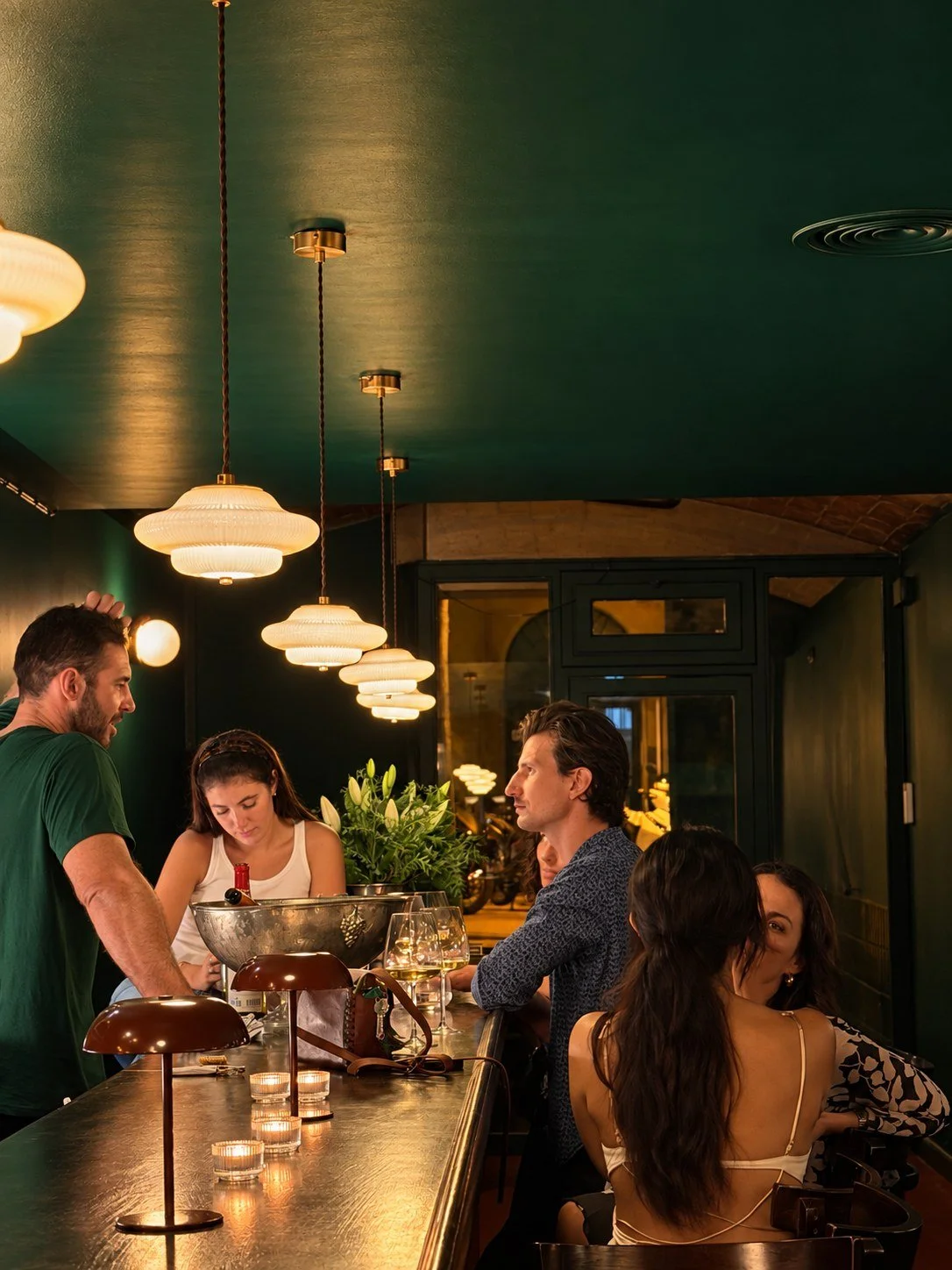
Explore hand-cut beef tartare at Brigitte, a Parisian bar at 91 Carrer d’Enric Granados in Barcelona. Check the current menu for the serving format, accompaniments and availability.
When you are craving beef tartare, you are looking for more than somewhere that serves meat. You may already have a texture, seasoning and style of meal in mind. This raw preparation is one of the recognisable dishes of French dining, and choosing it in Barcelona can become the starting point for dinner with friends, an evening as a couple or introducing a speciality to a visitor. The dish matters, but the place should also suit the time you want to share. A useful choice connects the food you want with the kind of evening you are planning.
At Brigitte, hand-cut beef tartare belongs to a French menu within a Parisian bar setting. Other dishes give guests different ways to choose: tuna tartare, eggs mimosa, mini truffle croques or duck confit parmentier, depending on the current offer. Check the menu for the tartare's availability, serving format and price. You can then request a table with a practical idea of dinner, without assuming that every person coming with you wants the same dish. A shared evening can accommodate different appetites while keeping the pleasure of sitting down together at its centre.
Why hand-cut makes a difference to expectations
The description hand-cut refers to meat cut manually with a knife rather than processed through a mincer. For enthusiasts, this helps establish an expectation about texture. It does not, on its own, explain every seasoning ingredient, the origin of the meat or the accompaniments being served. If one of those details determines your choice, ask the team directly. A dish name points you in a direction; information about the preparation offered during your visit gives you a clearer basis for deciding whether it matches your tastes.
You do not need technical language to describe what you enjoy. A preference for a more noticeable texture or a restrained seasoning can be explained simply. Whether a preparation can be adjusted depends on the kitchen's arrangements, so changes should not be assumed. Ask before ordering if something is important to you. A short conversation is more useful than expecting this tartare to reproduce one you ate elsewhere. Recipes and portions differ, and the enjoyable part of discovering a restaurant is understanding its actual dish rather than measuring it against an unspoken expectation.
A French classic without a fixed dinner programme
Tartare can be the central dish of a meal without requiring a set sequence of starters and desserts. You might begin with a small plate, go directly to the main dish or plan the order around your companions' wishes. Part of the appeal of bistro-style cooking is this freedom: recognisable dishes that fit into a real evening. French dining does not require every guest to follow the same sequence or choose the same food. The practical aim is a meal people want to eat, at a pace that works for the table.
If you know beef tartare well, the choice may be immediate. If it is new to you, read the description and ask questions before deciding. A classic dish is not automatically familiar to everyone, and not every guest knows whether its preparation suits their preferences. Choosing something else after asking is perfectly reasonable. A good order begins with a genuine wish to eat the food. It should not come from feeling obliged to try the speciality that someone else has decided everyone must have in order to experience a French dinner.
Build the meal around what you are looking forward to
Think about the place you want tartare to have in dinner before ordering several first plates. If it is the dish you have been waiting for, a simpler start may let you enjoy it more. Eggs mimosa and mini truffle croques are other possibilities on Brigitte's menu, to consider according to appetite and the number sharing. Current serving formats are more useful than a general rule about quantities. Explain what kind of meal you have in mind rather than adding portions without considering the combined order and the amount everyone actually wants.
Guests can also choose individual starters and meet again around the main part of the meal. That can be easier when tastes differ or people arrive with different appetites. Dinner among friends does not need to become a negotiation over every plate. Be clear about what is shared and what each guest is ordering personally. Keeping that distinction simple preserves conviviality while leaving someone who prefers a cooked dish free to choose one. Your interest in tartare can be the reason for selecting the venue without becoming a requirement for everyone at the table.
Beef, tuna or a cooked dish?
Tuna tartare offers a different possibility for guests drawn towards fish. Do not assume that beef and tuna tartares share the same seasoning or presentation. Read the descriptions separately and ask if you are undecided. Your preference might be as straightforward as wanting meat or fish that evening. The right choice is the food you will enjoy within the dinner you are planning, rather than the option that sounds more unusual. A little information helps you decide with confidence while leaving plenty of room for discovery at the table.
For someone who does not want a raw preparation, duck confit parmentier and ham and truffle coquillettes indicate another side of Brigitte's cooking, subject to the current menu. Explain dietary needs and allergies before ordering, and check directly what can be offered. The same table can bring different preferences together without losing its sense of occasion. Guests share a place, a conversation and an evening even when their plates look different. Choosing a restaurant with several appealing possibilities can therefore be more useful than insisting on a single dish as the focus for the entire group.
Choosing wine for your dinner
Wine can begin with your preferences rather than an allegedly compulsory pairing. Do you usually enjoy reds or whites? Are you selecting a bottle for several dishes or a glass for your own meal? Explain those wishes, then consult the references and prices on the current list. The tartare's seasoning and the other guests' food can also influence advice. Without that information, naming one appellation as the perfect answer would not help you make a choice grounded in the evening you are actually arranging. A conversation is more useful than an inflexible rule.
When sharing a bottle, talk about budget and the group's habits as well. Some guests prefer ordering by the glass; others do not want wine. The simplest arrangement is one everyone understands. You do not need to change individual preferences to create a French dinner. Drinks accompany the food and conversation without needing to become a complicated exercise. A question about style and price often establishes enough of a starting point to ask the team for guidance and choose something the people drinking it will enjoy throughout their meal.
Leave room for cheese or dessert if you want it
Tartare can be followed by French cheese or a dessert when that suits your appetite. Brigitte's menu gives different ideas for the end of dinner: a cheese board, Saint-Marcellin, chocolate mousse or caramel brioche, according to what is being offered. Looking at this part early does not mean fixing every course in advance. It simply helps you know whether to leave space for something that especially appeals. That is more enjoyable than discovering your favourite dessert only after ordering more first plates than you actually wanted to eat.
Within a group, some guests may want to continue with dessert while others stop after their main dish. Those differences are ordinary and need not interrupt a pleasant dinner. If you share something, check its format and any ingredients that matter to the people involved. Keep the decision enjoyable: a dessert does not become better because everyone is expected to order one. An ending chosen around your appetite and taste extends the experience more naturally than another course added automatically when nobody really wants it at that point in the evening.
Choose a setting as well as a dish
Brigitte's Parisian character forms part of the idea of French dining in Barcelona. Genuine photographs show bottle green, dark wood, mirrors and the room's details. If you are deciding where to take a friend who enjoys tartare, these images connect the dish with an atmosphere. They can also help you consider whether to come as a couple or arrange a larger gathering. A considered choice brings guests' food preferences together with the kind of time they want to spend. The menu and the room answer different, equally practical questions about dinner.
If the occasion is a birthday, business dinner or group gathering, say so in the request. Do not assume that every individual menu item can be offered in a particular event format. If tartare needs a place in a menu agreed in advance, discuss that with the team and wait for confirmation. You can then share a reliable plan with guests. The food gives the event a direction; the concrete arrangements depend on what has been accepted for the date and number of people involved, rather than on a general description of the restaurant.
Check the current details before booking
Read the current menu for the price, portion and announced accompaniments. An older post or photograph may not describe the service you are planning to attend. If wanting tartare determines the outing, ask about its availability. For ingredients or dietary needs, contact the team before ordering. A dish name cannot answer a particular question that has not yet been considered. Making an important expectation explicit allows the venue to respond to the actual request and gives you a better basis for deciding whether to plan the evening around that dish.
Then prepare the reservation details: date, arrival time and number of guests. Mention any important seating preference or other request and wait for a specific response. A submitted form does not automatically guarantee everything entered in its comments. Read the conditions displayed during booking and wait for confirmation. You can then tell companions what has genuinely been arranged and arrive with a clear idea of the reserved time. Settling these details beforehand leaves the beginning of dinner free for welcoming people and choosing food rather than sorting out practical assumptions once everyone is there.
Request your table at Brigitte
Looking for hand-cut beef tartare in Barcelona with a Parisian setting? Browse Brigitte's current menu to explore the dish and the other possibilities for your meal. Look at genuine photographs of the venue, then choose a date that works for the people you would like to bring. Dinner can begin with one precise craving while leaving your guests free to choose their own dishes. That is often how a search for a speciality becomes a welcome reason to gather people for an evening that everyone can enjoy in their own way.
Use the reservation page on Brigitte's official website to request a table. Include the necessary details and ask if tartare availability or a preparation detail is essential to your visit. After receiving answers and confirmation, you can look forward to the pleasant part: meeting your companions, discovering the menu and enjoying French food in Barcelona. The dish you were searching for becomes the beginning of a shared moment in a setting that appealed to you, with the practical arrangements already clear enough to let the conversation and dinner take their course.
Plan your visit
Brigitte welcomes members and their guests aged 18 and over at 91 carrer d’Enric Granados, Barcelona. Stated hours are Tuesday to Saturday, 6 pm to 2 am. Check current arrangements and wait for your reservation confirmation.
Related reading

Where to spend an evening in Barcelona when you are over 40
Explore Brigitte for an evening in Barcelona after 40, with French food and a Parisian setting. Choose around your preferences and request a dinner table.
Français · English · Español · Català
For an evening in Barcelona after 40, discover Brigitte, a Parisian bar at 91 carrer d’Enric Granados. French food, wines from the menu and a bottle-green interior with dark wood and mirrors offer an address to consider for dinner or meeting friends. Age does not define a single programme: choose according to your companions, tastes and the occasion you want to share. Browse photographs and the menu, then send a reservation request with relevant details. The team can advise about the format and arrangements for your visit, giving the gathering a practical basis before you invite everyone.
The question often becomes more useful when you describe what you enjoy. You might want to catch up with friends, introduce your partner to an address or welcome adult visitors to Barcelona. Perhaps you appreciate familiar cooking; perhaps a new speciality attracts you. Such preferences guide a venue choice more effectively than an age category. Brigitte offers a French and Parisian setting to explore in that spirit. See whether the combination appeals and build the occasion around your actual wishes, with arrangements that suit the table and the time people have available for spending the evening together.
Choose the evening’s content before its label
Begin by asking what you want to do together. Dinner for two, a gathering of several friends and a drink at the start of the evening are different plans. The answer helps you choose a time and whom to invite. There is no need to follow a general idea of what going out after 40 should mean. Habits and curiosity can sit comfortably together. A concrete suggestion is enough: here is food and a setting I would like to discover with you. Companions can then explain what appeals and share their availability before the proposed occasion takes its final shape.
The same address can interest adult friends of different generations for different reasons. Some come for a French speciality; others want dinner together or to discover the interior. Bring these wishes into a clear format while leaving room for personal choices. The menu provides shared proposals, and everyone can have a preference. What connects the guests is their intention to meet. Preparation should support that encounter through reliable information, retaining freedom in the meal and conversation once the group arrives. A good gathering can accommodate differences without requiring everyone to approach the evening in exactly the same way.
Discover Brigitte’s Parisian setting
Real photographs show bottle green, dark wood, mirrors and details of the dining room. They help you understand the venue’s identity and introduce the address to people you would like to invite. Explore images alongside the menu: décor and cooking contribute together to the choice. You might be attracted to the Parisian setting before deciding the whole programme. Sharing photographs and a menu link gives companions concrete references. They can picture the venue, ask a question or say whether the idea appeals. Your invitation begins with real elements that guests can explore for themselves before confirming they would like to attend.
State atmosphere requirements if they affect the decision. If seating layout or another characteristic matters, ask directly about possibilities for your guest count. Photographs introduce décor; they cannot guarantee sound levels or attendance on a particular evening. The team’s response helps you decide using relevant information. You can distinguish the visual identity you enjoy from the arrangements available for your visit. This approach works at any age and lets you plan according to clearly expressed preferences. The aim is to find a setting that fits the occasion you want, using what has actually been confirmed rather than expectations about a whole age group.
Compose French food around your tastes
Eggs mimosa and mini truffle croques suggest ways to start in Brigitte’s culinary spirit. Explore current proposals and formats. You may want to share opening dishes or prefer individual orders. Ask companions what suits them rather than decide for everyone. A quick discussion about appetite and anticipated dishes helps create an enjoyable selection. The beginning of dinner also becomes a conversation about tastes, food memories and specialities people want to rediscover or try. It gives guests an accessible starting point for exchanging opinions while leaving later choices open until everyone has seen what is offered for the meal.
Dinner can take several directions: hand-cut beef tartare, tuna tartare, duck confit parmentier, or coquillettes with ham, Emmental and truffle. These examples introduce the culinary identity; the current menu shows the dishes offered for your visit. Preferences and appetite attract people to particular preparations, without age determining a selection. You can arrive for one speciality and let companions choose something else. The table shares the setting and occasion, while each order provides a personal way into the French cooking. Different dishes can enrich the conversation and give everyone a chance to explain what they enjoy about the meal they chose.
Wine and other drinks within the occasion
The French wine selection may appeal to guests who enjoy a particular region or want a choice alongside food. Describe the style, budget and serving format you have in mind when asking for advice. For several people, establish who wants to share a bottle and who prefers a separate order. Check formats for the chosen reference. Petit Chablis is offered by the bottle in the menu defined for Brigitte; wines by the glass belong to their corresponding selection. A few straightforward indications help you choose confidently and give more attention to company than to the practical details of each order.
Cocktails and other drinks should be chosen from the options actually available. Guests who do not consume alcohol can browse menu choices suited to their preferences. A shared occasion leaves room for different drinks. Some people mainly want dinner and others are curious about a particular beverage; both approaches can meet at the same table. If the plan includes an opening drink followed by food, explain that in the reservation enquiry. You will understand possibilities and the slot’s duration, giving a clear framework to the sequence you want to organise with companions. The choices themselves can remain personal within that shared arrangement.
Enjoy catching up with friends
A gathering can have substance without an extra activity. You share news, introduce one friend to another or return to an unfinished conversation. Dinner offers natural starting points: a first impression of the room, an anticipated dish or a preference you have just discovered. Subjects can develop without needing to fill every moment deliberately. The evening’s interest lies in the guests and the attention you give one another. Choosing somewhere that appeals creates an initial common context; conversation can then find the direction that suits your group. Food and company can have space together throughout the time you have reserved.
For a larger gathering, explain the project with a reliable guest count. A friendly dinner, birthday celebration and private-hire enquiry call for different arrangements. State your date, expected guests and essential needs, then wait for a relevant response. You can send an invitation reflecting accepted conditions. The event’s details will have a clear framework, while choices that can remain open keep their spontaneity. Guests know what has been organised without following the entire preparation. You can concentrate on welcoming them, making introductions and getting the evening started with the information they need already communicated before their arrival at the venue.
Consider individual needs and timing
If someone has an allergy or dietary requirement, ask about the actual preparations before choosing. A dish’s name cannot establish its full composition. The enquiry provides information relevant to the person and time to decide whether the proposals suit them. Everyday preferences can then be discussed at the table. Combine common and individual orders according to available formats if that works for your group. Thoughtful planning considers what people want and can eat, leaving room for everyone in the meal. The goal is comfortable participation, with choices based on useful information and attention to the guests actually attending your gathering in Barcelona.
Timing also depends on the people involved. A realistic arrival and understanding of the slot help guests prepare journeys and other commitments. If you want to remain after dinner, ask what is possible; a meal reservation does not automatically secure a table for the entire night. Chocolate mousse, caramel brioche French toast or French cheeses offer ideas for the final course, according to the menu. Available time and appetite will guide decisions within the agreed arrangements. Everyone can enjoy the evening with a common understanding of its practical framework while retaining freedom in the choices they make at the table.
Plan your evening at Brigitte in Barcelona
Browse real photographs and the current menu, then suggest the address to the people you want to see. Choose a date, time and guest count, and gather essential questions for your format. Send the enquiry through the official website’s reservation page. Wait for confirmation and important answers before sharing a final invitation. Brigitte’s name, 91 carrer d’Enric Granados and the agreed time provide details that are easy to find. You can arrive with the arrangements understood and let some food decisions happen together. If the group changes, coordinate the enquiry so everyone continues to work from the same confirmed information.
An evening in Barcelona after 40 can answer many different wishes. The useful questions concern enjoyment: whom would you like to see, what food attracts you and what occasion do you want to share? Brigitte provides a French and Parisian direction for exploring those preferences. Décor, dishes and drinks bring a setting; the people give the evening its own character. Settle the practical details and enjoy the meeting according to your tastes. There is room to choose what appeals today, remain curious about a new speciality and discover what your companions would like to savour while spending time together around the same table.
Plan your visit
Brigitte welcomes members and their guests aged 18 and over at 91 carrer d’Enric Granados, Barcelona. Stated hours are Tuesday to Saturday, 6 pm to 2 am. Check current arrangements and wait for your reservation confirmation.
Related reading
Where to share a French cheese board in Barcelona
Share a French cheese board at Brigitte in Barcelona. Explore the current formats and menu, discover a Parisian setting and request your next dinner table.
Français · English · Español · Català
For French cheese in Barcelona, explore Brigitte's menu at 91 Carrer d’Enric Granados. The Parisian bar offers cheese boards in smaller and larger formats, alongside a separate Saint-Marcellin option. Check the current selection and prices before deciding. A board can be part of dinner, a wish shared with friends or the end of a meal for people who prefer cheese to something sweet. The right format begins with how you want to eat and the guests who actually want to join in, rather than a fixed rule for every table.
The pleasure goes beyond recognising names. Around a board, people compare tastes, discover one another's preferences and take time to talk. Some want a familiar cheese; others enjoy being surprised. Sharing works when it welcomes both approaches. You do not need to know French regions or production families before visiting. Start with what you already enjoy, ask a few questions and decide what role cheese should have in the evening. It can become a subject of conversation without turning dinner into a lesson or requiring every guest to describe flavours in specialised terms.
Decide where cheese belongs in the meal
A board plays different roles depending on when you order it. It can be your main appetite, accompany several dishes or arrive after a main course. Consider this before choosing the format. A group hoping to taste a little has a different intention from guests coming specifically to eat cheese. That distinction makes the order clearer. Neither a dish title nor a photograph can determine the right quantity for every set of companions. The current serving and your actual plans give a more useful starting point for advice than an abstract number of people per board.
Some guests may choose cheese while others finish differently. A shared evening does not require an identical route through dinner. Chocolate mousse or caramel brioche may attract part of the table, depending on availability. Knowing this before ordering a larger communal selection is helpful. Sharing stays enjoyable when the people involved genuinely want to participate and others can retain a different choice. There is no need for guests to justify preferring dessert or stopping after the main dish. The important common element is the time you are spending together around the table.
Smaller or larger: consider who will participate
The two formats on the menu provide an initial reference, but the choice depends on interested guests, their appetites and other food. Ask about the current composition and serving rather than inventing a universal allowance per person. A board after several dishes has a different purpose from one intended to occupy the centre of dinner. Explain that to the team so advice can begin with Brigitte's actual offer and your plans. A brief description of how you want to eat is more useful than asking for a quantity without mentioning what will come before or after it.
A larger booking does not mean everybody wants cheese. Some guests may want a taste, some have a strong preference and others will not participate. Choose around the actual number interested rather than the total reservation count alone. A small conversation prevents misunderstandings and gives the board an appropriate role. The aim is to be pleased to discover what arrives, instead of ordering a quantity automatically because the group is large. Clear expectations make sharing easier while leaving room for the appetites of people who want other food or a different end to dinner.
Explain your tastes without knowing every cheese
Describing what you enjoy is often more useful than trying to remember an exact name. Mention a soft or firm texture, a subtle or stronger taste, or a milk preference if you have one. These details provide a starting point for understanding the proposed selection. They do not guarantee a replacement or adjustment; those possibilities need checking. They do allow a practical conversation without tasting vocabulary or regular experience of ordering cheese in restaurants. You can be curious and specific in ordinary language, which is enough to help the team understand the type of experience you are seeking.
In a group, preferences can become conversation rather than a problem. One guest enjoys something unfamiliar to another, somebody recalls a trip and another discovers a texture. Taste according to curiosity without turning the board into a knowledge test. Names and information add context, but simple reactions also belong: liking something, being surprised, wanting another piece or preferring a different option. This freedom is part of sharing. It gives each person room to enjoy the selection honestly instead of feeling expected to admire every cheese because it appears on the same board in front of the group.
Use textures as accessible landmarks
French cheeses include different families of texture. Soft and pressed cheeses do not create identical sensations. Rind, maturation and the nature of the product can influence taste too. These are broad landmarks for exploring a selection, not a description of every cheese served at Brigitte. Ask the team for the current composition. You can then connect explanations to the actual products rather than expecting a particular variety that was never announced. A little context makes discovery more understandable while keeping the real selection, rather than a general account of French cheese, at the centre of your decision.
If you want to compare, one possible approach is to begin with what seems gentler and move towards stronger flavours. This is an option, not a rule. You can follow your appetite and return to the pieces you prefer. There is no requirement to comment on every cheese or find the correct terminology. The board accompanies the evening. It can open exchanges without replacing the conversation you came to share. Some guests will enjoy discussing the food in detail; others will simply taste while continuing to talk about the reasons you wanted to meet in the first place.
Saint-Marcellin offers another cheese choice
Saint-Marcellin has a distinct place on Brigitte's menu. If that name particularly appeals, read the current proposal instead of assuming it is always included in every board. An individual reference and a selection to share can answer different wishes. One lets you focus on a speciality; the other offers discovery across the current composition. Ask what you need to know to choose the format that fits interested guests and this stage of dinner. This avoids treating two separate options as interchangeable when their serving and role in your meal may not be the same.
There is no need to declare one better than the other. Come for a familiar speciality or explore the board being offered. Tell the team if some guests specifically want Saint-Marcellin so the order remains clear. A cheese name does not imply every possible service arrangement. Checking what is available keeps the choice enjoyable and prevents expectations that have not been confirmed. The aim is food you want to savour, not a combination decided before looking at the actual offer. Both a particular favourite and a varied selection can have a place when they match what people genuinely want.
Which wine could accompany the board?
French cheese may encourage you to browse the wine list. Begin with the preferences of those drinking and any other dishes. Do you normally enjoy white or red? Are you choosing a bottle for dinner or a glass for this stage? Advice can then consider available references. No single wine should be imposed without knowing the cheeses being served, your tastes and how you intend to order. Check prices and make the choice in that practical context. A considered pairing can remain straightforward when it responds to the real table instead of a rule applied without those details.
Cheese can equally belong in an evening where some guests do not drink wine or alcohol. Sharing food does not demand identical drinks. If communal spending is planned, agree what is shared and what remains individual before ordering. Keep the arrangement simple. This prevents guests being involved in a bottle they did not want. The most useful accompaniment is one the people concerned enjoy selecting within an understanding everyone shares. It lets the wine remain part of the meal rather than become the focus of the event or a decision that other guests feel obliged to follow.
French cheese within a Barcelona evening
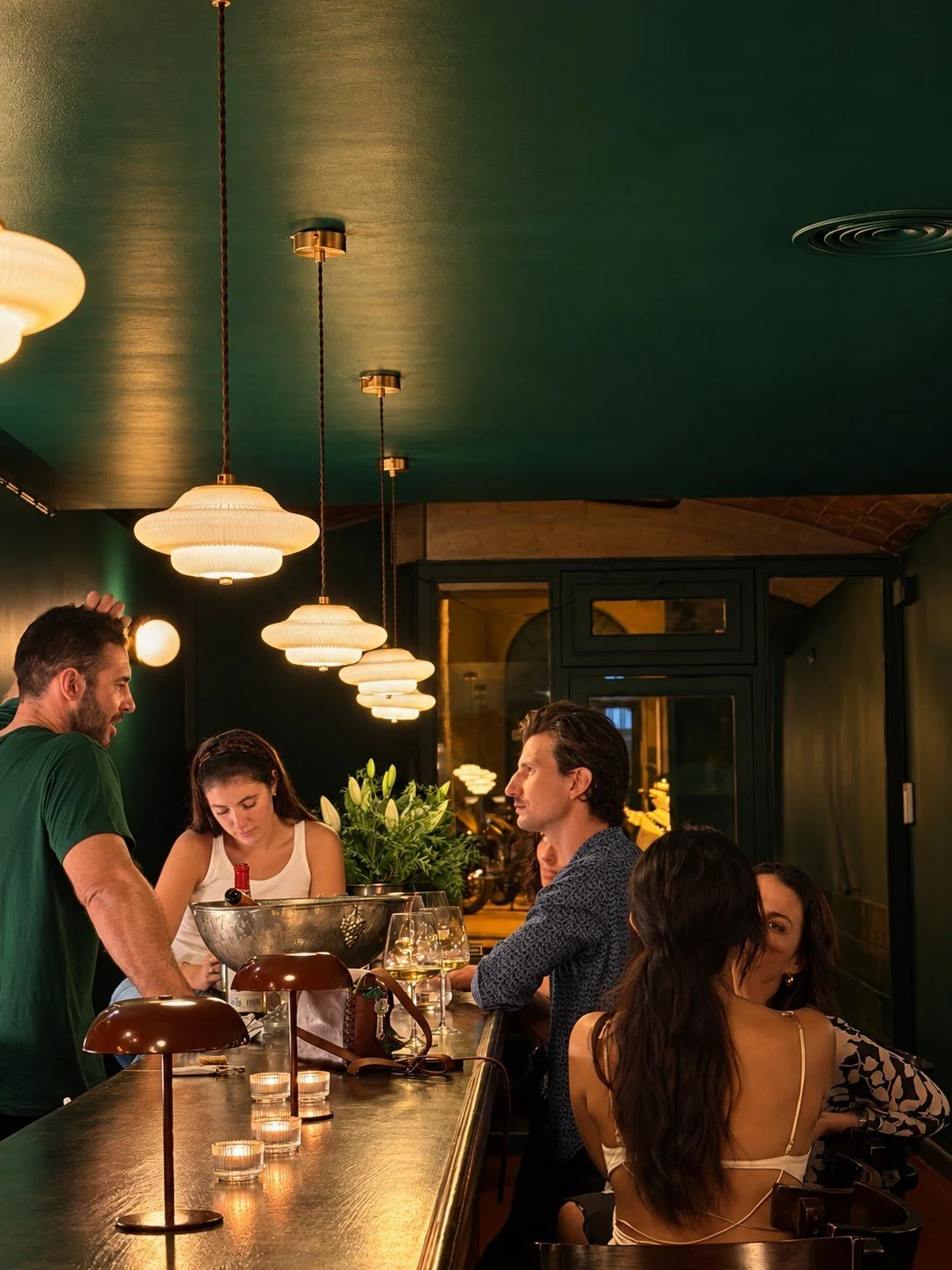
Brigitte's Parisian setting provides a context for French food. Genuine photographs show bottle green, dark wood, mirrors and room details. They help you imagine a board at the centre while conversation continues. You may be specifically looking for French cheese or primarily seeking somewhere to meet friends. Those intentions can come together: a concrete food idea helps select the venue and gives the invitation a starting point. Browsing the setting alongside the menu helps you decide whether the whole proposal suits the evening rather than choosing from a speciality name in isolation.
The rest of the menu can contribute too. Eggs mimosa, mini truffle croques, tartares, duck confit parmentier and ham and truffle coquillettes suggest different directions, subject to availability. You do not need all of them to enjoy the venue. Look at your appetite and your guests' wishes. Cheese can be one element without becoming a compulsory stage. The shared experience is a time and place; individual dishes can reflect different tastes while still belonging to the same evening. That makes planning more welcoming than requiring everybody to participate equally in each part of a fixed order.
Prepare a group or celebration
For a birthday, reunion or business dinner, cheese can be among the wishes you discuss with the team. Explain the date, expected numbers and meal format. A dish on the individual menu is not automatically confirmed in every group arrangement. Composition, service and conditions need agreement for your project. You can then inform guests using a real proposal rather than announcing cheeses not yet selected for the event. Distinguishing early ideas from an accepted plan makes both the invitation and the kitchen's preparation clearer while preserving the personal character you want the evening to have.
If several people organise, nominate one contact to gather information and keep a clear version of the plan. For an ordinary dinner, an arrival time and accurate guest count may be enough. Mention dietary needs before ordering and check possibilities directly. Information about the product actually proposed is more useful than a conclusion drawn from a name or old image. Each guest can then choose with knowledge relevant to their own situation. Keeping this practical preparation simple helps the evening begin comfortably without needing repeated conversations about arrangements once everyone is present and ready to eat.
Request your table at Brigitte
To share French cheese in Barcelona, check Brigitte's current menu and choose a format around interested guests and the rest of dinner. Genuine venue photographs help you see whether the setting suits your plans. You can arrive with preferences and let the selection guide discovery. Send a request through the reservation page on the official website with your date, arrival time and guest count. Read the conditions and wait for confirmation, along with answers about any essential requirements. A submitted form is the beginning of arranging the visit rather than confirmation of every detail you have mentioned.
Once those practical details are settled, meet your companions at 91 Carrer d’Enric Granados and enjoy choosing food and drinks. The board can take its place according to your appetite, whether as the central idea of dinner or a final shared moment. Nobody needs to recognise every cheese to enjoy it. The pleasure comes from meeting your own tastes, your companions' curiosity and time around a French table. In Brigitte's Parisian setting, a cheese selection can become a simple reason to gather, compare impressions and let an evening in Barcelona unfold through conversation and good company.
Plan your visit
Brigitte welcomes members and their guests aged 18 and over at 91 carrer d’Enric Granados, Barcelona. Stated hours are Tuesday to Saturday, 6 pm to 2 am. Check current arrangements and wait for your reservation confirmation.
Related reading
Where to eat duck confit parmentier in Barcelona
Discover duck confit parmentier in Barcelona at Brigitte, with French cooking and a Parisian setting. Explore the current menu and request your table.
Français · English · Español · Català
Explore duck confit parmentier on Brigitte’s current menu. The Parisian bar at 91 Carrer d’Enric Granados in Barcelona brings French cooking to your dinner plans; check the current offer before booking.
Some evenings call for a dish that makes you want to sit down, take your time and enjoy dinner. Duck confit parmentier fits that idea of comforting French food. In Barcelona, it can be a way to return to a familiar culinary reference, introduce a speciality to someone or gather friends around a particular appetite. The dish becomes the beginning of the plan rather than a detail left until the last moment. Choosing where to eat then means finding both the food you want and a setting for the time you hope to share.
At Brigitte, duck confit parmentier is one of the dishes to explore on the current menu. It belongs to French cooking served within the character of a Parisian bar. Genuine photographs of the room and the menu help connect that appetite with a practical dinner plan. Check the current offer, see which other dishes might suit your companions and choose a date. The parmentier can be the starting point for your evening without requiring everyone at the table to order the same food. Different choices leave room for the pleasure of eating together.
Why parmentier suggests comfort food
Parmentier refers to a family of dishes associated with potato. In the duck confit version, the meeting of duck and mashed potato gives enthusiasts a recognisable starting point. That broad description explains the dish's comforting image without defining every recipe. Each kitchen can make its own choices about preparation and presentation. If exact ingredients or another detail matter to you, use the current menu and information provided directly by Brigitte's team. A general understanding is useful, but it should not replace asking about the dish actually being offered during your visit.
The attraction can be simple: wanting a cooked dish, enjoying a familiar texture or remembering a French meal. A special celebration is not required. After a busy day, during a stay in Barcelona or when meeting friends, parmentier can answer an appetite that needs no further justification. Choose it because it is what you want to eat, rather than because dinner in a French venue supposedly requires a set programme of specialities. That keeps the evening connected to your pleasure instead of turning a menu into a list of obligations to complete.
Give the dish a central place in dinner
If parmentier is your main reason for coming, leave it an appropriate place in the order. Several first plates can be enjoyable, but they should not prevent you enjoying the dish you anticipated. Consider your appetite, the portions currently offered and what you might want afterwards. The menu provides a practical starting point. No universal quantity suits every guest and occasion. Your actual hunger and idea of the meal remain more useful than a rule that all dinners must include a starter, main dish, cheese and dessert regardless of what anyone wants.
You might choose to go directly to parmentier and decide later about dessert. Alternatively, share a first plate with companions before everyone selects a main course. This freedom makes planning feel natural. You do not need to treat the menu as something to work through in a prescribed order. Choose what appeals and ask about formats if you are unsure. A coherent order is often more enjoyable than accumulating dishes that no longer match your appetite when they arrive. Leaving room for the anticipated main plate can make the evening more satisfying.
Introduce duck confit to friends
When guests know little about French food, a dish name may benefit from a short explanation. You can describe parmentier as a cooked dish bringing duck and potato together, then let the menu and the team explain the current preparation. This gives a reference without announcing ingredients or a recipe that have not been checked. Discovery is more pleasant when it begins with an accurate description and space for questions. Your guests do not need a complicated account of gastronomy to decide whether they would like to try the food in front of them.
Let them choose whether that style of dish appeals. Someone may prefer tuna tartare, another hand-cut beef tartare, while another wants to begin with something for sharing. Brigitte's current menu offers different ways into dinner. You can select the venue because you want parmentier and still have a lovely evening with people who order other dishes. What connects the table is the time you are making for one another, rather than identical plates. A good invitation leaves each guest free to participate through their own tastes and appetite while enjoying the same place.
Parmentier or ham and truffle coquillettes?
Both can appeal when you are searching for comforting food in Barcelona. Ham and truffle coquillettes suggest a different familiar register, centred on pasta. Parmentier puts duck at the heart of your choice. If you are undecided, start with what you fancy that evening and read the current descriptions. There is no need to identify one dish as the overall winner. Each meets a preference that may change from one visit to the next. Choosing dinner is about the appetite you have now, not making a permanent judgement between two French menu options.
For a group, that variety can make ordering easier. Some guests want to discover duck, while others are drawn to pasta or truffle. If the idea is to taste several dishes, ask whether the current formats suit sharing. Explain that intention before ordering; it cannot be inferred simply because several people have booked together. The team can respond using the actual menu and help distinguish individual dishes from anything you want to share. A little clarity protects everyone's expectations while keeping the dinner convivial and open to several different ways of enjoying the food.
Choose a beginning that leaves room for the main dish
Eggs mimosa and mini truffle croques may suggest ways to begin a French evening. Consider them as part of the whole meal. Perhaps you want a small first step before parmentier; perhaps you prefer to save your appetite for it. A starter is not compulsory. If companions wish to order several first plates, you can participate according to your own appetite. Make the order clear for both the table and the team so that sharing does not accidentally become a set programme everyone is expected to follow to the same extent.
The same applies to homemade foie gras when available on the menu. If another speciality is important to the visit, check before building a whole sequence around it. Products and dishes can change. You can plan a few wishes while keeping an alternative you would genuinely enjoy. Dinner does not need to depend on one exact scenario to succeed. Using the current offer and your actual appetite keeps the choices connected to the evening itself rather than to an inflexible picture of what the meal ought to contain before you have even arrived.
Select drinks for the people at the table
A duck dish may lead you to explore Brigitte's French wine list. Start with your preferences, then consider companions' food if sharing a bottle. Useful advice takes both into account alongside the references actually available. Insisting on a single appellation without knowing your tastes or the preparation would be less helpful. Explain whether you want a glass or a bottle, and check prices before deciding. The choice can remain simple while still showing attention to the table. You do not need extensive wine knowledge to describe the style you normally enjoy drinking.
Some guests will not want wine or alcohol. That does not change their place in the dinner. If you are organising, leave people free to choose from the available drinks. Agree a principle for shared spending before ordering. A bottle shared by only part of the group does not necessarily need to be split between everyone. Clarifying these arrangements keeps conversation easy and lets the drink accompany the meal rather than become a point of disagreement at the end. The simplest option is the one the people involved understand and are happy to follow.
A Parisian setting for French food in Barcelona
Brigitte's photographs show bottle green, dark wood, mirrors and tables that give the room its personality. They help connect your wish for parmentier with an atmosphere. A restaurant is also chosen through what you imagine doing there with your companions. Perhaps you are hosting a French friend, having dinner with your partner or discovering somewhere with colleagues. Looking at the room complements reading the menu. The two together help you choose an evening that suits your actual company, rather than selecting a dish without considering the place in which you will enjoy it.
Distinguish the atmosphere shown in photographs from a confirmed table arrangement. Include any important request when booking. For a birthday, company dinner or private hire, explain the plan and wait for a response about what can be arranged. Do not assume an individual menu dish is automatically included in an event proposal. The food gives your evening an appealing direction; practical arrangements need discussion with the team according to the date, numbers and requirements. That keeps the information you share with guests aligned with the event that has genuinely been agreed.
Prepare your visit around a particular appetite
If duck confit parmentier is the main reason for visiting, check availability and the current price. Ask ingredient questions before ordering, particularly where allergies or dietary needs are concerned. A general description does not replace a response relevant to your situation. Any requested adjustment also needs discussion and agreement. These details let you choose with a clearer understanding of the actual dish, without presuming a recipe or possibility the venue has not announced. A brief question can be enough to settle an important expectation before it influences the rest of your dinner plans.
Then prepare the date, arrival time and exact number of guests. Send the request through the official website after reading the displayed conditions. Wait for confirmation before treating the table as secured and share the validated information with companions. This preparation can stay brief while leaving the enjoyable part of dinner at the centre once you arrive. You will not need to keep organising the group between orders. The practical framework will already be in place so you can choose food, take time to talk and enjoy discovering Brigitte together during the evening.
Request your next dinner at Brigitte
Want to enjoy duck confit parmentier in Barcelona? Explore Brigitte's current menu and genuine photographs to prepare the visit. Make the dish the heart of dinner, choose a first plate if it appeals and perhaps leave space for cheese or dessert. Other guests can follow their own appetites. A comforting speciality can become the starting point for a shared evening without making the order compulsory for the whole table. One precise food wish is enough to begin a plan, provided everyone still has room to enjoy the occasion in their own way.
Use the reservation page on Brigitte's official website to request a table. Include the details and questions essential to your visit, then wait for confirmation. You will have a concrete plan: a date, the people you want to see and a place whose French cooking makes you want to sit down for dinner. Parmentier becomes more than a dish searched for in Barcelona. It becomes one reason to spend an evening together, with Brigitte's Parisian character providing the setting for a meal chosen according to your appetite and the pleasure of the moment.
Plan your visit
Brigitte welcomes members and their guests aged 18 and over at 91 carrer d’Enric Granados, Barcelona. Stated hours are Tuesday to Saturday, 6 pm to 2 am. Check current arrangements and wait for your reservation confirmation.
Related reading

Where to eat French food in Barcelona: an evening at Brigitte
Explore French food in Barcelona at Brigitte: tartares, duck confit parmentier, cheese and a Parisian bar setting. Browse the menu and request a table.
Français · English · Español · Català
For French food in Barcelona, explore Brigitte, a Parisian bar at 91 Carrer d’Enric Granados. Its menu brings together French classics so you can build dinner around your tastes.
Looking for French food in Barcelona can mean several different things. You might be missing a familiar dish, hoping to discover a cuisine you do not know well, or simply trying to choose somewhere for a good evening. A place to eat, talk and share a bottle of wine is about more than a list of specialities. The setting, the people coming with you and the kind of dinner you want all matter. At Brigitte, French cooking meets the atmosphere of a Parisian bar, giving you a starting point for an evening shaped around your own tastes.
The menu offers different ways into that experience. Eggs mimosa, beef and tuna tartares, mini truffle croques, duck confit parmentier and French cheeses each suggest a different appetite. You can plan dinner around a dish you particularly want to try or start with several plates for the table. There is no need to understand the conventions of formal French dining before booking. Browse the current menu, see what appeals to you and think about who you would enjoy sharing the evening with. Current dishes and prices are available through the official website.
Start with the evening you want
Before asking where to eat, consider who will be joining you. A dinner for two, a reunion with friends and an evening with colleagues do not require exactly the same arrangements. As a couple, you may want time to read the menu and discuss what you fancy. In a group, it helps to agree on the arrival time and the basic shape of the meal. Will everyone choose an individual dish, will you share some starters, or would a mixture suit the table? Answering that first makes the actual booking easier.
Brigitte is worth considering if the idea of French food in a Parisian bar setting fits your plans. Look through genuine photographs of the room rather than relying only on a broad description of the atmosphere. Then compare the menu with what your guests enjoy eating. For a larger party or a special occasion, describe your plans to the team before assuming that an ordinary table booking includes a tailored event. A clear request gives everyone a better understanding of what is possible and what still needs to be agreed.
Finding your way around a French menu
French food is not a single recipe or a compulsory sequence of courses. It can begin with eggs mimosa, focus on a tartare or bring people together around cheese. At Brigitte, the dish names suggest different textures and flavours: a creamy starter, beef cut by hand, the character of a French cheese or the aroma of truffle. Start with something you already know you enjoy. You can then add another dish out of curiosity, without feeling that you need to order a particular combination to have an authentic evening.
Read the current descriptions carefully. A familiar dish name does not mean that every restaurant uses identical ingredients, portions or accompaniments. If a detail matters to you, ask before ordering. It is also sensible to avoid planning the entire evening around a dish whose availability has not been confirmed. Menus and products can change. Having a second choice that genuinely appeals to you keeps the decision enjoyable if your first idea is unavailable. The current menu and the team's explanation are more useful than an old photograph or a remembered price.
Begin with eggs mimosa or mini truffle croques
Eggs mimosa offer an approachable introduction to a French classic. They can set the tone for a relaxed dinner, particularly when several people want to start with plates for the table. Their appeal is straightforward: a familiar ingredient presented as a dish to enjoy together. When deciding how much to order, explain your plan to the team. A first taste before a substantial main course is different from an aperitif built around several dishes. Let the number of guests and the rest of the meal guide the decision.
Mini truffle croques answer a slightly different craving. Their smaller format can suit the beginning of an evening before each guest chooses how to continue. You do not have to choose between these two starters as if one were the correct introduction to French food. They offer different pleasures, and going directly to a main dish is another perfectly reasonable option. Consider the whole meal before ordering several rounds. If you already know that a particular main course or dessert is the part you most want, leave yourself room to enjoy it properly.
Beef tartare or tuna tartare?
Hand-cut beef tartare is one option for guests who enjoy raw beef and its particular texture. Tuna tartare takes the meal in another direction, towards fish. Choosing between them is about your preferences rather than your knowledge of restaurant terminology. Ask what is included in the current preparation if the description leaves you unsure. This makes the decision more useful than relying on a general idea of what tartare usually means, since seasoning and accompanying ingredients can differ from one kitchen to another.
Raw preparations are not the right choice for every person at the table. Tell the team if someone prefers a cooked dish, or if a dietary requirement affects the group's plans. Allergies need a direct conversation about ingredients and what can be accommodated before ordering; an online description alone is not enough. A good shared evening leaves space for different choices. Guests do not all have to order the same kind of dish to enjoy dinner together. Building a meal around everyone's actual preferences is usually more successful than insisting on a single theme.
When you want something comforting
Duck confit parmentier offers another way to approach French cooking at Brigitte. It is a dish to consider when you want the main part of dinner to feel comforting and substantial. The ham and truffle coquillettes belong to a similarly generous register, with the attraction of a familiar pasta shape given its own place on a restaurant menu. These options speak to a different appetite from a tartare or a selection of small plates. Choose them because that is what you want to eat, rather than because a French dinner supposedly has to follow particular rules.
A long working day, a catch-up with old friends or a straightforward craving can all be reasons to choose comfort food. Think about how hungry you are and what else you want to order. If the main dish is the part you are most looking forward to, a smaller beginning may help you enjoy it more. Ask whether your chosen format suits sharing if that is your plan. Clear expectations about quantities and service make a more relaxed evening than trying to reorganise the meal once several different dishes have arrived.
French cheese and a dessert worth saving room for
A French cheese board can be a course in its own right or a way to extend the conversation. Sharing also brings a sense of discovery: guests can describe what they like and taste according to their curiosity. Saint-Marcellin offers a further possibility for cheese lovers. Check the current selection and formats on the menu, then ask the team for any details that matter to you. Preferences can vary considerably within the same group, which is part of what makes cheese an interesting dish to discuss and share.
Chocolate mousse and caramel French toast point towards two different ways to finish dinner. Some guests know they want chocolate from the moment they sit down; others are drawn to a brioche-based dessert. Neither needs to become an obligatory final course. If one is a priority, allow for it when choosing the earlier dishes. Ask about ingredients or preparation if you need specific information. The most enjoyable ending is the one you still want to eat when it arrives, rather than an extra course ordered simply because you feel a proper dinner should include one.
Choosing French wine without a lesson
Eating French food in Barcelona can also be an opportunity to discover or return to French wine. You do not need to memorise appellations to choose a bottle. Explain what you normally enjoy: white or red, lighter or fuller in style, a first glass or something to share with dinner. These preferences give the team a more useful starting point than selecting a famous name without considering the food or the people drinking it. Use the current wine list to check references and prices before making your decision.
In a group, remember guests who do not drink wine or alcohol. A convivial meal works best when everyone can choose freely. Some people might share a bottle while others select a different drink from the available list. If there is an agreed budget, make that clear before ordering several references. A brief conversation at the start can prevent awkwardness at the end. Wine can complement the evening without becoming a test of expertise or an unexpected cost. The aim is to make a choice that suits the people around your table.
A setting that belongs to the evening
Brigitte's photographs show bottle green, dark wood, mirrors and the details that give the room its identity. They help you imagine a visit more clearly than a generic description of a French restaurant. Still, photographs do not guarantee a particular table or arrangement. If you have a seating preference or a request that matters to the evening, include it when booking and wait for the team's answer. That keeps the actual reservation aligned with the experience you are hoping to organise for your guests.
Perhaps you want a setting for a long conversation, somewhere to take friends visiting Barcelona, or an evening that feels different from your usual routine. Those are good reasons to look beyond the menu alone. Keep the arrangements simple: compare the room, the dishes and the booking information with what you actually need. A successful choice does not depend on making the evening elaborate. It depends on finding a place whose offer suits the occasion, and choosing a date and arrival time that work for the people coming with you.
Plan your visit to Brigitte
Before sending a reservation request, gather the essential details: your preferred date, arrival time, exact number of guests and any needs worth discussing in advance. If you are organising a birthday, company dinner or private event, explain that clearly. A table reservation does not automatically reserve the entire venue or include a custom event format. Any special arrangement should be agreed with the team. Giving the right information at the beginning helps them respond accurately and helps you communicate a clear plan to the rest of the group.
If French cooking, a Parisian bar setting and time around the table sound like your kind of evening, explore Brigitte's current menu and photographs on the official website. Then send your reservation request through the booking page. Read the conditions displayed there and wait for confirmation before treating the booking as final. With the practical details settled, you can turn your attention to the enjoyable decisions: who is coming, which first dish appeals most, and how you want to spend the evening together in Barcelona.
Plan your visit
Brigitte welcomes members and their guests aged 18 and over at 91 carrer d’Enric Granados, Barcelona. Stated hours are Tuesday to Saturday, 6 pm to 2 am. Check current arrangements and wait for your reservation confirmation.
Related reading

Private bar hire in Barcelona: plan your event at Brigitte
Plan a private event in Barcelona at Brigitte, with French food and a Parisian bar setting. Share your date, guest count and plans with the team.
Français · English · Español · Català
Planning private bar hire in Barcelona? Present your event to Brigitte, a Parisian bar at 91 Carrer d’Enric Granados. Discuss the format and conditions with the team for your date and group.
Some occasions call for more than a large dinner table. A birthday, a farewell, an evening with clients or a reunion may bring a group together around a more personal plan. You want to know who is invited, decide how the evening will unfold and choose a setting that matches the occasion. Hiring a bar privately in Barcelona can be a useful starting point, provided you explain what you actually need: a seated dinner, a gathering around shared plates or an event with arrangements that must be discussed in advance.
At Brigitte, French cooking and the character of a Parisian bar give that project a clear direction. Bottle green, dark wood, mirrors and photographs of the venue help you picture an evening within an established setting. You do not necessarily need an elaborate theme to make it personal. The guests, the food and the way people are welcomed can do that work. To find out whether Brigitte can accommodate your event, begin with a request that explains the preferred date, expected number of guests and format you have in mind.
A group booking and private hire are different requests
A group booking concerns a number of places at an agreed time. Private hire requires an understanding about the use of the venue, the guests being hosted and the services included. This distinction matters when you invite people to what you describe as a private evening. You should be able to explain exactly what has been confirmed. If exclusive use is essential to your plans, say so explicitly in the first conversation. That allows the team to respond to the right request rather than interpreting it as an ordinary dinner reservation.
Expressions such as a reserved area or a private room can also mean different things at different venues. Instead of relying on a label, describe the outcome you want: welcoming only your guests, having dinner together or arranging a format suited to the celebration. The team can then explain what is possible at Brigitte for the relevant date. Make sure the scope of the agreement is clear before invitations are sent. What you promise guests should match the arrangements actually approved, including any limits that affect the way you plan to use the space.
Let the occasion guide the format
For a birthday, your first thoughts may be about the person being celebrated and the friends you want around them. A company evening might be intended to thank a team or help colleagues get to know one another. With clients, you may want a setting for conversation outside a formal meeting. These occasions share a wish for conviviality, but they do not necessarily need the same welcome, meal or pace. Define the purpose first so that the practical decisions support it rather than making the event more complicated than it needs to be.
Write a few sentences describing what you want guests to experience. Perhaps everyone arrives at an agreed time, has a first drink, enjoys dinner and continues talking afterwards. That simple description helps separate essentials from optional ideas. Mention any speeches, surprises or staggered arrivals. Their feasibility needs to be checked; it cannot be inferred from a general private hire request. A readable outline is easier to discuss than a long list of extras without a clear sense of what matters most. It also gives you a useful basis for reviewing a proposal.
The date and guest count shape the plan
Start with the date you would like to book. If an alternative genuinely works, include it, rather than sending conflicting requests for the same event. Availability should never be assumed, especially when many people need to coordinate diaries. Also explain when guests could realistically arrive. Colleagues finishing work at different times may not all be able to join at the same moment. A programme based on a plausible arrival is more useful than an ambitious schedule that some guests will miss before they have even reached the venue.
Be equally clear about numbers. Distinguish confirmed attendees from people who have been invited but have not yet answered, and explain when you expect to provide a firmer count. This does not mean that every change will be possible; adjustment terms need to be agreed with the team. It simply gives the discussion a realistic starting point. A sensible estimated range and a confirmation deadline are more helpful than describing a gathering as anything from a few friends to the whole company, or presenting a provisional figure as final.
Set a budget around what it should cover
An event budget becomes easier to understand when you define its scope. Do you want to host both food and drinks? Provide a welcome, then let guests make their own choices afterwards? Arrange one invoice for the company? These decisions influence the format and the information the venue needs. Before requesting a proposal, identify what the organiser intends to pay for and whether any part would be paid by guests, subject to agreement. Clear arrangements prevent different expectations emerging at the table when people begin ordering or ask how payment will work.
Ask for a proposal that explains what is included, what falls outside it and which conditions apply. A single total is not enough to compare different event plans. You need to understand the meal format, drinks, agreed schedule and confirmation process. Do not assume an online article implies a fixed package, unlimited drinks or complimentary extras. For your event at Brigitte, the arrangements expressly discussed and approved with the team should be your reference. That keeps the budget connected to the real evening you are organising rather than to assumptions carried over from another venue.
Make French food part of the experience
The venue's cooking can make planning simpler. Start with Brigitte's menu and discuss a format that works for the group, rather than designing a meal unrelated to the place. Eggs mimosa, mini truffle croques and French cheeses suggest possibilities for sharing; duck confit parmentier and ham and truffle coquillettes suggest a dinner built more clearly around a main dish. These examples describe the character of the menu. They are not a private event package or a promise that those dishes will be available for your chosen date and format.
For a group, the question is not only what people enjoy eating but how the food will fit into the evening. Individual dinner choices and a gathering around several shared dishes require different arrangements. Mention major preferences and dietary requirements while discussing the event. Allergies need a direct check with the team. Avoid announcing a menu to guests before it has been agreed, and distinguish early ideas from the dishes finally selected. This prevents an appealing planning conversation turning into a promise that the kitchen has never actually confirmed for the event.
Plan drinks for the whole group
French wine may contribute to the evening's character, but drinks still require practical decisions. Would you prefer a selection agreed in advance or choices made during dinner? Who can approve additional orders? What budget applies? These questions do not have to make the event rigid. They remove uncertainty once guests are present and help the team understand how to handle requests. Ask what can be arranged for your particular format, then pass on only the information your guests need. Internal spending arrangements can stay with the organiser and the venue.
Remember guests who do not drink alcohol. They should be able to participate in the welcome and select a drink from the available options. Discuss this as part of the plan without assuming that a particular alcohol-free menu or package exists. If clients or colleagues are not people you know closely, freedom of choice can make the atmosphere more comfortable. Build the occasion around conversation and the meal rather than around a type of drinking everyone is expected to share. A clear welcome includes all the people you have chosen to invite.
Create a schedule with room to enjoy the evening
A useful outline may have just three stages: arrival, dinner or the first shared plates, then further conversation. For each stage, ask what the team needs to know. A surprise involves coordinating arrivals. A thank-you speech requires choosing a moment compatible with service. Bringing a cake or another item from outside needs prior agreement. These are discussion points, not automatically included services. Any item placed in the programme should correspond to something the venue has actually accepted, with practical details settled before guests arrive for the evening.
Leave space for the reason you are gathering: spending time together. Too many activities can complicate an event whose guests mainly want to talk and enjoy dinner. Brigitte's French food and Parisian setting already give the occasion a personality. A suitable date, a clear welcome and a meal format everyone understands can matter more than an elaborate schedule. Keep the moments that mean something to the group and remove those that would interrupt them. A personal event does not have to be busy to feel considered, welcoming and distinct from an ordinary evening out.
Confirm the conditions before inviting guests
Before treating private hire as agreed, check the date, format, guest count, scope of the booking and budget. Payment arrangements, any deposit, changes and cancellation conditions should be explained in your conversation with the team. They should not be guessed from practices encountered elsewhere. Ask for clarification if an important point remains ambiguous. A useful confirmation is one you can use to organise the evening and invite people without having to interpret what was probably meant. It should tell you what has been accepted and what still needs a decision.
For a professional event, supply the necessary billing details and nominate one person to coordinate decisions. This reduces the chance of the venue receiving different instructions from several colleagues. The same approach helps with a celebration among friends: one organiser sends updates and passes on the confirmed information. Once the arrangements are settled, keep the invitation straightforward. Guests need the date, time, venue and relevant participation details. The information required only for preparation can remain between the organiser and the team, keeping the welcome simple while the planning stays clear.
Send your private hire enquiry to Brigitte
Prepare a short message with the occasion, preferred date, an alternative if you have one, guest count and desired format. Add a budget if it has already been set, along with any essential requests that need checking. This is a starting point for discussion, not a confirmation of availability or services. Browse the room photographs and current menu on Brigitte's official website so you can explain more precisely what appeals to you. A focused request makes it easier to identify the right questions and move towards a proposal grounded in your actual plans.
Looking for private bar hire in Barcelona with a Parisian character? Send your project to Brigitte through the official website and state clearly that you are enquiring about private hire. If you use the booking form, include that request and wait for an appropriate response before considering the event confirmed. The team can discuss the possibilities for your chosen date and the applicable arrangements. Once those details are approved, you can focus on what gives the evening its meaning: bringing the right people together and sharing time around French food in Barcelona.
Plan your visit
Brigitte welcomes members and their guests aged 18 and over at 91 carrer d’Enric Granados, Barcelona. Stated hours are Tuesday to Saturday, 6 pm to 2 am. Check current arrangements and wait for your reservation confirmation.
Related reading

Company dinner in Barcelona: an evening at Brigitte
Plan your company dinner at Brigitte in Barcelona, with French food and a Parisian setting. Share your date, guest count and budget to discuss arrangements.
Français · English · Español · Català
For a company dinner in Barcelona, Brigitte offers French cooking in a Parisian setting at 91 carrer d’Enric Granados. Consider the address when bringing a team together, welcoming visiting colleagues or marking a professional milestone. Start with a request stating your preferred date, guest count and format. The team can then respond about availability and arrangements. You will have a practical basis for inviting participants and planning a meal that suits the occasion. The current menu and real photographs help you explore the venue before presenting the idea to your colleagues.
A professional dinner can mean different things depending on who is attending. A team that has worked together for years will approach the evening differently from colleagues meeting for the first time. Some want to celebrate a completed project; others simply want time together after a working day. Identifying that purpose helps set the invitation’s tone and each person’s place in the occasion. French cooking and a Parisian interior give you references for deciding whether Brigitte fits the gathering you have in mind. The people involved will bring their own character to the evening.
Begin with the purpose of meeting
Give the meal a purpose guests can understand without a lengthy explanation. You may be welcoming someone new, bringing several offices together or thanking a team for its work. Naming the occasion helps you create a coherent guest list and choose a date. It also gives the dinner a clear place alongside the day’s other professional activities. Conversation can open towards personal interests and culinary discoveries, while operational decisions remain in the setting you have planned for them. Everyone knows why they have been invited and how they can take part in the gathering.
Think about the host’s role as well as the guests’ experience. The organiser often introduces people, encourages initial exchanges and shares the useful practical details. If some participants barely know one another, a few introductions at the beginning can help the table feel more welcoming. Explain the connections between guests and the project that brings them together. The value of the dinner can grow from the quality of those encounters. The setting and food support that purpose without requiring an additional programme to fill every moment of the evening with a planned activity.
Gather the information needed for the reservation
Prepare a date, a realistic arrival time and the most reliable guest count you can provide. Add the professional context and essential requirements to your request to Brigitte. If two dates are still possible, explain the alternatives clearly rather than sending conflicting enquiries. One person coordinating replies makes the conversation easier to follow. Guests have a contact for changes, and the venue has an updated version of the plan. This is particularly useful when participants come from several teams or when different managers are collecting their availability before the group can confirm its final arrangements.
For colleagues travelling to Barcelona, connect dinner with the programme they already know. Check when their last activity finishes and allow them time to reach the address. Send 91 carrer d’Enric Granados together with the venue’s name and the confirmed arrival time. A short, complete message will be easy to find later. If staggered arrivals seem likely, explain them in the reservation request. The team can advise how they fit with the reserved slot and ordering arrangements. This gives you reliable information for planning rather than relying on an assumption about how the evening will work.
Discover French food with colleagues
Food gives early conversations an accessible subject. Eggs mimosa and mini truffle croques introduce Brigitte’s French identity and suggest ways to begin, according to the current selection. Browse the serving formats and ask about ordering for your table. Some guests enjoy discovering several opening dishes; others already know what they would like to eat. A suitable arrangement takes account of those preferences and the framework confirmed with the venue. It can leave room for choice without making every decision collective or turning the first part of the meal into an extended exercise in coordination.
Hand-cut beef tartare, tuna tartare, duck confit parmentier and coquillettes with ham, Emmental and truffle offer several different directions. Check the current menu for the dishes available for your visit. These specialities may interest colleagues familiar with French cooking as well as those keen to explore it in Barcelona. The table can share a culinary setting while welcoming different appetites and preferences. Dishes provide something to talk about and become part of the memory of the dinner alongside the professional reason for meeting. Each person can find an individual way into the meal.
Agree a format that lets people enjoy dinner
Ask the team what arrangement suits your guest count and plans. Groups may need particular conditions, but those conditions should come from an actual proposal. Establish what is included, how food and drinks will be chosen and what is needed to confirm. You can then explain the plan to colleagues in straightforward terms. If they need to select a dish beforehand, provide the information and reply date. If they will choose at the table, they mainly need to understand the agreed framework and any common spending limits. Clear guidance reduces questions when the meal begins.
Chocolate mousse or caramel brioche French toast may appeal to those who would like dessert, depending on the available menu. French cheeses offer another direction for guests who enjoy them. The menu distinguishes cheeseboard formats and Saint-Marcellin; current choices and the team’s advice will help you decide. Keep these preferences in mind from the first orders so the meal feels like an enjoyable whole. The point is to make room for the tastes around the table, with a pace that fits the duration agreed for your reservation and the rest of the group’s evening plans.
Give every guest clear information for choosing
Collect any allergies and dietary requirements that need checking before the visit. Pass on the relevant details and request advice about the preparations being considered. A dish’s name cannot guarantee that it suits a particular need. Asking in advance gives the person concerned time to understand the possibilities before deciding. This can be handled discreetly rather than becoming a subject for the entire group. Guests mainly need to know that their requirements have been communicated and whom to approach if they still need clarification when they arrive and begin looking at the menu.
Drinks deserve the same attention to individual preferences. Brigitte’s French wine selection can accompany the food, while cocktails and other drinks should be explored on the current menu. Find out who wants to share a bottle and who prefers an individual order. Petit Chablis is offered by the bottle in the menu defined for Brigitte, while choices by the glass belong to their own selection. Colleagues who do not drink alcohol can consider the other available options. Dinner remains a shared experience while allowing choices to differ from one person to another around the table.
Budget, approval and company paperwork
Agree the spending framework with the appropriate person in the company before presenting dinner to participants. The budget should make sense for the planned orders and any possible additions. Ask Brigitte for an arrangement suited to the group, then establish what it includes before approval. Any partial company contribution should also be explained to guests. This preparation reduces hesitation during the evening and allows the host to remain involved in the conversation. Financial details then have a clear framework, specific enough for everyone to understand how the meal will be organised and paid for.
If you need particular billing details or a receipt for company purposes, mention them before coming. Confirm what the venue can provide and gather the relevant business information for the request. Do the same for booking conditions that affect your plans, including a change in guest count or date. You can then provide reliable information to whoever approves the expense. A single contact for these exchanges keeps the agreed details easy to follow. It also reduces administrative questions that would otherwise need attention just as colleagues are arriving and beginning to enjoy their dinner together.
Consider the setting and event requirements together
Real photographs show Brigitte’s interior, including bottle green, dark wood and mirrors. Explore them to understand the setting and introduce it to participants. They give a concrete basis for choosing this address in Barcelona. For any requirement concerning how the group will be seated, ask directly what can be arranged. A photograph lets you discover the décor; the venue’s response explains the possibilities for a particular guest count. Together, these sources help you make a choice with realistic expectations and describe the plans to the people who need to approve the proposed dinner.
A speech, presentation or private-hire enquiry requires further detail. Explain what you want to do and what it involves, then wait for an appropriate agreement. Reserving a table does not automatically provide an exclusive space or particular equipment. If dinner includes a professional intervention, check that it fits the accepted format. You can still keep the programme simple and coherent. Guests will have an evening they can understand, with room for food, conversation and any planned contribution. Its organisation will rest on confirmed arrangements rather than on facilities that have merely been assumed.
Plan your company dinner at Brigitte
Browse the menu and photographs, then gather the essential information: date, time, guest count, budget and purpose of the meal. Submit the request through the official website’s reservation page, explaining the professional context. The team can consider possibilities for your group. Wait for confirmation and answers to decisive questions before sending the final invitation. That message can be brief, with Brigitte’s name, the address, the time and the dinner format. Colleagues will have what they need without being asked to follow the whole organisation process or piece together details from several separate messages.
On the evening itself, you can concentrate on welcoming people, making introductions and enjoying their company. French cooking will offer opportunities for discovery, while the Parisian setting brings its own identity to the meeting. A company dinner in Barcelona can become a shared memory built around the things people enjoy eating and talking about together. At 91 carrer d’Enric Granados, the occasion begins with a few reliable planning details and comes to life at the table, within the time and arrangements agreed with Brigitte for the group you have brought together.
Plan your visit
Brigitte welcomes members and their guests aged 18 and over at 91 carrer d’Enric Granados, Barcelona. Stated hours are Tuesday to Saturday, 6 pm to 2 am. Check current arrangements and wait for your reservation confirmation.
Related reading

Where to celebrate your 40th or 50th birthday in Barcelona
Plan a 40th or 50th birthday in Barcelona at Brigitte. Explore French food and a Parisian setting, then share your group plans and request a reservation.
Français · English · Español · Català
For a 40th or 50th birthday dinner in Barcelona, discover Brigitte, a Parisian bar at 91 Carrer d’Enric Granados. French cooking and a Parisian setting can frame a group table or private hire project. Availability, format and conditions need confirmation with the team. Begin with the people you would like around you and the kind of time you hope to share. A milestone can inspire a personal celebration without requiring one standard model of party, spending or entertainment for everyone approaching the same age.
Changing decades may encourage a more considered gathering. You might want friends from different stages of life, visitors coming to Barcelona or a proper dinner with those who matter now. The useful programme reflects that actual wish. Brigitte gives it a French and Parisian direction, with a table as the meeting point and arrangements discussed for the group. Food provides a starting idea, while the guests and your priorities help determine the format. The evening need not resemble anybody else's birthday to feel significant, personal and worth the preparation.
Give the evening a personal purpose
Write down what would make the birthday enjoyable for you before focusing on practical details. A conversation with a few friends, several circles meeting or one meaningful touch may matter most. Forty and fifty come without a compulsory programme. These wishes are more helpful than an abstract picture of a major celebration. They guide numbers, the meal and any highlight without adding things solely because they seem expected. The question is how you want to feel among the guests, not how many activities should appear on an invitation to make the occasion look important.
A close friend can help turn the idea into a practical request. Keep preparation coherent rather than involving several organisers without clear decisions. One contact can gather answers and communicate with Brigitte. Participate in the choices or leave certain agreed details as a surprise. The format should suit the celebrated person and companions instead of becoming a collection of unrelated suggestions. A little coordination protects the original intention and makes it easier to enjoy the night itself rather than supervising every element because nobody knows which version of the plan is current.
Bring different circles together
A guest list can include people who have not met: long-standing friends, relationships made in Barcelona, former colleagues and visitors. Think about welcoming them. Simple introductions and awareness of who knows the group can make the beginning warmer without a formal activity. Dinner offers a practical setting for those meetings. The aim is not to manage every conversation, but to give people a comfortable way in. Friends may enjoy hearing about different parts of your life through one another, especially when the first moments allow time to settle and become acquainted.
Separate confirmed attendees from people who have not answered. Give an honest estimate and ask when the final count is needed. A sensible range can help explore possibilities but does not replace required confirmations. Send important changes promptly rather than letting several numbers circulate. Adjustment terms remain those agreed for the event. Clear preparation means you know who is coming, the venue understands the request and friends receive an invitation corresponding to an actual place. It avoids making the group's size a continuing question throughout the final days before the celebration.
Choose a date that lets guests arrive
If people travel to Barcelona, allow time when choosing the date. Give a preferred option and an alternative only if both genuinely work. Wait for availability before encouraging transport bookings or sending final invitations. A broad evening idea can become precise after agreement. There is little value in building everything around a date assumed free when the venue has not confirmed the arrangements. Accurate information makes planning easier for visitors, who can then decide how to join without interpreting a possibility as an accepted booking or an event already secured for the group.
Arrival time should also suit the real guests. People coming after work differ from visitors already nearby. Choose a clear meeting time and read the reservation conditions, including the expected duration. Discuss what can take place at Brigitte if imagining several stages of the evening. A reliable invitation avoids promising use of the venue or a schedule not accepted for the chosen format. This does not require a complicated programme. It simply gives the gathering a practical framework so you can enjoy the food and company once people arrive.
A birthday table or private hire
The choice depends on the desired result. A group table can support dinner with friends; private hire concerns exclusive use or particular arrangements. Numbers alone do not automatically define either. Explain what guests should experience: meeting for dinner, a specific service format or being together exclusively. The team can respond about possibilities and the information needed for your date. Describing the result is more useful than relying on a label that different people may interpret differently. It makes the first conversation about the real project rather than assumptions around the word party.
Check the scope before describing the event as private. A table does not reserve the whole venue, and an area or special service needs agreement. For private hire, ask about applicable guest counts, advance planning and confirmation requirements. Do not borrow conditions from another establishment. Once understood, tell guests the relevant information without sharing every preparation detail. A clear invitation can stay short while the organiser keeps the practical agreement. That distinction helps the celebration feel welcoming and straightforward even when a larger amount of coordination has taken place behind it.
Plan spending around your priorities
Decide what you intend to host: dinner, part of the evening or a particular touch, according to the accepted arrangement. The principle should be clear before orders. A milestone does not prescribe a spending model. It calls for something comfortable to you and understandable to participants. Share a defined budget with the guest count and format so the discussion has a concrete basis. You can focus resources on what matters rather than adding items simply because they appear on somebody else's idea of what a 40th or 50th birthday should involve.
When reviewing a proposal, check inclusions and decisions still required. Food, drinks, confirmation and relevant terms should be understandable. A total is not evidence that every imagined extra is covered. Coordinate a common gift or surprise where it affects the venue. Spending becomes clearer when each choice serves a purpose and someone owns the decision. This prevents optional ideas accumulating without anybody knowing whether they were approved. It also leaves guests comfortable with the part, if any, they are expected to cover rather than discovering different assumptions after the meal has begun.
Let French food connect the evening
Brigitte's menu suggests different routes: eggs mimosa, mini truffle croques, tartares, duck confit parmentier, ham, Emmental and truffle coquillettes or French cheese, according to the current offer. Guests can have different appetites. Your anticipated speciality need not become everybody's order. French cooking and time together provide the common thread. A varied menu can help people participate through familiar tastes or discovery without asking the celebrated person to choose an individual plate for every friend. Browse current dishes to see whether the overall proposal suits the guests before finalising the plan.
An organised event also needs decisions about how food is served. Individual choices, shared beginnings or an agreed menu cannot simply be assumed. Discuss possibilities for the project and mention allergies or dietary needs. Tell guests about confirmed food rather than early ideas. This prevents promising a speciality whose availability or format has not been accepted. Friends can arrive with accurate information and enjoy dinner instead of continuing to organise it. The meal supports the occasion most effectively when the practical arrangements are understood well enough to let conversation and personal choices take their place.
Select the moments that matter
A few words, a group photograph or a surprise may be meaningful. Choose what suits you and check points affecting the venue's operation. Bringing cake, decorating or arranging an intervention requires agreement. One prepared moment can mark the date without repeatedly interrupting conversation or demanding identical participation. Personal attention depends more on the fit of the choice than the number of activities. You can plan a highlight that feels natural to the group and still leave friends free to enjoy the evening in the manner they find comfortable and worthwhile.
Leave room for unplanned time too. Conversations between friends meeting for the first time or reconnecting after years may become the strongest memories. Food and setting already give the dinner character. Prepare arrival and the main moment, then allow people to enjoy one another. This lets you experience the birthday instead of supervising it entirely. A successful 40th or 50th can simply reflect you and gather the people you genuinely wanted to see. The milestone is a reason to make that time happen, not an instruction to fill every interval with a scheduled performance.
A Parisian setting for a particular date
Genuine photographs show Brigitte's bottle green, dark wood, mirrors and room details. Browse them alongside the menu to imagine the event. The setting can make hosting friends in Barcelona feel personal through an established French identity. Atmosphere belongs in the choice with food and possible arrangements. You do not need to invent a whole decorative theme if the place already suits your taste. A room that appeals to you can provide the framework while guests, conversation and the meal make the birthday different from any other gathering held there.
Once confirmed, send the venue name, address, date, time and necessary participation details. Do not overwhelm guests with preparation exchanges. Visitors can plan from these validated points. If arrangements change, centralise updates and wait for the venue's response about adjustments. One accurate version is better than conflicting messages. It keeps preparation readable while preserving the simplicity you wanted. The guests need enough to join comfortably, while organiser-only details can remain with the team. That gives the invitation a clear purpose without making every person responsible for managing the event before they arrive.
Present your milestone birthday to Brigitte
Prepare an enquiry with the preferred date, optional alternative, guest count and desired format. Say it is a 40th or 50th birthday and include essential requirements. Share the budget if defined. Current photographs and menu help make the request concrete. This begins the discussion rather than confirming availability or services before an answer. Accurate information allows the team to understand what matters most and explore an arrangement grounded in the actual group. A focused request can remain short while still explaining why this birthday needs the particular format you are seeking.
Ready to celebrate the decade in Barcelona with a Parisian character? Send the project through Brigitte's official website. If using the reservation form, describe the request clearly and wait for appropriate confirmation before sending final invitations. Meet your guests at 91 Carrer d’Enric Granados for a French dinner shaped around your wishes. Practical details will have been discussed; the essential part remains spending time with people who matter and giving your 40th or 50th an evening that feels like you. The occasion can be significant through the company and the attention, without following a standard birthday script.
Plan your visit
Brigitte welcomes members and their guests aged 18 and over at 91 carrer d’Enric Granados, Barcelona. Stated hours are Tuesday to Saturday, 6 pm to 2 am. Check current arrangements and wait for your reservation confirmation.
Related reading

Tuna tartare in Barcelona: explore Brigitte's menu
Looking for tuna tartare in Barcelona? Explore Brigitte’s French menu and Parisian bar setting. Check the current dishes and request your dinner table.
Français · English · Español · Català
For tuna tartare in Barcelona, browse Brigitte’s current menu. The Parisian bar at 91 Carrer d’Enric Granados offers a French setting for planning dinner before requesting a table.
Looking for tuna tartare in Barcelona for your next dinner? The choice already says something about your appetite: raw fish, a preparation where texture matters and a dish you would like to enjoy in a setting that appeals to you. It does not yet explain how you want to spend the evening. Perhaps you are coming as a couple, meeting a friend or welcoming visitors to the city. The right restaurant needs to answer two questions: does the dish interest you, and does the place fit the time you are hoping to share?
At Brigitte, tuna tartare belongs to a French menu within a Parisian bar setting. You can consider it as your own main choice or alongside other wishes at the table. Hand-cut beef tartare offers another raw preparation; duck confit parmentier and ham and truffle coquillettes point towards cooked dishes. Browse the current menu to see what is being offered. This first look helps you prepare dinner around the group's actual preferences before requesting a reservation. One person's interest in fish can become the starting point for an evening that still leaves other guests free to choose.
Choose tuna because it is what you fancy
You do not have to select fish as part of a prescribed dining sequence. You may simply prefer tuna that evening, want a different texture or feel like returning to a preparation you enjoy. A useful menu lets you begin with that preference without needing a lengthy explanation. The practical questions are what the proposed tartare contains, how it is presented and whether that sounds like something you would like to eat. Your appetite is a better starting point than a rule about what a French meal should include.
Tartare does not describe one universal seasoning. Two restaurants can use the same dish name while offering different experiences. If a flavour or ingredient matters to you, ask rather than assuming it is included or absent. Explain what you like in ordinary language. The team can tell you about the current preparation and whether it meets your request. That makes the decision about the actual dish at Brigitte, instead of a mental picture borrowed from another dinner. A short conversation can clarify enough to let you choose confidently and enjoy discovering something new.
Meet the dish in Brigitte's setting
Coming to Brigitte is about more than locating the name of a speciality on a list. The venue brings French food together with a Parisian atmosphere. Photographs of the counter and room show bottle green, dark wood and mirrors that contribute to that identity. They give context to the idea of your meal, your companions and the kind of evening you want. Food and setting are often chosen together, even when a particular craving starts the search. Looking at genuine images helps connect the dish with the experience around the table.
You might be planning a straightforward evening after work, a catch-up with someone you do not see enough or dinner with friends visiting Barcelona. In each case, consider how many people are coming and when they can realistically arrive. A small amount of preparation usually helps: choose a time, browse the menu and share the confirmed details. It is easier to enjoy discovering tuna tartare when practical arrangements are not still taking up the entire conversation. The aim is to make the arrival clear enough that dinner can begin with food and company rather than coordination.
Give tuna tartare a place in the whole meal
Think about the complete dinner before ordering. Would you like a first plate, your tartare and dessert? Would you rather share several dishes and decide later whether you are still hungry? Neither approach is compulsory, but distinguishing between them makes the order clearer. Serving formats on the menu and the team's advice help with quantities. A dish name alone cannot tell you how many portions suit a group with different appetites. Explain the meal you want to have so that any advice starts from the way you actually intend to eat.
If you would like several people to taste the tartare, say so when choosing. Sharing is enjoyable when it fits the format and everyone understands the plan. It should not disappoint someone who thought the order was an individual dish. Equally, guests can choose separate main plates while sharing something at the beginning. Keep that distinction clear. A few words about what is communal and what belongs to each person's order can prevent repeated discussions over portions. Dinner remains flexible while the people at the table understand what they are ordering together.
Begin with a French speciality if you wish
Eggs mimosa and mini truffle croques suggest two ways into the menu, depending on availability. You may want one first plate before tuna tartare, or prefer the fish dish to be your first step. You do not need to order many references to enjoy French cooking. Choose what creates a genuine appetite and keep a pace that lets you appreciate it. Several tempting dishes do not all need to be ordered at once. Looking at the meal as a whole can make the eventual choices more satisfying for the people who will eat them.
Homemade foie gras may interest other guests when it is on the current menu. Check availability if it matters to the plan. Choosing tuna tartare does not oblige the whole table to follow an exclusively fish-based dinner. Different preferences can meet in the same evening. The connection between dishes can be the pleasure of discovering the menu and spending time together, rather than a rigid sequence every guest must follow. This freedom is useful when a group includes both enthusiastic explorers and people who prefer ordering something familiar they already know they enjoy.
Choose a drink without a compulsory pairing
Start with what you enjoy drinking and how you intend to order. A bottle shared by several guests and a glass chosen for your own dish serve different needs. Brigitte's current wine list gives references and prices. Ask for guidance while explaining your preferences and the other food being ordered. Without knowing the preparation and available wines, naming one appellation as the perfect match is less helpful than a straightforward discussion. You can make an informed choice without turning the decision into a technical exercise or following a pairing you would not otherwise enjoy.
You can also choose something other than wine. A French evening does not require a particular drink to be successful. If you are organising, leave each guest free to select from the available options. When costs are shared, agree the basic approach before ordering: a bottle between some people, individual glasses or another arrangement accepted by the group and venue. Choices are easier when everyone understands them. Nobody needs to be drawn into an option that does not suit their tastes or budget simply because the meal began with the idea of a French speciality.
Leave alternatives for guests who do not eat raw fish
Tuna tartare appeals to people who enjoy raw fish, but it does not suit every preference. If someone does not want it, help them find another possibility on the menu. They do not need to share your dish to share the evening. Brigitte's cooked options offer a different introduction to French food. To know what will be available during your visit, consult the current menu and ask any essential questions before booking. This makes selecting a venue easier for a group whose preferences include more than the dish that first caught your attention.
Allergies and dietary requirements need a direct conversation about ingredients and possibilities before ordering. A photograph or dish name is not enough to answer a specific question. Mentioning the need in advance helps obtain relevant information without making assumptions about what the kitchen might do. The same applies to a requested change: it needs explicit agreement. Dinner is more comfortable when guests arrive with confirmed expectations rather than adaptations imagined during planning. You can still keep the arrangements simple while ensuring the people concerned receive an answer relevant to their actual situation.
Finish according to your appetite
The end of dinner can take several directions. Cheese lovers can explore the French selection or Saint-Marcellin, depending on the current menu. Guests who prefer something sweet may look towards chocolate mousse or caramel brioche. These ideas are not a required sequence of courses. They help you identify what appeals and decide whether to keep room for a particular last dish. A dinner can end in different ways for different people without losing its shared atmosphere. What matters is that the choices still feel enjoyable when the time comes to order.
Discussing this early can help when several plates are being shared. If some guests are especially looking forward to dessert, the group can account for that in the first quantities. If others want to stop after tartare, that is fine too. A pleasant table leaves room for those differences. Success does not depend on every person eating exactly the same number of courses. It depends on guests finding a way to enjoy the menu and one another's company at a pace that works for them, without turning personal appetite into a group obligation.
Request a booking that matches the occasion
Decide the date, arrival time and exact number of guests before submitting the request. For a birthday or business event, explain the occasion and any important needs. An ordinary dinner table and private hire are different projects. If you want a particular arrangement or a menu agreed in advance, discuss it with the team. A speciality appearing on the individual menu does not guarantee it can be offered in every event format. Distinguishing those requests makes the conversation clearer and avoids promises to guests that have not been confirmed by the venue.
Read the booking conditions displayed on the website and wait for confirmation. If tuna tartare availability determines your decision to come, ask explicitly. You can then give companions the validated information: date, time and relevant details for joining the evening. This avoids conflicting messages and last-minute changes based on misunderstandings. The preparation can be brief while still giving dinner a clear framework. Once it is settled, everyone can arrive knowing what has genuinely been arranged and leave the remaining choices to the pleasurable task of reading the menu together.
Discover tuna tartare at Brigitte
For your next tuna tartare in Barcelona, explore Brigitte's current menu and genuine venue photographs. See how the dish fits into an evening of French cooking while leaving other guests free to select different plates. Identify what attracts you most: the tartare itself, something to share at the start, a dessert or the chance to discover a Parisian setting with people you want to see. Connecting those wishes makes the choice of restaurant more useful than finding a speciality in isolation from the rest of the evening you would like to organise.
Send your request through the reservation page on Brigitte's official website. Include essential questions and wait for answers before treating particular arrangements as final. Once the table is confirmed, you can focus on the enjoyable part: arriving, meeting your guests and choosing dinner. Tuna tartare becomes more than a search result. It takes its place within an evening prepared around your own preferences, in Barcelona, with Brigitte's French menu and Parisian character giving the meal a setting. The practical plan is settled enough to let the food and conversation take centre stage.
Plan your visit
Brigitte welcomes members and their guests aged 18 and over at 91 carrer d’Enric Granados, Barcelona. Stated hours are Tuesday to Saturday, 6 pm to 2 am. Check current arrangements and wait for your reservation confirmation.
Related reading

A weekend with friends in Barcelona: where to book dinner
Plan a weekend dinner with friends at Brigitte in Barcelona. Explore French food, real photos and the current menu, then share your date and request a table.
Français · English · Español · Català
To book dinner during a weekend with friends in Barcelona, discover Brigitte, a Parisian bar at 91 carrer d’Enric Granados. French cooking, wines from the menu and a Parisian interior offer an address to consider for bringing everyone together after the day’s activities. Browse real photographs and the menu, then send your preferred date, time and guest count. Check possibilities for the day you want and wait for confirmation. You can then share a clear meeting point and leave food decisions to develop according to everyone’s preferences once the group is gathered around the table for the evening meal.
A weekend together brings different rhythms. Some friends want to explore extensively, while others prefer free time; arrivals may be staggered and meal preferences vary. A common dinner gives you a reference without requiring everyone to follow the same daytime programme. You know when to meet and can share what each person has discovered. Brigitte offers a French setting to explore in Barcelona for that occasion. You might choose the address for a speciality, the décor or a cuisine several friends would enjoy discovering together. Practical preparation gives those shared wishes a place within the weekend you are arranging as a group.
Make dinner the group’s meeting point
First decide which occasion you want to share. The opening evening may bring friends together after arrival, while another dinner may suit those joining later. Review availability before selecting a date and check possibilities with the venue. A weekend does not mean that every day or time offers the same arrangements. A precise enquiry brings a useful response. You can then give dinner a real place in the trip, with a format that fits the guests and the time they want together. The invitation becomes a concrete part of the programme rather than an idea that everyone imagines differently until the last moment.
A common meal also works when friends choose different daytime activities. A confirmed time and address create a shared reference. People retain freedom during the day while knowing where to reunite. In the evening, everyone brings impressions and stories. Light organisation works best with reliable details: Brigitte’s name, 91 carrer d’Enric Granados and the accepted arrival time. Send them in a message that is easy to find rather than leaving information scattered across separate conversations. Guests can prepare their own day while keeping the same dinner arrangement in mind, making it simpler to enjoy different interests and still share an important part of the weekend together.
Choose a realistic arrival for travelling friends
Allow suitable time between the final activity and dinner. Friends meeting from different places need room to reach one address. If some arrive in Barcelona that day, consider their commitments before fixing a start. You can request a realistic slot without planning every journey in the trip. The aim is comfortable arrival and a venue that understands the intended format. Mention staggered arrivals during the enquiry and ask how they fit the meal and ordering arrangements. The response lets you plan using accepted conditions rather than assumptions about how the group will be welcomed when people reach the venue at different moments in the evening.
One coordinator can gather replies and share updates without deciding for everyone. That person keeps the date, guest count and essential questions together, then communicates confirmed answers. If another friend wants to join, ask the venue and await agreement before changing the invitation. This attention keeps expected and arriving numbers aligned. Other friends can still contribute preferences about food and setting. Coordination simply makes the practical exchanges easy to follow for both guests and restaurant. A clear contact also helps when plans evolve during the weekend, allowing the group to update arrangements with reliable information while retaining freedom in the rest of the trip.
French cooking within your Barcelona weekend
A trip can accommodate different culinary wishes across its meals. You may want local cooking at some points and a French setting for one evening with friends. Choose according to what appeals to the group. Brigitte brings that Parisian direction through a menu to browse before reserving. It helps establish whether dishes fit the tastes present. Share the menu and invite companions’ impressions. Deciding together is easier when everyone considers the same concrete proposals. The choice can reflect a speciality people genuinely want rather than a broad assumption about what every meal during a Barcelona weekend needs to look like for the friends travelling together.
Eggs mimosa and mini truffle croques suggest ways to begin. Hand-cut beef tartare, tuna tartare, duck confit parmentier and coquillettes with ham, Emmental and truffle offer further directions. These examples present the culinary identity; the current menu establishes the proposals for your visit. Friends can arrive with a speciality in mind or choose at the table. You share a setting while individual preferences retain space. That flexibility is useful on a trip combining different habits and appetites. Dishes become another part of discovery, giving people something to discuss and enjoy without requiring the same selection from every person attending the dinner that evening.
Order according to appetite and sharing preferences
Before ordering, establish whether everyone wants a full dinner. The day’s different rhythms may explain varying appetites. Some want one dish, while others would like shared opening choices before deciding the rest. Browse formats and ask for quantity advice. Shared and personal orders can combine according to menu possibilities. An understood principle avoids choosing without knowing who is participating in each dish. It also lets you return to conversation, looking forward to food actually selected for the group’s tastes. A short discussion can leave the meal more comfortable and reduce practical questions once the first dishes have started arriving at the table for your friends.
French cheeses offer another direction, with cheeseboard formats and Saint-Marcellin as a separate reference. Chocolate mousse and caramel brioche French toast may appeal to guests wanting a sweet finish, according to available proposals. Keep those wishes in mind when choosing the beginning. Considering dinner as a whole helps you enjoy the specialities that matter most. Identical orders are unnecessary for the meal to become part of a shared memory. Different tastes can become a subject of discovery and a way to learn something about travelling companions. The food can take a personal shape within an occasion everyone will remember as part of the same weekend together.
Prepare dietary requirements and drinks
Ask beforehand whether allergies or dietary requirements need checking. Pass relevant information to the team and wait for advice about actual preparations. A dish’s name does not reveal its complete composition. If the answer affects venue choice, enquire before confirming. The person concerned can then decide using relevant information. Everyday preferences can be discussed at the table. Thoughtful organisation gives everyone a comfortable place in the meal and leaves attention for conversation, impressions of the dishes and stories about the day. Each guest knows what has been checked and whom to approach if another clarification is needed when choosing from the menu during the visit.
For drinks, establish who wants to share a bottle and who prefers an individual order. French wines can be explored using the dishes and budget as references. Petit Chablis is offered by the bottle in the menu defined for Brigitte; choices by the glass belong to their corresponding selection. Cocktails and other drinks should be browsed among current proposals. Guests who do not consume alcohol can consider menu alternatives suited to them. The table can welcome different choices in one evening. Everyone retains freedom to participate according to their preferences, with drinks accompanying the meal rather than requiring the whole group to agree on one identical option.
Explore the setting and the evening’s next stage
Real photographs show Brigitte’s bottle-green interior, dark wood and mirrors. They introduce the Parisian identity when suggesting the address. Look at images alongside the menu to consider the whole venue. If a seating feature or another characteristic matters to the group, ask about possibilities during the reservation enquiry. Photographs introduce décor; the team’s response explains arrangements. You can distinguish what appeals visually from what has been confirmed for your guest count. This is particularly useful when people have different expectations of an evening out, giving everyone concrete references and room to ask essential questions before they commit to joining the dinner during the weekend.
If outdoor seating matters, mention it and request a relevant answer. Brigitte’s terrace is small, with four tables and eight chairs; that reference does not guarantee a particular arrangement for a group. Likewise, dinner followed by staying at the venue requires checking possibilities and the slot’s duration. Explain the sequence you want and plan from the conditions received. The evening can retain spontaneity while the agreed parts remain understood. Your later programme will depend on preferences and confirmed arrangements. Shared information helps friends choose comfortably without an unspoken assumption about seating or staying longer becoming an issue at the end of a meal enjoyed together.
Agree the budget and request your dinner
A clear budget helps decisions during a group trip. Look at current menu prices and discuss what everyone wants to spend. Establish how common dishes and personal drinks will be handled before ordering. Ask the venue about payment arrangements if needed. A brief conversation often allows comfortable participation and keeps dinner focused on tastes and company. For a larger group or private-hire enquiry, describe the project explicitly and ask for applicable conditions. A table reservation and an exclusive event are different arrangements. Check confirmation and changes in numbers too, giving your friends a reliable basis before finalising this part of the weekend programme together.
Choose a date, time and reliable guest count, then send the request through the official website’s reservation page. Include the trip context and essential questions, and wait for confirmation before sharing final details. Brigitte at 91 carrer d’Enric Granados will be the meeting point. Coordinate any updates after the venue’s response so everyone retains the same information. A weekend gains character through chosen activities and time left for company. Booking dinner provides a common point among different rhythms. French cooking and a Parisian setting offer the context; dishes, stories and impressions give the meal its personal place in the memory of the trip you shared with friends.
Plan your visit
Brigitte welcomes members and their guests aged 18 and over at 91 carrer d’Enric Granados, Barcelona. Stated hours are Tuesday to Saturday, 6 pm to 2 am. Check current arrangements and wait for your reservation confirmation.
Related reading

Ham and truffle coquillettes in Barcelona: comfort food at Brigitte
Discover ham, Emmental and truffle coquillettes at Brigitte in Barcelona. Explore the French menu and request a dinner table in a Parisian bar setting.
Français · English · Español · Català
Discover ham, Emmental and truffle coquillettes at Brigitte, a Parisian bar at 91 Carrer d’Enric Granados in Barcelona. Check the current menu for your next dinner.
Some dish names immediately suggest the evening you want. Ham and truffle coquillettes belong to that kind of food: an appealing dinner, something familiar to look forward to and a reason to spend time around the table. In Barcelona, they can prompt a visit to a French venue or a return to a comforting style of cooking in a different setting. No major celebration is required. An evening with friends, dinner as a couple or a specific craving can be enough to begin making plans and decide who you would enjoy bringing along.
At Brigitte, the coquillettes bring together Emmental, ham and truffle within the character of a Parisian bar. The combination gives a concrete point of reference: pasta, cheese and the aroma of truffle. Consult the current menu for the preparation and practical details being offered. You can then build dinner around that wish while leaving other guests free to choose another speciality. A convivial meal does not depend on identical orders. It begins with a table where different tastes can meet and everyone has a reason to enjoy the food as well as the company.
Returning to a familiar pasta shape
Coquillettes often bring everyday French food to mind. The small elbow-shaped pasta is recognisable to many guests, which can be precisely why it appeals on a restaurant menu. The attraction comes from familiar ingredients made into something you want to eat, rather than a complicated name. At Brigitte, ham, Emmental and truffle give the dish its direction. You may choose it because it reminds you of something, or simply because the combination sounds good. Both are valid ways into a menu. Food does not need to be unfamiliar to make an evening worth planning.
A memory should not replace the current description, however. If you are thinking of a recipe eaten elsewhere, check the ingredients or presentation that matter to you. Coquillettes does not guarantee one universal sauce, method or serving format across every restaurant. Ask for clarification if needed. That leaves you free to appreciate Brigitte's actual dish instead of expecting it to reproduce a version only you remember. Familiarity and discovery can sit together in the same meal when you approach the food with accurate information and a little curiosity about the preparation offered by this particular kitchen.
Ham, Emmental and truffle: start with your tastes
The announced combination speaks to several appetites: pasta, cheese and truffle. If those ingredients appeal together, the dish may become your first choice for dinner. If one raises a question, ask before ordering. It is better to check what the preparation contains than to assume something can be removed or replaced. Adjustments depend on the kitchen and need confirmation, especially if the possibility determines whether you want to come or order the dish. A clear question makes your choice about the actual offer rather than a version you have designed without agreement.
For allergies or dietary requirements, speak directly with the team about ingredients and current possibilities. A photograph is not enough, and the dish name may not list every component. Mention what you need before the order is placed. You can then choose with relevant information, or select another menu item if that is more suitable. This does not have to make dinner complicated. It helps each guest find food that genuinely fits their situation and tastes, instead of relying on assumptions that only become apparent when everyone has already ordered and begun the meal.
Let the pasta be the centre of dinner
Ham and truffle coquillettes can be the main reason for your evening out. If so, consider the first plates with that dish in mind. Sharing several specialities can be enjoyable when it matches the group's appetite, but it is not obligatory. You can choose pasta directly and decide afterwards how to finish. The best arrangement leaves room for what you came to enjoy. Ordering everything that catches your attention at the start can make an anticipated dish less satisfying if you are no longer hungry when it reaches the table.
If you like preparing choices in advance, browse the rest of the menu too. Perhaps you want room for chocolate mousse or caramel brioche. Perhaps a first plate appeals more than dessert. These decisions do not have to be final before arrival, but they help build a coherent order. Current formats and the team's advice are more useful than estimating quantities from a dish name alone. Appetites differ, and an enjoyable dinner leaves room for that. A flexible idea of the meal is often enough to make choosing at the table feel easier and more natural.
Begin at your own pace
Eggs mimosa and mini truffle croques offer ideas for a French beginning, depending on availability. Their presence does not mean they must automatically be paired with coquillettes. You may want one shared speciality or prefer to keep truffle for the main dish you came to discover. There is no compulsory combination. Think about companions' tastes and what each person wants from dinner. A starter chosen together can open the conversation without becoming a stage everyone must follow with the same appetite, quantity or enthusiasm throughout the first part of the evening.
If preferences differ considerably, guests can start in their own way. Some may be interested in homemade foie gras when offered, while others go directly to a main plate. French dinner can accommodate those individual rhythms. Keep intentions clear: what you are sharing, what remains personal and when you want to continue. A few words protect the conviviality. They also prevent someone sharing a dish they expected to order for themselves or being included in a communal selection that does not appeal. Freedom is easier to enjoy when the basic arrangement is understood by the people involved.
Bring people with different appetites
Coquillettes can be your reason for choosing Brigitte without becoming every guest's programme. Tuna and hand-cut beef tartares point towards raw preparations; duck confit parmentier offers another comforting cooked dish. Check the current menu for available options. Looking at alternatives lets you plan around a precise craving while considering the people who will join you. That is often what turns a search for one speciality into a useful restaurant idea for the group. Guests can have different reasons for enjoying the venue and still share the same evening around one table.
Avoid deciding somebody's order from a broad category. A cheese lover will not necessarily want pasta, and a guest who prefers fish may not want tartare. Let the menu create individual choices and ask useful questions where needed. Conviviality comes from being together freely rather than ordering alike. You can discover several sides of Brigitte's food during one dinner and exchange impressions as you eat. That makes variety part of the pleasure rather than a problem to solve before anyone can sit down. One guest's favourite does not need to become everybody's requirement.
Drink what suits the meal you want
French wines on the list can accompany dinner, but your enjoyment remains the starting point. Do you normally prefer white or red? Are you looking for a glass for the pasta or a bottle that works with several dishes? Explain this before asking for advice. Check available references and prices. The current selection and preparation matter more than an imposed rule that ignores the food on the table and the people drinking. A useful choice is grounded in the real dinner rather than in a universal pairing announced without knowing what anyone likes.
Other drinks and alcohol-free choices also belong to the evening. Guests do not need wine to enjoy French food or dinner with friends. If costs are shared, agree a simple principle before ordering. This can remain informal while avoiding contradictory expectations when payment comes. Wine, when selected, accompanies the meal; it need not dominate the planning or define how everyone participates. A clear arrangement allows each person to make a comfortable choice and keeps attention on the reason you gathered: enjoying food, conversation and time together in a setting that attracted you to the venue.
Meet the dish in a Parisian setting
A familiar plate can feel different when it becomes part of discovering somewhere new. Brigitte's genuine photographs show bottle green, dark wood, mirrors and room details. They are more useful for imagining a visit than a generic image of French cooking. Browse them alongside the menu if atmosphere matters to you. They can help establish whether the setting suits dinner as a couple, a reunion with friends or an introduction to a new address. Food is the beginning of the search, but the room helps connect it with the evening you actually want.
Explain any particular occasion in the request. Birthdays, group dinners and private hire require different conversations. Do not assume a dish on the individual menu is automatically available in every event format. If coquillettes should feature in a menu arranged beforehand, discuss that wish with the team and wait for confirmation. The venue's cooking gives the project a direction, while the practical plan depends on the date, guest count and arrangements agreed together. Keeping those stages distinct lets you tell guests about a real proposal rather than an idea that has not yet been approved.
Check the menu and request a table
Before booking specifically for ham and truffle coquillettes, check availability and the current price. Ask explicitly if an ingredient or preparation detail is essential. Then gather the date, arrival time and guest count. Accurate details help the team answer and help you organise companions. An important seating preference or requested adjustment needs confirmation; it is not secured simply because it appears in a booking comment. Read the displayed conditions and wait for the reservation response before telling others the arrangement is final. These small steps prevent assumptions from becoming the first conversation of dinner.
Ready for ham, Emmental and truffle coquillettes in Barcelona? Browse Brigitte's menu and send a request through the reservation page on the official website. Include essential questions, then wait for confirmation. Share the validated details with your companions and look forward to arriving, choosing the rest of dinner and spending time together. A comforting dish becomes a simple reason to enjoy a French evening in Barcelona, with Brigitte's Parisian character giving the meal its setting. The practical decisions are clear enough for food and conversation to become the centre of the visit.
Plan your visit
Brigitte welcomes members and their guests aged 18 and over at 91 carrer d’Enric Granados, Barcelona. Stated hours are Tuesday to Saturday, 6 pm to 2 am. Check current arrangements and wait for your reservation confirmation.
Related reading

Where to go for a first date in Barcelona
Explore Brigitte for a first date in Barcelona, with French food and a Parisian setting. Browse the real photographs and current menu, then request a table.
Français · English · Español · Català
For a first date in Barcelona, discover Brigitte, a Parisian bar at 91 carrer d’Enric Granados. Its interior and French cooking offer an address to consider when meeting over dinner. Browse the real photographs and current menu, then suggest the venue to the person you would like to meet. A date, an arrival time that suits you both and a confirmed reservation provide a clear starting point. You can then discover the dishes and let conversation find its place, with the practical details understood before you sit down together for the evening.
Choosing a first-date venue can sometimes take more thought than the meeting itself. You want an address you like, one that is easy to explain and leaves room for the other person’s preferences. A specific suggestion can make the process feel natural: the setting and food appeal to me; would you like to go? Brigitte brings a French and Parisian identity to that question. Your companion’s response matters alongside your own first impression. Together, those preferences can turn a restaurant idea into a dinner that both of you are interested in sharing in Barcelona.
Suggest the address in a straightforward way
There is no need to present your choice as a promise of a perfect evening. Explain what actually appeals to you: the interior, a cuisine you enjoy or a dish you would like to discover. This already gives you something to talk about. The other person can say what they like and ask questions. You start planning an occasion for two, taking account of shared preferences. A brief, considerate invitation leaves each person space to feel comfortable with the suggestion and to contribute an opinion before the reservation is requested and the date is settled.
Once you have agreed, send Brigitte’s name and full address. Add the confirmed date and time so the meeting details are easy to find in your messages. If you need to leave by a certain time, say so simply. Your companion can do the same, allowing you to choose a suitable slot. These details bring clarity without dominating the occasion. Their purpose is to help you arrive knowing that the arrangements are understood. You can give your attention to the person you have come to meet rather than work through unanswered practical questions at the beginning.
Explore the setting before your visit
Real photographs of Brigitte show bottle green, dark wood and mirrors in the interior. They introduce the Parisian setting before you reserve. Notice what appeals to you and share the images if they help explain your suggestion. Photographs give a concrete impression of the décor, while the menu tells you about the food. Together, they make it easier to decide as a pair. You are choosing a setting you would like to explore together, using real references and leaving the experience of the particular evening to unfold when you arrive for your first dinner.
A first date can begin with somewhere you would enjoy discovering or introducing to another person. The important point is that the venue fits the meeting you want and that you have discussed what matters. If a particular feature is essential, ask about it when making the reservation. A table arrangement, an access requirement or another specific request needs confirmation from the team. You can then distinguish the décor that interests you from the arrangements available for your visit. Clear information supports a comfortable arrival for both people and lets the setting become part of a shared discovery.
Let the menu open a conversation
Reading the menu together gives you an easy starting subject. You can discuss favourite foods, dishes that remind you of something or preparations you would like to discover. At Brigitte, eggs mimosa and mini truffle croques introduce the French culinary identity and offer ideas for opening orders, according to the current selection. You can express a preference without deciding the whole meal immediately. Dinner also takes shape through these small exchanges. They reveal something about how the other person likes to eat and what they enjoy, creating simple opportunities to listen and respond as you choose.
Sharing a dish might appeal, or you may each prefer an individual choice. Ask your companion and look at the available formats before deciding. Sharing works best as a mutual preference. One person may enjoy trying several things while the other has a particular dish in mind, and both approaches can fit at the same table. A simple conversation about ordering is already a way to consider each other’s tastes. Let the meal find its form through choices that feel clear and comfortable to you both, with room for the appetite and curiosity you bring that evening.
Find dishes you genuinely want to try
Guests who enjoy raw preparations can consider hand-cut beef tartare or tuna tartare. Duck confit parmentier and coquillettes with ham, Emmental and truffle offer other directions. Browse the current menu to see the proposals for your visit. These examples introduce Brigitte’s culinary identity and may help you decide whether to suggest the address. You can arrive with one dish in mind while staying curious about your companion’s preferences and other parts of the meal. The range of choices provides opportunities to discover what you have in common and where your tastes take different paths.
If you have an allergy or a dietary requirement, ask the team about the actual preparations before ordering. A direct question gives you information relevant to your needs and supports a more comfortable choice. You can also enquire beforehand if the answer affects your restaurant decision. Taking these requirements into account is part of planning a considerate occasion for two. Once the essential points are clear, conversation can return to the food and the subjects that interest you. Each person should feel able to choose with useful information rather than leave an important practical question unresolved during dinner.
Choose drinks according to personal preferences
You can ask for wine advice by explaining what you enjoy and what you plan to eat. A simple preference, a serving format and a budget already provide useful guidance. If you are considering a bottle for two, check that the idea suits your companion too. Petit Chablis is offered by the bottle in the menu defined for Brigitte; orders by the glass come from the corresponding selection. Separate choices are also possible. Enjoying time together leaves plenty of room for different tastes, including different preferences about the drinks you would like to order with your meal.
Cocktails and other options should be explored on the current menu. Each person can choose a drink that suits them, whether or not they consume alcohol. The encounter gains interest through your company and conversation, with individual preferences given space. If you want to begin with drinks and then have dinner, explain that plan when requesting the reservation and check the duration of the slot. You will know how to organise the start of the evening. Drink choices can stay open while the practical framework for the table is clear to both people before the date begins.
Make room to discover the other person
The meal gives you opportunities to talk about concrete things. A speciality can open a conversation about a trip, a habit or another place you like. Ask a question, listen to the answer and let the subject develop. You do not need a sequence of prepared topics to give dinner substance. First impressions of the setting and dishes already offer starting points. The pleasure of meeting can come from straightforward exchanges, the things you discover and whatever your companion feels interested in sharing. A little curiosity about the answer can carry the conversation further than a carefully scripted programme.
You can also leave moments to read the menu or enjoy the food. Dinner brings conversation together with attention to the meal. That rhythm can make discovery feel natural, without a sense that someone needs to speak continuously. Everyone approaches a first date differently, so stay attentive to what seems comfortable for both people. Choosing an address you want to explore together creates a shared context. The quality of the exchange will then grow from your presence, curiosity and willingness to give space to the other person’s answers as the evening unfolds around your table.
Consider dessert and the end of dinner
Chocolate mousse and caramel brioche French toast offer ideas for a final course, according to the available menu. You may have left room for dessert or decide according to your appetite. French cheeses are another possibility to consider if you enjoy them. Ask about formats before imagining a shared order. As with the opening dishes, a few words can establish what each person prefers. The final choice can remain a simple pleasure, continuing the food experience within the time reserved and according to what appeals to you at that point in the meal together.
Payment can also be approached plainly. If you would like to treat your companion or prefer to share, express the intention rather than assume the other person already understands. A brief exchange helps you find an approach that suits you both. The same clarity is useful when discussing the rest of the evening. You can explain what you had in mind and listen to the other person’s wishes. The venue arrangements and individual availability provide the framework; a shared decision determines what you would like to do after dinner and how to bring the date to its next stage.
Plan your first date at Brigitte
To organise a first meeting in Barcelona, suggest the address and browse the menu and photographs together if that helps. Choose a realistic date and arrival time, then send a request through the official website’s reservation page. Include essential requirements and wait for confirmation. You can then share Brigitte’s name, 91 carrer d’Enric Granados and the agreed details in one message that is easy to find. Planning comes down to a few reliable pieces of information, enough to help both people arrive with a clear understanding of where and when they are meeting for dinner.
The rest will be discovered at the table: what each person likes, first impressions of the food and subjects that emerge from conversation. The Parisian interior and French cooking will give the evening a setting while leaving you to discover what the encounter becomes. For a first date in Barcelona, Brigitte is an address you can consider exploring together. A thoughtful invitation, choices that respect individual preferences and a few confirmed practical details create room for the part that gives the occasion its meaning: taking time to discover more about the person sitting across the table from you.
Plan your visit
Brigitte welcomes members and their guests aged 18 and over at 91 carrer d’Enric Granados, Barcelona. Stated hours are Tuesday to Saturday, 6 pm to 2 am. Check current arrangements and wait for your reservation confirmation.
Related reading

Where to organise a leaving party in Barcelona
Plan a leaving party at Brigitte in Barcelona, with French food and a Parisian setting. Share your date, guest count and format to prepare the gathering.
Français · English · Español · Català
To organise a leaving party in Barcelona, discover Brigitte, a Parisian bar at 91 carrer d’Enric Granados. French cooking, drinks from the menu and a Parisian interior offer an address to consider for gathering colleagues or friends before a new chapter. Send your date, guest count and preferred format with the reservation request. The team can advise on possibilities and conditions. You will then have a concrete basis for inviting people, explaining the role of food and preparing an occasion that suits the person you want to celebrate. Current photographs and the menu help you explore the venue before deciding.
A departure may mark a new job, a move or the end of time spent together. These occasions differ but often share an intention: thanking someone and making time to see them. The gathering can remain straightforward, with people happy to meet and a few meaningful words. Choosing a venue supports that purpose. At Brigitte, French cooking and a Parisian setting can provide the context, while guests, memories and consideration for the person leaving bring the personal meaning. A useful plan gives those elements room rather than filling the evening with details that distract from the people coming together for the occasion.
Choose a format that suits the person leaving
Begin with what the person enjoys. Would they like several circles of friends together, dinner with their team or a smaller gathering? Do they want to speak, hear a few messages or simply talk with everyone? Those preferences guide the format before other details. You might plan a meeting over opening dishes or a full dinner, according to the venue’s possibilities. A relevant invitation explains that intention. Guests understand what they are joining and can prepare their attendance, appetite and time. The gathering takes shape around the person concerned and the way they would actually like to share this stage with others.
If you are planning a surprise, consider which details can stay private without making arrival difficult. Numbers, timing and planned contributions need discussion with Brigitte when they affect the venue’s operation. A surprise does not establish agreement for a particular event format. Explain the idea and wait for the necessary answers. You can then retain a programme that makes the person happy and remains practical. Personal gestures such as a written note or a remembered story can give the departure considerable meaning with little material preparation. Choose the elements that genuinely suit the guest rather than treating additional activities as essential to the celebration.
Gather guests and availability
Create a list reflecting the person’s connections: close colleagues, former collaborators or friends, depending on the occasion. If circles barely know one another, plan introductions at the beginning. Briefly explaining connections is often enough to start conversations. Choose one or two realistic dates and collect reliable replies. A coordinator can keep information together and prevent conflicting versions of the plan. The aim is to give the venue a useful guest count and guests a clear invitation. This is particularly helpful when people come from different teams, organisations or social circles and may need a little context to feel comfortable joining the gathering.
For people leaving work, choose an arrival time compatible with their journeys and the available slot. Mention staggered arrivals if they are part of the plan and ask how they fit with orders. An approximate time can leave guests imagining different arrangements. Prefer a confirmed start and an explained format. Brigitte’s name and 91 carrer d’Enric Granados provide a concrete meeting point. Everyone can arrive with common references, leaving opening minutes for greetings and catching up. Clear information also lets participants with later commitments decide how much time they can spend at the event and communicate that before the final arrangements are made.
French food to accompany the gathering
Eggs mimosa and mini truffle croques offer ideas for beginning to discover Brigitte. Browse the current menu and formats before choosing for your numbers and appetite. Shared opening dishes can accompany conversation, while some guests may prefer individual orders. Ask what suits the people attending and how the table can be organised. The meal benefits from an understood purpose: a few dishes for a shorter meeting or the beginning of dinner. That distinction helps create an appropriate order and lets guests know whether food is central to the invitation. Everyone can prepare with a fair picture of the kind of gathering being proposed.
For dinner, hand-cut beef tartare, tuna tartare, duck confit parmentier and coquillettes with ham, Emmental and truffle offer several directions. The current menu establishes the proposals for your visit. A leaving party can bring different tastes into one culinary setting. Personal choices can remain available within the shared occasion. If you want a particular group arrangement, ask for an actual proposal before announcing a menu or price. Included elements need to be understood by the organiser and guests before confirmation. This leaves room for food preferences while giving the venue useful information about how you hope the meal will work for the people attending.
Make space for dietary needs and preferences
Collect allergies or dietary requirements that need checking beforehand. Pass relevant information to the team and wait for advice about proposed preparations. A dish name does not establish all ingredients or suitability for a particular situation. Asking gives people concerned time to consider their choices. The process can stay discreet, with one contact coordinating questions. Comfortable participation is the goal, using proposals guests can actually enjoy and relevant information before choosing shared or individual orders. Needs can be addressed as part of the preparation, allowing the person concerned to arrive knowing whom to approach if any further clarification is required at the table.
The final course can reflect different preferences too. French cheeses offer a direction for guests who enjoy them; chocolate mousse and caramel brioche French toast suggest a sweet finish, according to the available menu. If you are considering an outside cake or particular presentation, establish what is possible before planning it. Conversation and the presence of friends can make the departure feel celebrated without extra material elements. Additions matter when they suit the person and fit agreed arrangements. The choice can remain simple and personal, giving the group a comfortable final part of the meal within the time reserved for the occasion.
Drinks and financial contributions
For drinks, find out who wants to share a bottle and who prefers a separate order. French wines provide a direction to explore alongside food. Describe tastes, budget and serving format when asking for advice. Petit Chablis is offered by the bottle in the menu defined for Brigitte; wines by the glass belong to their corresponding selection. Cocktails and other drinks should be explored among current options. Each guest can follow a preference, including people who do not consume alcohol and want to consider other menu choices. The gathering remains shared even when different drinks are ordered around the same table that evening.
Explain payment arrangements before the event. A company invitation, friends sharing costs and a common contribution create different frameworks. Agree the principle, establish applicable arrangements with the venue and tell participants what concerns them. A gift collection can be managed separately and explained clearly by the organiser. Guests will know what is expected before the bill arrives. This preparation keeps the leaving party focused on the person being celebrated, reducing practical questions during orders and conversations. Whatever method you choose, make sure everyone understands the same arrangement and that the venue has confirmed the parts relating to how the meal will be ordered and paid for.
Prepare meaningful words and a thoughtful welcome
A brief thank-you can give the gathering a centre. Mention a contribution, tell a specific story or wish the person well in their next project. If an intervention is planned, explain how it would work and ask the venue about possibilities. Particular equipment or use of the space should not be assumed within a table booking. Guests can also keep things simple, letting a few words emerge naturally through conversation. Meaning comes from precise memories and attention to the person, rather than the length of a speech. Select an approach that gives them room to enjoy the occasion and respond in their own way.
The organiser also helps people meet. Welcome guests arriving alone, introduce different circles and repeat useful information when necessary. Then give yourself room to enjoy the evening instead of following an overloaded programme. Clear arrangements allow the person leaving to talk with the guests. Colleagues who know fewer people can also find a place in the conversation. The event becomes shared time with real consideration for everyone present and for the ways they want to express thanks or encouragement. Your role is to support those exchanges, using the setting and meal to bring people together comfortably around the occasion you have prepared for them.
Request your leaving party at Brigitte
Real photographs show bottle green, dark wood and mirrors. Explore that setting with the menu, then prepare an enquiry stating date, time, numbers and format. For a large group or private-hire search, say so explicitly: a table and an exclusive event involve different conditions. Ask about confirmation and guest-count changes too. A relevant response gives the invitation a reliable foundation. Share the useful details and keep organisation coordinated through one person who knows what has been accepted. Guests can then arrive with a clear understanding of where they are meeting and how the gathering will fit the person whose departure they are celebrating.
Use the official website’s reservation page and await confirmation before announcing the final programme. At 91 carrer d’Enric Granados, colleagues or friends can come together for this departure in Barcelona. Food and drinks provide a common thread; words, stories and company bring personal meaning. Planning a leaving party at Brigitte can rest on that intention: inviting the right people, choosing a format that suits them and leaving the person departing time to enjoy everyone’s presence. The occasion marks a change while making space for shared memories and the conversations people want to have before the next chapter begins for their friend or colleague.
Plan your visit
Brigitte welcomes members and their guests aged 18 and over at 91 carrer d’Enric Granados, Barcelona. Stated hours are Tuesday to Saturday, 6 pm to 2 am. Check current arrangements and wait for your reservation confirmation.
Related reading

Where to meet friends over sharing dishes in Barcelona
Meet friends at Brigitte in Barcelona over French food. Explore opening dishes, cheeseboards and sharing formats, then request a table for your gathering.
Français · English · Español · Català
To meet friends over sharing dishes in Barcelona, discover Brigitte, a Parisian bar at 91 carrer d’Enric Granados. Eggs mimosa, mini truffle croques and French cheeseboards offer ideas for exploring the menu together. Browse current choices and serving formats, then request a table for your guest count. The meal can take shape around appetite, preferences and the parts you would like to share. French cooking provides a common thread for a gathering whose main pleasure is seeing one another. The team’s advice helps you connect that intention with the dishes actually offered for your visit.
A table of friends rarely brings identical eating habits. Some arrive hungry, while others mainly want to taste a few things. One person already has a favourite speciality in mind; another wants to discover the menu. A comfortable arrangement leaves space for these differences. Sharing can be an enjoyable way to compose dinner when orders and quantities are understood. At Brigitte, the current menu and advice from the team provide the useful references. Settle the essentials before coming if needed, then leave yourself room to choose together according to what appeals once you are sitting at the table.
Establish what everyone expects from dinner
Before ordering, ask whether everyone intends to have a full meal. The answer changes how you read the menu. Friends coming for dinner will choose differently from people meeting over a few opening dishes. A short exchange helps prevent anyone from remaining hungry or feeling committed to more food than they wanted. It also leaves a place for someone who already knows which dish they would like. You can combine shared proposals and individual choices according to actual formats and the preferences expressed. The intention is to build the meal from the appetites around the table that evening.
Sharing might cover only part of dinner. Opening dishes together followed by personal choices can offer a straightforward arrangement. Another table may prefer a different selection after asking for advice. Talk about what you want to eat rather than apply a single principle to every guest. Check serving formats and take the group’s appetite into account. Dinner can develop around a shared idea without requiring identical quantities or experiences for everyone. A clear opening conversation makes later choices easier, allowing the gathering to remain centred on friends catching up rather than on continual negotiation about how the meal should work.
Opening dishes with a French identity
Eggs mimosa are among the French references to discover at Brigitte. They can invite conversation about food memories or familiar classics people enjoy finding again. Mini truffle croques suggest another direction for beginning. Check the current menu and serving formats before deciding how many to order. The team can help relate your guest count to a coherent selection. Opening dishes then have a clear purpose: starting with flavours that attract you and introducing the venue’s cooking at a comfortable pace. They offer something tangible to discuss as friends arrive, settle in and discover what they would like to eat.
House-made foie gras may interest some guests when offered; establish availability and format before adding it to the order. With a shared preparation, it helps to know who actually wants some. A common selection works best when it reflects the people present rather than an intention to make everyone taste everything. Friends can enjoy different parts of the menu. The occasion remains collective because you share time, impressions and conversation, even when certain dishes are ordered for only part of the table. Asking first helps quantities and expectations correspond to the people who will actually enjoy each proposal during dinner.
Explore the rest of the menu together
Hand-cut beef tartare and tuna tartare provide directions for guests who like raw preparations. Duck confit parmentier and coquillettes with ham, Emmental and truffle introduce another indulgent register. These examples present Brigitte’s cooking; check the current selection for your visit. If you hope to share a speciality, ask whether its format suits that intention. Different dishes may call for different approaches. A name alone cannot establish how much to order for several people. Relevant advice makes the selection more useful and lets you consider the whole meal rather than guessing from the description of each individual dish on the menu.
Once initial choices are made, review the overall order. Have you considered everyone intending to have dinner? Has the friend wanting a particular dish made that clear? Are shared preparations for the whole table or only certain guests? These are quick questions before ordering. They make decisions understandable and help the team see the arrangement you want. You can then return to conversation, looking forward to dishes chosen for your actual preferences. The aim is to enjoy what comes to the table with a common understanding, leaving more attention for the stories and news friends have brought to the gathering.
French cheeses as another way to share
French cheeseboards offer a direction for friends who enjoy that part of the meal. The menu distinguishes small and large formats; look at current proposals when deciding according to the group and the rest of dinner. Saint-Marcellin appears as a separate reference with its own format to consider. Different cheeses and presentations should be understood individually. Asking the team clarifies what you are ordering and helps create a selection suited to the curiosity and appetite of the cheese lovers present. You can introduce the idea before ordering so that people interested have an opportunity to express what they would like.
Where cheeses fit depends on your habits. Some friends want a distinct discovery moment, while others prefer them after another dish. Explain your intention and ask how it can work for the table. Drinks can also be discussed in relation to the chosen selection. Specialist vocabulary is unnecessary: describe what you like and the format you are looking for. Discovery becomes accessible when guests can offer an opinion about what interests them. The pleasure can come from comparing impressions and hearing other people’s preferences, with a shared setting that leaves each person room to find their own way into the food.
Consider individual needs and preferences
If someone has an allergy or dietary requirement, ask before selecting shared dishes. The team needs to respond about actual preparations and their suitability. Sharing makes it especially important to understand which proposals work for which people. Direct advice helps you arrange orders using relevant information. A guest may also keep an individual selection if that better fits their needs. The goal is comfortable participation, with everyone understanding what they can choose from the confirmed options. This question belongs early in the organisation, allowing the person concerned time to consider the response before the group starts placing its common food order.
Everyday dislikes deserve space too. One friend may not enjoy a preparation others want to try. Hear the preference and adjust without turning the decision into a debate about taste. Shared plates and personal orders can sit together at the same table. That flexibility keeps sharing enjoyable and voluntary. Attention to each person shows through concrete decisions: knowing who eats what, leaving an alternative and giving everyone the chance to order something they genuinely want. The evening can accommodate different preferences while retaining a coherent meal, based on understanding rather than expecting every friend to take part in every shared dish.
Choose drinks and agree how orders are shared
Find out who wants to share a bottle and who prefers a separate order. The French wine selection offers a direction to explore alongside chosen dishes. Explain your preferences and budget, ask for advice and establish the format of the selected reference. Petit Chablis is offered by the bottle in the menu defined for Brigitte; wines by the glass come from their corresponding selection. Cocktails and other drinks should be explored among current options. Guests who do not drink alcohol can choose according to their preferences too. The group can enjoy the same dinner with different drinks around the table.
Clarify the budget by explaining the principle before ordering. You might share common food costs while keeping some drinks individual, or choose another approach everyone accepts and that fits payment arrangements at the venue. Ask for clarification if needed. What matters is that friends understand the same system. A short conversation at the beginning supports a more comfortable evening and reduces the need to revisit each choice at the end. Sharing can keep its focus on food and company. Everyone knows how they are participating, leaving the occasion available for the pleasure of catching up rather than a discussion of unsettled practical details.
Request your gathering at Brigitte
Real photographs show bottle green, dark wood and mirrors, giving you concrete references when suggesting the address. Browse them alongside the menu, choose a date and gather a reliable guest count. For a larger group or special occasion, explain the context in the reservation request. State the intended meal and essential questions, then wait for confirmation before sending the final details. Brigitte at 91 carrer d’Enric Granados will be the meeting point. If numbers change, coordinate the enquiry and await a response before updating guests. A few reliable details help everyone arrive knowing what the group has actually arranged.
When choosing, consider opening dishes, specialities and any wish for cheese or dessert. Chocolate mousse and caramel brioche French toast offer ideas for guests wanting a sweet finish, according to the available menu. Serving formats and appetite will guide the selection. Meeting friends over sharing dishes in Barcelona can begin with a straightforward idea: agree on what gives everyone pleasure, then enjoy time together. Brigitte’s French cooking and Parisian setting provide a place to explore those choices. The meal takes shape through what people genuinely want to eat, while the conversation and company make the gathering personal to your group of friends.
Plan your visit
Brigitte welcomes members and their guests aged 18 and over at 91 carrer d’Enric Granados, Barcelona. Stated hours are Tuesday to Saturday, 6 pm to 2 am. Check current arrangements and wait for your reservation confirmation.
Related reading

Where to bring clients together for a convivial evening in Barcelona
Bring clients together at Brigitte in Barcelona for French food in a Parisian setting. Share the date, guest count and budget to discuss your dinner plans.
Français · English · Español · Català
To bring clients together for a convivial evening in Barcelona, discover Brigitte, a Parisian bar at 91 carrer d’Enric Granados. French cooking and a Parisian interior offer a setting to consider for a professional dinner or meeting with partners. State your date, guest count and purpose in the reservation enquiry. The team can respond about availability and relevant conditions. You can then invite participants on the basis of a confirmed format, with a clear address and an understandable programme. Real photographs and the current menu help you explore the venue before deciding how to welcome your guests for the evening.
Hosting clients over dinner gives a relationship a different kind of time. You might thank them for a collaboration, welcome visitors or introduce people who barely know one another. The value lies in the quality of exchanges and the attention given to guests. Choosing a venue means considering food, visual setting and the practical needs of the occasion. At Brigitte, real photographs and the menu introduce a French address in Barcelona. The team’s answers establish what can be organised for your project, connecting the setting that appeals with arrangements suited to the people you would like to bring together at the table.
Give the invitation a clear purpose
Begin by identifying what you want to share. Thanking clients after a project, hosting them during a Barcelona visit and bringing several partners together call for different preparation. The intention helps shape the guest list and tone. A short invitation can explain the context and dinner idea. Guests understand why you want to host them and who will attend. This clarity is particularly useful with people from several companies, allowing each person to picture the occasion before confirming availability. You can offer a straightforward description of the gathering without asking guests to infer its professional or social purpose from the venue name alone.
Dinner can leave room for professional exchanges while retaining an informal structure. Consider useful subjects or introductions, then allow guests to discover their companions. Conversation may touch on projects, interests or experiences of Barcelona. The host’s role includes welcoming and listening alongside discussing their own work. If you want a structured contribution, explain it to the venue and establish possibilities before announcing it. A table reservation provides a meal framework; additional uses need to fit accepted conditions. Clear preparation leaves the evening available for dialogue, with room for the questions and ideas guests actually want to share once they have met one another.
Choose guests and prepare introductions
A coherent list makes exchanges easier. Think about existing connections, common interests and people who might enjoy meeting. If guests do not all know one another, prepare straightforward introductions. A name, role and a concrete reason to connect may be enough. You do not need to recite everyone’s entire career. Focus on making conversation accessible. Once initial links are established, the food and venue provide more subjects. Guests can ask questions and share interests at their own pace. The intention is to help people feel included in the table, giving them enough context to speak comfortably with the companions you have invited for the occasion.
For visitors, consider their day’s programme and the journey to dinner. A realistic arrival helps the gathering begin comfortably. Send Brigitte’s name, 91 carrer d’Enric Granados, the date and confirmed time in one easy-to-find message. If someone joins later, mention it while organising the reservation and ask how that can work. One coordinator can gather changes and keep details current. Clients receive a reliable version without following the whole preparation. Shared reference points also help the host welcome people with the practical arrangements already understood, leaving attention for introductions and conversation as guests arrive from different activities or commitments during their stay in Barcelona.
French cooking to open the conversation
Eggs mimosa and mini truffle croques offer ideas for beginning to discover Brigitte. You can mention the French culinary identity when proposing the address and let preferences become clearer at the table. Explore current choices and formats to find an arrangement that suits the guests. Some opening dishes may interest several people, while others prefer individual orders. A simple question often establishes the principle. Food becomes a common subject through choices that respect each person’s tastes. The host can facilitate without deciding everything, giving clients a comfortable opportunity to explain what they would like to try and how they prefer to order for the meal.
Hand-cut beef tartare, tuna tartare, duck confit parmentier and coquillettes with ham, Emmental and truffle offer several directions. The current menu establishes the proposals. These examples may attract clients familiar with French cooking or interested in discovering it in Barcelona. You can suggest a culinary setting and retain freedom in individual choices. If the group needs a particular arrangement, request a proposal specifying included elements. You can then explain dinner accurately rather than announce a special menu that has not been agreed. Guests know whether they choose beforehand or at the table and understand the meal’s framework before arriving for the evening you have planned.
Prepare dietary requirements thoughtfully
Invite participants to mention allergies or dietary requirements that need checking. Pass relevant details to the team and request advice about actual preparations. A dish’s name cannot guarantee suitability for a particular situation. Asking beforehand provides time to understand possibilities before confirming. The process can stay discreet, with one contact for questions. Clients mainly need relevant information for choosing and a person to approach if further clarification is required. Thoughtful hospitality becomes concrete when each guest feels considered in decisions affecting their participation. Essential needs can then be addressed in preparation, allowing the meal itself to remain available for conversation and enjoyment around the table.
Everyday preferences may vary without requiring identical orders. Some guests appreciate French cheeses; others may want chocolate mousse or caramel brioche French toast, according to the available menu. Check formats and consider the whole dinner before multiplying opening choices. People can decide according to appetite. As host, you can facilitate questions and ensure everyone has an opportunity to express a preference. A professional table feels convivial when decisions are understandable and attention goes to people alongside the food. Leaving room for different tastes can make discovering the menu more interesting, with each guest able to choose something they genuinely want to enjoy that evening.
Choose drinks within understood arrangements
The French wine selection offers another direction alongside dinner. Ask for advice using dishes, budget and preferred styles. If you suggest a common bottle, find out which guests want to share it. Separate orders can suit other preferences. Petit Chablis is offered by the bottle in the menu defined for Brigitte; choices by the glass belong to their corresponding selection. Establishing formats at the beginning makes orders clearer. You can then remain present in conversation, with the arrangement understood by those taking part. Drinks can accompany the food without requiring the host to return continually to practical questions as the evening develops around the table.
Cocktails and other drinks should be chosen among current options. Clients who do not consume alcohol can explore alternatives suited to their preferences. The invitation concerns a meeting and a meal, accommodating different habits. If hospitality covers only defined items, explain that principle before the evening. Guests should understand the framework when choosing. Useful information can be communicated simply, allowing comfortable decisions and helping the host follow the budget. Everyone can enjoy the same occasion with different drinks, while the purpose of the gathering remains the company and exchanges shared. Clear expectations support participation without making each order a subject of financial discussion during the conversation.
Settle budget and event requirements beforehand
Agree a spending framework with whoever approves the expense. Then request a proposal for your numbers and format, checking what is included and how additions work. If you need particular billing information or a receipt, mention it beforehand and establish what the venue can provide. Ask about conditions for changes in numbers, date or programme too. Keep replies coordinated through one person. Clear preparation helps the host stay available for guests instead of handling questions that could have been clarified earlier. A reliable record also makes internal approval easier and gives everyone organising the occasion the same understanding of the arrangements accepted for the dinner.
Real photographs show bottle green, dark wood, mirrors and details of the dining room. Explore them alongside the menu to understand the setting. For seating, exclusive use, equipment or other particular requirements, ask about possibilities for your group. A table and a private event involve different arrangements. Dinner in an open venue also does not automatically establish a confidential environment for every professional subject. Choose table conversations accordingly and explain any essential requirement. The programme can stay light: welcome guests, make introductions, dine and enjoy company. What matters is that announced elements reflect confirmed possibilities and support the relationships you want to nurture through the evening.
Request your client evening at Brigitte
Prepare a date, time, guest count and meal context, then browse photographs and the current menu. Include essential needs and your budget framework in the enquiry through the official website’s reservation page. Wait for confirmation and important answers before sending the final invitation. That message can remain concise: Brigitte’s name, address, arrival time and purpose. Clients have the references needed to attend. You have a clear basis for welcoming them, with one reliable version of the details and a contact coordinating changes. If the group evolves, communicate updates after the venue has responded so that everyone continues to work from information that has actually been accepted.
At 91 carrer d’Enric Granados, French cooking and a Parisian setting can accompany an evening built around your guests. Thanking a collaboration, getting to know someone or sharing a conversation different from formal meetings gives the occasion substance. Good preparation leaves attention for those exchanges. Bringing clients together for a convivial evening in Barcelona can begin with straightforward decisions: an address you like, confirmed arrangements, a clear invitation and time to enjoy dinner together. Dishes and people then give the gathering its individual character. The shared memory grows from how guests are welcomed and the conversations they have time to discover over the course of the meal.
Plan your visit
Brigitte welcomes members and their guests aged 18 and over at 91 carrer d’Enric Granados, Barcelona. Stated hours are Tuesday to Saturday, 6 pm to 2 am. Check current arrangements and wait for your reservation confirmation.
Related reading

French bar in Barcelona: a Parisian evening at Brigitte
Discover Brigitte, a French bar in Barcelona with French food, wine and cocktails at 91 Enric Granados. Explore the menu and request your table reservation.
Français · English · Español · Català
Looking for a French bar in Barcelona can mean much more than finding somewhere to order a glass of wine. You may want a table for catching up with friends, familiar dishes that make choosing dinner a pleasure, and an atmosphere that suits an evening together. At 91 Carrer d’Enric Granados, Brigitte brings those elements into one place: a Parisian bar where you can have dinner, share a few plates and enjoy the conversation around them.
Whether you live in Barcelona or are visiting for a few days, Brigitte offers a French approach to an evening out. Food, wine and the setting belong to the same experience. You can arrive with a particular dish in mind, or choose the place first and decide what to eat together. This guide introduces the house, explains how to plan your visit and covers the practical details worth knowing before you request your first reservation with us.
A Parisian bar on Carrer d’Enric Granados
An exact address makes arranging an evening considerably easier. You can tell your friends where to meet, plan your journey and begin thinking about dinner without another round of messages about the location. Brigitte is at number 91 on Carrer d’Enric Granados in Barcelona. Keep the street name and number with your reservation details, especially if different members of your party are making their own way here. It gives everyone the same clear meeting point for the evening.
The Parisian character comes through in the French cooking, the wines and the way the space brings a bar and dining room together. Our idea of an enjoyable French evening leaves room for different appetites and preferences. Some guests like to try several dishes together; others already know what they want for dinner. The setting gives both approaches a place. You can plan around the people coming with you, rather than build the whole evening around a formal dining sequence.
Choose the atmosphere as well as the food
Before booking somewhere new, most of us want to picture the evening. Photographs of the counter, the lounge and the tables help you do that. Bottle green, burgundy tones, wood and warm lighting form the visual world of Brigitte. Those details matter when you are choosing a place for a date, a reunion or dinner with friends. Looking through the photographs is a useful way to decide whether the setting matches the occasion you have in mind.
A table and a seat at the counter offer different ways to enjoy the space. The booking form lets you state a preference, or say that either arrangement works for you. Think about what matters most to your party: sitting opposite one another over dinner, for example, or choosing the counter as part of the evening. Your request helps the team understand your plans. Seating remains subject to availability, and the confirmation email establishes the reservation arranged for your visit.
French food for different kinds of evening
Brigitte’s menu gives you several ways to put dinner together. Devilled eggs, mini truffle croque-monsieur sandwiches, tartares and French cheeses provide different starting points. You might share something first and then choose your own dish, or order around a few favourites you already know you enjoy. Checking the current menu before visiting is the easiest way to see the dishes and prices available. It also helps when one person is organising the reservation for everyone else.
Sharing works particularly well when people arrive with different appetites, but it remains a choice. A French dinner can be a selection of plates placed between friends, or one dish followed by a dessert. There is no need to decide everything before you sit down. Discuss what you would like to try, leave room for the dishes that interest you most and ask the team about anything unfamiliar. That gives the meal a natural shape without making ordering a complicated task.
Beef tartare, tuna tartare and comforting favourites
Hand-cut beef tartare is the kind of dish some people have already chosen before they arrive. At Brigitte it sits alongside tuna tartare, offering another option for guests who prefer fish. Having both on the menu also gives a mixed group different directions for dinner. For the exact ingredients, accompaniments and availability on your chosen evening, consult the current menu and ask the team before ordering. That is particularly useful if a specific ingredient matters to your decision.
For a more comforting mood, duck confit parmentier and pasta with ham and truffle offer another side of the menu. They suit the feeling of sitting down after a long day and choosing something familiar and satisfying. You may be organising an autumn dinner with friends, or simply looking for French cooking during a stay in Barcelona. Either way, the occasion can be as straightforward as wanting a good meal and time together around the table.
Homemade foie gras also belongs to Brigitte’s French food offering. If it is the main reason for your visit, check the current menu and confirm availability before coming. A homemade dish may not be available at every service. Knowing that in advance helps you plan with the right expectations and gives you time to consider the rest of the menu. Your dinner can then take shape around what you enjoy, what is available and the preferences of your companions.
French cheeses and a sweet finish
A French cheese board creates an easy moment to share, whether it follows dinner or accompanies a wine-focused evening. Saint-Marcellin provides another route into French cheese at Brigitte. How you include cheese depends on your appetite and the rest of your order. It can come after a main dish, sit alongside other plates or become a larger part of the meal. Look at the current menu to choose the option that makes sense for the number of people at your table.
Chocolate mousse and caramel French toast made with brioche continue the same feeling of familiar French cooking at the end of dinner. Some guests know immediately that they want dessert; others prefer to wait until the savoury plates are finished. Sharing something sweet can also work well when you would like a taste rather than a whole extra course. The menu available on the day remains the reference for the desserts being served and their prices, so check it before making your final choice.
Wine, cocktails and time together
French wine naturally has a place in an evening at Brigitte. Start with what you like drinking and the food your table has ordered. A glass can accompany an individual dish, while a bottle gives several guests something to enjoy together. Telling the team your preferred style and the budget you have in mind makes the choice easier. You can ask for guidance without needing to know every region, producer or wine term before you open the list.
Cocktails and champagne offer other ways to begin. Your party might meet for an aperitif before deciding on dinner, or arrive ready to eat. Having a bar and a dining space within the same venue is useful when conversation is an important part of the plan. Remember that your reserved seating has the duration stated during booking. If you are imagining a particular sequence for the evening, explain it beforehand so the team can discuss the arrangements and what is possible.
For friends, dates and getting back together
People do not always choose an evening out by searching for a type of cuisine. Sometimes the real question is where to meet a friend you have not seen for months, where to book for a date or where to bring people who enjoy both dinner and drinks. Brigitte brings a Parisian setting and French food to those occasions. Think first about who is coming and what would make them comfortable, then choose the dishes and drinks around that shared plan.
Birthdays and larger groups call for a little more preparation. Explain your preferred date, the number of guests and the format you are considering: a seated dinner, a gathering around shared plates or a private event. These details allow the team to assess what can be arranged. A standard table request is separate from an agreement to book the venue exclusively. For a private event, the practical arrangements need to be discussed and confirmed for your particular plans and date.
How to request a reservation at Brigitte
The reservation page collects the information needed to organise your visit, including your preference for a table or the counter. The form states that seating is reserved for two hours. Choose your slot with the rest of the evening in mind, and check when your companions can actually arrive. If you are booking on behalf of a group, agreeing on the date and arrival time first helps avoid a chain of changes after you have submitted the request.
Reservations are confirmed by email according to availability. Submitting the form is a request, so wait for the confirmation before treating your table as booked. Check the practical information and access conditions displayed on the website at the time of booking as well. If your guest numbers or arrival plans change, let the team know as soon as you can. Clear information helps everyone prepare, from the person arranging the evening to the people welcoming you when you arrive.
Questions worth considering before you visit
Do you need to know French cuisine to enjoy the menu? Start with your own tastes and ask about any dish you would like explained. Does the visit need to mark a special occasion? Dinner with friends can be reason enough. Where should you look for prices? The current menu linked from the website is the reference. If someone in your party has an allergy or dietary requirement, flag it in advance and confirm the options with the team before ordering food.
It is also worth thinking about the balance of your evening. Perhaps you want an early catch-up before another commitment, or a dinner that becomes the main event. Choosing the right reservation slot makes that easier. Share the confirmed details with your companions, including the address and arrival time, so everyone can enjoy the same plan. A small amount of preparation lets you focus on the food and the people once you are seated, instead of organising the evening from your phone.
Plan your French evening in Barcelona
An enjoyable dinner often begins with three simple decisions: where to meet, when to arrive and who to bring. If you are looking for a French bar in Barcelona that brings food, wine and a Parisian atmosphere together, find Brigitte at 91 Carrer d’Enric Granados. Browse the photographs, look through the current menu and choose a suitable time. Then send your reservation request through the website and wait for confirmation. We look forward to helping you prepare your first evening with us.
Access is reserved for members and their guests, aged 18 and over. Check the conditions on the website before planning your visit.
Plan your visit
Brigitte welcomes members and their guests aged 18 and over at 91 carrer d’Enric Granados, Barcelona. Stated hours are Tuesday to Saturday, 6 pm to 2 am. Check current arrangements and wait for your reservation confirmation.
Related reading

Saint-Marcellin in Barcelona: discover French cheese at Brigitte
Discover Saint-Marcellin at Brigitte in Barcelona, with French food and a Parisian setting. Explore the current menu and request a table for your dinner.
Français · English · Español · Català
For Saint-Marcellin in Barcelona, explore Brigitte's menu at 91 Carrer d’Enric Granados. The Parisian bar offers an option for cheese enthusiasts seeking something specific and guests curious about a French speciality. Check the current serving and price, then decide how cheese fits your evening: a shared moment, an individual preference or the conclusion of dinner. A particular favourite can give the visit a direction while leaving companions free to enjoy other parts of the menu and take part through their own tastes rather than an identical order for everyone.
Choosing cheese by name is a particular way of approaching a menu. You may not want a varied selection. Perhaps you recognise a reference or have heard about something you would like to discover. Saint-Marcellin lets you begin with that intention. At Brigitte, it can belong to an evening of French cooking with other dishes for companions and a Parisian setting for conversation. The speciality guides your dinner without defining every guest's choices. You can have one precise wish while still keeping the meal open, welcoming and interesting for people whose appetites lead elsewhere.
A first reference for discovering the cheese
The INAO describes Saint-Marcellin as a soft cow's milk cheese shaped as a small round disc. These general characteristics help identify the French speciality before exploring how it appears on the menu. INAO
That description does not replace information about the plate being served. Check Brigitte's current proposal for presentation and accompaniments. Ask about details that matter instead of assuming a recipe. The same name can evoke different memories among guests. What matters for dinner is the actual offer during your visit and whether it fits your appetite that evening. A useful introduction makes the choice clearer while leaving room for discovery. It does not require the restaurant to reproduce a version that only one person remembers from an earlier meal somewhere else.
Come for a cheese you enjoy
People sometimes choose a restaurant for a familiar dish, and cheese can be that reason too. You may enjoy returning to one reference without wanting an entire selection. No specialist vocabulary is required. Knowing that you like this kind of cheese and would enjoy giving it a place in dinner is enough. Check availability if that determines whether you want to come. A clear preference can be the beginning of an evening without needing to become a programme for everyone or an elaborate culinary project decided before you know who will join you.
If Saint-Marcellin is new to you, curiosity can provide the starting point. Ask how it appears on the current menu and whether the format matches the way you want to order. Discovery should not become an obligation. An interest in French food does not mean enjoying every speciality or ordering them in a prescribed sequence. Part of the pleasure is understanding an offer, asking a question and deciding freely whether it is what you wish to try. Guests can discover at different speeds while still enjoying the same setting and conversation together around the table.
Give it a role in dinner
Cheese can be a central appetite or follow another dish. Consider that before ordering several first plates. If Saint-Marcellin is the part you anticipate most, keep some appetite for it. If it is an additional discovery, the format and interested guests may guide quantities more. Explain these intentions simply. They help advice respond to the real meal instead of a general rule about what French dining should contain. A useful order leaves room for the food people are looking forward to rather than filling the table by habit before anybody considers the complete evening.
You may also let the plan become clearer during dinner, provided availability is not assumed. A small first order followed by a decision about cheese suits some groups; others prefer knowing their whole meal from the start. Neither approach is automatically better. Choose what makes the evening comfortable and fits the reservation conditions. The important point is not to let an automatic order displace the dish or cheese you genuinely wanted. A little awareness of appetite keeps the meal flexible while protecting the particular reason that made you interested in visiting.
A particular speciality or a board to share
Brigitte's menu also includes French cheese boards. If deciding between a selection and Saint-Marcellin, ask about the current composition and formats. Do not assume the individual reference appears on every board. A speciality chosen for itself and a collection for discovery meet different wishes. The useful choice depends on curiosity, interested guests and the rest of dinner. You can select either without turning the decision into a general ranking. The goal is food you want to enjoy at this moment, in the quantity and arrangement that actually suits the people involved.
When sharing, establish who wants to participate. The total guest count does not explain how many will eat cheese. Some want a taste and others prefer a different option. Explain the intention and ask whether the format suits it. Sharing is more comfortable when everyone understands it. This prevents a guest expecting an individual order while the group treats it as communal, or a quantity chosen around people who never wanted this stage. Clear expectations preserve the pleasure of the meal without requiring a formal discussion about every later dish or individual choice.
Build a French dinner around the appetite
If cheese follows a main dish, explore the rest of the menu while considering the whole meal. Hand-cut beef tartare and tuna tartare appeal to guests who enjoy raw preparations. Duck confit parmentier and ham, Emmental and truffle coquillettes point towards comforting cooked food. Use the current menu to check available dishes. These examples suggest directions rather than a compulsory sequence before Saint-Marcellin. You can choose one main plate, share something at the beginning or keep the focus on cheese. The order should follow genuine appetite instead of an attempt to complete every French reference.
Eggs mimosa and mini truffle croques may interest people wanting a first plate. Choose according to hunger and companions' tastes. Your cheese preference does not determine everybody else's dinner. One guest can choose fish, another a cooked dish, while you all meet through conversation. The common experience is the time made for one another. Plates can differ without losing the French character of the evening at Brigitte. This freedom makes the meal more inclusive for guests with different habits, levels of curiosity or ideas about how much they want to eat during the visit.
Begin wine choices with your tastes
If you would like wine with cheese, browse the French references and explain what you enjoy. A shared bottle and a glass for your own order serve different needs. Advice may also consider other dishes and guests. Imposing one appellation without knowing the preparation and preferences is less useful than a discussion. Check prices and choose something suited to the actual dinner. You do not have to follow a pairing you would not otherwise want simply because a cheese name appears to demand it. The right starting point remains the people who will drink the wine.
Cheese also belongs in evenings without wine. Each guest should be free to select another available drink rather than automatically following the group. Agree communal spending before multiplying references. The conversation can be short while preventing drinks becoming awkward when the point was to meet friends. Conviviality depends more on freedom and a shared understanding than identical ordering throughout the meal. A clear arrangement keeps the beverage in its role alongside food and company. It does not need to define how everyone participates or require a choice that does not fit somebody's preference or budget.
A Parisian setting for a French speciality
Genuine photographs show Brigitte's bottle green, dark wood and mirrors. They provide a setting for the idea of cheese in Barcelona. Explore the room when planning dinner as a couple, meeting friends or welcoming visitors. The menu describes the food; the images help you see whether the atmosphere matches the occasion. Looking at both avoids choosing from a speciality name without considering how you want to spend the evening. A familiar food reference can become more appealing when it connects with a place where you would actually enjoy sitting down with your companions.
Tell the team about occasions needing particular arrangements. Birthdays, larger tables and private hire do not involve identical conditions. An individual Saint-Marcellin option is not automatically agreed in every group format. If you want it in a menu organised beforehand, say so and wait for a response. You can then inform guests using confirmed choices. Distinguishing a wish from an agreement keeps planning clear and prevents promising something not accepted. Food gives the evening a direction, while date, guest count and practical needs define how that idea can become a concrete event.
Check details and request your table
Ask directly about ingredients, allergies or dietary needs before ordering. A cheese name and general portrait do not answer every individual situation. Any adjustment also needs discussion and agreement. If coming specifically for Saint-Marcellin, check availability and current price. An old post or photograph does not guarantee the offer during a particular service. These checks give the decision a real basis without taking pleasure away from discovery. You can settle an important expectation in advance and still enjoy selecting other food, drinks and the pace of the evening once everyone has arrived.
Explore Brigitte's current menu and photographs, then request a table through the reservation page on the official website. Include your date, arrival time, guest count and essential questions. Read the conditions and wait for confirmation. You can then meet at 91 Carrer d’Enric Granados with the practical details clear. Choose your dishes, drinks and the place cheese will have in dinner, then enjoy a French evening in Brigitte's Parisian setting. Saint-Marcellin may be the reason for coming; conversation and the time with your companions can become what makes the visit particularly worth remembering afterwards.
Plan your visit
Brigitte welcomes members and their guests aged 18 and over at 91 carrer d’Enric Granados, Barcelona. Stated hours are Tuesday to Saturday, 6 pm to 2 am. Check current arrangements and wait for your reservation confirmation.
Related reading

Where to have a romantic dinner in Barcelona
Discover Brigitte for a romantic dinner in Barcelona, with French cooking and a Parisian setting. Explore the real photos and menu, then request a table.
Français · English · Español · Català
For a romantic dinner in Barcelona, discover Brigitte, a Parisian bar at 91 carrer d’Enric Granados. French cooking and an interior of bottle green, dark wood and mirrors offer a setting to explore together. Browse the real photographs and menu, then choose a time that works for you both. Your reservation request allows you to clarify the arrangements and any wishes for the table. Once the booking is confirmed, you can meet for dinner with the practical details understood and more attention available for the person sharing your evening.
An evening for two can mark an important date or simply answer a wish to spend time together. The occasion does not need to be exceptional to deserve a thoughtfully chosen address. Your priorities may be concrete: food you enjoy, an interior you would like to discover and time available in both schedules. Brigitte brings its French identity to that search. The way you compose dinner, the dishes that appeal and the conversations you return to will give the evening a personal character beyond the choice of restaurant itself.
Choose a setting you both like
The photographs show the colours, materials and details of the interior. They can help you clarify what an intimate setting means to you. Perhaps you want an enveloping visual atmosphere, an address beyond your usual habits or décor that evokes Paris. Explore the images with those preferences in mind and share them with your companion. Deciding together helps establish that the venue appeals to both people. Real photographs introduce Brigitte’s identity before you experience the dining room on the particular evening you choose to visit and sit down together.
If a table feature matters, state your wish when requesting the reservation. Ask what can be arranged and wait for a response. A venue’s atmosphere changes with the evening and the people present; photographs cannot establish a particular sound level or guarantee a specific position. A precise enquiry gives the team an opportunity to advise you. You can make the choice with clear expectations, bringing together the visual setting that interests you and the arrangements confirmed for your visit. This helps both people understand the plan before arriving for dinner.
Make the evening a shared occasion
Dinner can begin in the way you suggest it. Mention a dish you would like to try, send a photograph or propose a date for spending time together. Light preparation gives the occasion a direction without deciding every part of it beforehand. If you are celebrating something, say what matters to you. A relationship anniversary and a spontaneous evening may carry different expectations. The venue becomes a shared setting, while your intention to make time for one another gives the invitation coherence and helps you decide how to organise the meal.
Choose an arrival time that allows both people to come comfortably. Meeting after work may require some space between the final commitment and the journey. If either of you has plans later, share that information and choose a suitable slot. Food choices can remain open while you understand the time reserved for the table. A few practical details prevent organisation from occupying the opening conversation. Once you arrive, attention can turn to your companion, first impressions of the room and whatever you would like to discover together during the meal.
Begin dinner according to your appetite
Eggs mimosa and mini truffle croques suggest ways into Brigitte’s French cooking. Check the current menu and formats before ordering. You might begin with something shared or each prefer an individual choice. Sharing feels comfortable when it reflects a mutual wish. A few words establish whether each person wants to try several preparations or keep a dish of their own. The opening of dinner can then take shape around the preferences actually present at the table, with straightforward attention to what your companion enjoys and what both of you feel like eating.
A speciality may be the reason for your visit. House-made foie gras, when offered, might interest guests seeking that French reference; check its presence on the menu for your dinner. Several opening dishes are not essential to enjoying the meal. Consider your appetite, the main dishes that attract you and whether you want dessert. Looking at dinner as a whole helps the first order feel coherent. Ask about formats if useful, so the choices correspond to the experience you would like to share rather than simply following a fixed sequence out of habit.
French dishes for different tastes
Hand-cut beef tartare and tuna tartare offer a direction for guests who enjoy raw preparations. Duck confit parmentier suggests a comforting alternative, while coquillettes with ham, Emmental and truffle introduce another indulgent choice. These examples present Brigitte’s culinary identity; the current menu establishes what is offered. Choosing different dishes can make discovering the address more interesting. You remain within a shared culinary setting while allowing each person to follow their own appetite. The meal can accommodate distinct preferences and still feel like something you are exploring together at the table.
Dishes can invite conversation about memories or new discoveries. A familiar flavour may lead to a story about travel, a meal you remember or a habit you enjoy. Conversation can begin with something concrete and find its own direction. The dinner gains value through what you make of it as a pair. Attention to the food and interest in your companion’s words can sit comfortably together. There is room to taste, look around and appreciate the company you have chosen, with the setting providing a context rather than defining every part of the occasion.
Choose drinks alongside the food
The French wine selection can accompany dinner and offer another direction to explore. Tell the team which styles you enjoy, your budget and your preferred serving format. If you are considering a shared bottle, check that the idea suits both people. Separate orders may also suit different tastes. Establish the available formats: Petit Chablis is offered by the bottle in the menu defined for Brigitte. Wines by the glass should be selected from their corresponding list. Those details make choosing easier and leave you free to focus on what appeals with the food.
Cocktails and other drinks are chosen from the options actually available. Each person can follow a preference, whether or not they drink alcohol. You may want a first drink before choosing food, provided the sequence fits the confirmed reservation. Explain any particular expectation when making your enquiry. Drink choices can then remain enjoyable within arrangements you understand. An evening for two has space for differences as well as shared interests. What connects the choices is the wish to enjoy time together, with no requirement to order identical things in order to participate in the same experience.
Clarify the requirements that matter
If an allergy or dietary requirement affects your choice, ask the team about actual preparations. A dish name cannot establish its full composition. Relevant information will help you decide and determine whether the venue fits your dinner. Enquire before confirming if the answer is essential. That attention makes planning more comfortable for the person concerned. Dietary needs can take their proper place in the preparation, leaving the meal itself available for conversation and enjoyable decisions. Both people should have the information they need to choose comfortably from what is offered for their visit.
For a special occasion, describe any additional idea to the venue. A surprise, an outside cake or a particular service request needs agreement before being announced. Explain the plan simply and ask what is possible. An evening’s personal meaning can also come from gestures that require no restaurant arrangement: a written invitation, a remembered moment or the time you give one another. Establish the elements that depend on the venue beforehand. You can then keep your attention on the person you want to celebrate or reconnect with during the meal you have organised together.
Leave room for the end of dinner
Chocolate mousse and caramel brioche French toast offer two ideas for a sweet finish, according to the current menu. You can plan for dessert from the beginning or decide after the other dishes. French cheeses provide another direction for guests who enjoy them. Check the formats and ask for advice if you would like to share. A final order can continue the culinary discovery within the meal’s timeframe. It also gives another opportunity to discuss preferences, keeping the choice simple and enjoyable for both people as you decide what still appeals at that point.
If you want to stay for drinks after dinner, ask in advance what the reserved slot and venue arrangements allow. A table booked for a meal does not automatically mean it is available for the whole night. Plan from the answer you receive and your individual availability. Clear information gives the occasion room to breathe because you know what has been agreed. The end of dinner can then develop within that framework. You can decide together without an expectation about staying longer taking attention away from the conversation and the time you have already enjoyed.
Request a table for two at Brigitte
To prepare your romantic dinner in Barcelona, browse Brigitte’s real photographs and current menu. Choose a date, arrival time and any essential questions for the table. Send a request through the official website’s reservation page and read the stated conditions. Wait for confirmation, then share the address and agreed time with your companion. Your meeting point will be 91 carrer d’Enric Granados. Come with a speciality in mind or enjoy choosing together, using the French and Parisian setting that attracted you as a starting point for discovering the meal and the place.
Dinner for two gains meaning from what you actually share: an anticipated conversation, new impressions or familiar tastes you are happy to rediscover. Food and décor offer starting points; your presence and attention give the occasion its character. At Brigitte, settle the details that require an answer and let the meal develop according to your preferences. A romantic evening in Barcelona can rest on that straightforward intention: choosing somewhere you both like and making time to appreciate the person you are meeting, with room for the conversation and discoveries that emerge naturally around your table.
Plan your visit
Brigitte welcomes members and their guests aged 18 and over at 91 carrer d’Enric Granados, Barcelona. Stated hours are Tuesday to Saturday, 6 pm to 2 am. Check current arrangements and wait for your reservation confirmation.