Français · English · Español · Català
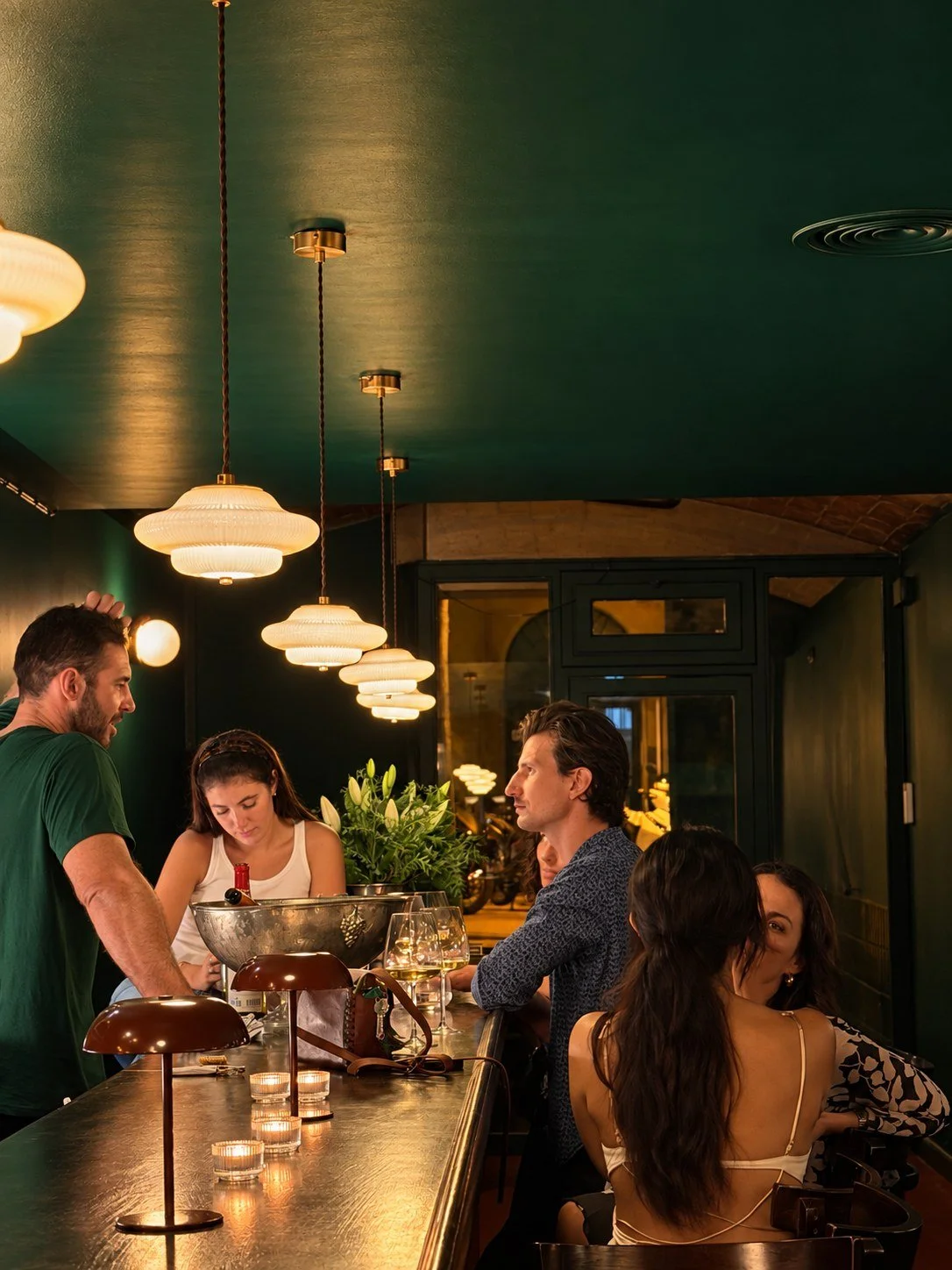
For French cheese in Barcelona, explore Brigitte's menu at 91 Carrer d’Enric Granados. The Parisian bar offers cheese boards in smaller and larger formats, alongside a separate Saint-Marcellin option. Check the current selection and prices before deciding. A board can be part of dinner, a wish shared with friends or the end of a meal for people who prefer cheese to something sweet. The right format begins with how you want to eat and the guests who actually want to join in, rather than a fixed rule for every table.
The pleasure goes beyond recognising names. Around a board, people compare tastes, discover one another's preferences and take time to talk. Some want a familiar cheese; others enjoy being surprised. Sharing works when it welcomes both approaches. You do not need to know French regions or production families before visiting. Start with what you already enjoy, ask a few questions and decide what role cheese should have in the evening. It can become a subject of conversation without turning dinner into a lesson or requiring every guest to describe flavours in specialised terms.
Decide where cheese belongs in the meal
A board plays different roles depending on when you order it. It can be your main appetite, accompany several dishes or arrive after a main course. Consider this before choosing the format. A group hoping to taste a little has a different intention from guests coming specifically to eat cheese. That distinction makes the order clearer. Neither a dish title nor a photograph can determine the right quantity for every set of companions. The current serving and your actual plans give a more useful starting point for advice than an abstract number of people per board.
Some guests may choose cheese while others finish differently. A shared evening does not require an identical route through dinner. Chocolate mousse or caramel brioche may attract part of the table, depending on availability. Knowing this before ordering a larger communal selection is helpful. Sharing stays enjoyable when the people involved genuinely want to participate and others can retain a different choice. There is no need for guests to justify preferring dessert or stopping after the main dish. The important common element is the time you are spending together around the table.
Smaller or larger: consider who will participate
The two formats on the menu provide an initial reference, but the choice depends on interested guests, their appetites and other food. Ask about the current composition and serving rather than inventing a universal allowance per person. A board after several dishes has a different purpose from one intended to occupy the centre of dinner. Explain that to the team so advice can begin with Brigitte's actual offer and your plans. A brief description of how you want to eat is more useful than asking for a quantity without mentioning what will come before or after it.
A larger booking does not mean everybody wants cheese. Some guests may want a taste, some have a strong preference and others will not participate. Choose around the actual number interested rather than the total reservation count alone. A small conversation prevents misunderstandings and gives the board an appropriate role. The aim is to be pleased to discover what arrives, instead of ordering a quantity automatically because the group is large. Clear expectations make sharing easier while leaving room for the appetites of people who want other food or a different end to dinner.
Explain your tastes without knowing every cheese
Describing what you enjoy is often more useful than trying to remember an exact name. Mention a soft or firm texture, a subtle or stronger taste, or a milk preference if you have one. These details provide a starting point for understanding the proposed selection. They do not guarantee a replacement or adjustment; those possibilities need checking. They do allow a practical conversation without tasting vocabulary or regular experience of ordering cheese in restaurants. You can be curious and specific in ordinary language, which is enough to help the team understand the type of experience you are seeking.
In a group, preferences can become conversation rather than a problem. One guest enjoys something unfamiliar to another, somebody recalls a trip and another discovers a texture. Taste according to curiosity without turning the board into a knowledge test. Names and information add context, but simple reactions also belong: liking something, being surprised, wanting another piece or preferring a different option. This freedom is part of sharing. It gives each person room to enjoy the selection honestly instead of feeling expected to admire every cheese because it appears on the same board in front of the group.
Use textures as accessible landmarks
French cheeses include different families of texture. Soft and pressed cheeses do not create identical sensations. Rind, maturation and the nature of the product can influence taste too. These are broad landmarks for exploring a selection, not a description of every cheese served at Brigitte. Ask the team for the current composition. You can then connect explanations to the actual products rather than expecting a particular variety that was never announced. A little context makes discovery more understandable while keeping the real selection, rather than a general account of French cheese, at the centre of your decision.
If you want to compare, one possible approach is to begin with what seems gentler and move towards stronger flavours. This is an option, not a rule. You can follow your appetite and return to the pieces you prefer. There is no requirement to comment on every cheese or find the correct terminology. The board accompanies the evening. It can open exchanges without replacing the conversation you came to share. Some guests will enjoy discussing the food in detail; others will simply taste while continuing to talk about the reasons you wanted to meet in the first place.
Saint-Marcellin offers another cheese choice
Saint-Marcellin has a distinct place on Brigitte's menu. If that name particularly appeals, read the current proposal instead of assuming it is always included in every board. An individual reference and a selection to share can answer different wishes. One lets you focus on a speciality; the other offers discovery across the current composition. Ask what you need to know to choose the format that fits interested guests and this stage of dinner. This avoids treating two separate options as interchangeable when their serving and role in your meal may not be the same.
There is no need to declare one better than the other. Come for a familiar speciality or explore the board being offered. Tell the team if some guests specifically want Saint-Marcellin so the order remains clear. A cheese name does not imply every possible service arrangement. Checking what is available keeps the choice enjoyable and prevents expectations that have not been confirmed. The aim is food you want to savour, not a combination decided before looking at the actual offer. Both a particular favourite and a varied selection can have a place when they match what people genuinely want.
Which wine could accompany the board?
French cheese may encourage you to browse the wine list. Begin with the preferences of those drinking and any other dishes. Do you normally enjoy white or red? Are you choosing a bottle for dinner or a glass for this stage? Advice can then consider available references. No single wine should be imposed without knowing the cheeses being served, your tastes and how you intend to order. Check prices and make the choice in that practical context. A considered pairing can remain straightforward when it responds to the real table instead of a rule applied without those details.
Cheese can equally belong in an evening where some guests do not drink wine or alcohol. Sharing food does not demand identical drinks. If communal spending is planned, agree what is shared and what remains individual before ordering. Keep the arrangement simple. This prevents guests being involved in a bottle they did not want. The most useful accompaniment is one the people concerned enjoy selecting within an understanding everyone shares. It lets the wine remain part of the meal rather than become the focus of the event or a decision that other guests feel obliged to follow.
French cheese within a Barcelona evening
Brigitte's Parisian setting provides a context for French food. Genuine photographs show bottle green, dark wood, mirrors and room details. They help you imagine a board at the centre while conversation continues. You may be specifically looking for French cheese or primarily seeking somewhere to meet friends. Those intentions can come together: a concrete food idea helps select the venue and gives the invitation a starting point. Browsing the setting alongside the menu helps you decide whether the whole proposal suits the evening rather than choosing from a speciality name in isolation.
The rest of the menu can contribute too. Eggs mimosa, mini truffle croques, tartares, duck confit parmentier and ham and truffle coquillettes suggest different directions, subject to availability. You do not need all of them to enjoy the venue. Look at your appetite and your guests' wishes. Cheese can be one element without becoming a compulsory stage. The shared experience is a time and place; individual dishes can reflect different tastes while still belonging to the same evening. That makes planning more welcoming than requiring everybody to participate equally in each part of a fixed order.
Prepare a group or celebration
For a birthday, reunion or business dinner, cheese can be among the wishes you discuss with the team. Explain the date, expected numbers and meal format. A dish on the individual menu is not automatically confirmed in every group arrangement. Composition, service and conditions need agreement for your project. You can then inform guests using a real proposal rather than announcing cheeses not yet selected for the event. Distinguishing early ideas from an accepted plan makes both the invitation and the kitchen's preparation clearer while preserving the personal character you want the evening to have.
If several people organise, nominate one contact to gather information and keep a clear version of the plan. For an ordinary dinner, an arrival time and accurate guest count may be enough. Mention dietary needs before ordering and check possibilities directly. Information about the product actually proposed is more useful than a conclusion drawn from a name or old image. Each guest can then choose with knowledge relevant to their own situation. Keeping this practical preparation simple helps the evening begin comfortably without needing repeated conversations about arrangements once everyone is present and ready to eat.
Request your table at Brigitte
To share French cheese in Barcelona, check Brigitte's current menu and choose a format around interested guests and the rest of dinner. Genuine venue photographs help you see whether the setting suits your plans. You can arrive with preferences and let the selection guide discovery. Send a request through the reservation page on the official website with your date, arrival time and guest count. Read the conditions and wait for confirmation, along with answers about any essential requirements. A submitted form is the beginning of arranging the visit rather than confirmation of every detail you have mentioned.
Once those practical details are settled, meet your companions at 91 Carrer d’Enric Granados and enjoy choosing food and drinks. The board can take its place according to your appetite, whether as the central idea of dinner or a final shared moment. Nobody needs to recognise every cheese to enjoy it. The pleasure comes from meeting your own tastes, your companions' curiosity and time around a French table. In Brigitte's Parisian setting, a cheese selection can become a simple reason to gather, compare impressions and let an evening in Barcelona unfold through conversation and good company.
Plan your visit
Brigitte welcomes members and their guests aged 18 and over at 91 carrer d’Enric Granados, Barcelona. Stated hours are Tuesday to Saturday, 6 pm to 2 am. Check current arrangements and wait for your reservation confirmation.