Français · English · Español · Català
For caramel brioche French toast in Barcelona, explore Brigitte's menu at 91 Carrer d’Enric Granados. The Parisian bar offers another ending for guests who enjoy a brioche-based dessert. Check the current preparation, price and availability, then decide what place it should have in dinner. Come with this particular wish while leaving companions free to finish according to their own tastes. One dessert can guide your interest in a venue without becoming everybody's required choice or determining each stage of the meal before the group has even arrived.
The French name brioche perdue suggests familiar cooking and a dessert whose basic idea is understandable before you have chosen the rest of the order. Caramel gives it a clear direction. That may be enough to prompt an evening out: returning to a memory, introducing a speciality or planning a meal where you intend to leave room for the final plate. At Brigitte, the idea sits within a Parisian setting and a menu allowing different routes. You can enjoy one expected dessert while friends discover another side of the cooking and the conversation remains shared.
A reference to the French toast family
Brioche perdue belongs to the French toast family, with brioche as its starting point. This helps explain the name without defining every recipe or service format. Read Brigitte's current proposal to understand the actual preparation. Do not assume accompaniments, garnish or presentation from something eaten elsewhere. A familiar title can open the appetite; the venue's information explains what is being offered during your visit. The two work together. Recognition gives a reason to look closer, while accurate details help decide whether this version corresponds to the dessert you would like to enjoy tonight.
The meeting of memory and discovery is part of the pleasure. You may know brioche French toast and enjoy finding it somewhere new, or have only a broad idea and want to ask before choosing. Extensive knowledge of French references is not needed. A simple explanation and real appetite are enough. The useful choice is not the one that sounds most knowledgeable, but what you want to savour as dinner ends. Other guests may have a different familiar reference or prefer exploring something unfamiliar. Both intentions can belong to the same enjoyable evening around one table.
Caramel gives the dessert its direction
Caramel appears in the dish name and provides a first reference if that combination appeals. It does not specify every component. Ask the team about composition if a detail matters, particularly when trying to return to a precise memory or avoid an ingredient. Choosing with an accurate expectation is more comfortable than using an imagined picture as the description. The kitchen's current preparation may differ from another version you remember. Understanding that helps you appreciate the actual offer rather than measuring it against something the venue never said it would reproduce for your dinner.
The appeal may come from returning to a familiar dessert register: brioche, caramel and the prospect of a final plate you have actively chosen. You can keep that simple without designing additions before reading the menu. The current description is the useful reference for what accompanies the dish. With the essential details understood, discovery can remain pleasant. You know what you are selecting while retaining curiosity about the experience. It is enough to connect the dessert with your own appetite and the meal you are enjoying, rather than seeking a perfect recreation of every remembered version.
Leave room for the dessert you anticipate
If caramel brioche is your main interest at the end, keep it in mind when reading the menu. You do not need to order dessert immediately. Account for the wish when selecting first plates and mains. Some guests prefer a starter and main; others a main and this dessert. Both can work according to appetite. The best arrangement leaves you wanting the part you anticipated when it arrives. A whole meal is more enjoyable when its choices relate to one another instead of treating every appealing plate as a separate addition without considering the effect on the final course.
Mention expectations simply in a group. One guest may be especially interested in brioche while another mainly wants to try first plates. Dinner can accommodate those rhythms. Join a shared beginning without committing to an entire communal route. Clarify what is shared and what remains individual when ordering. This protects an important preference from being displaced by habit, or quantities added without knowing who wants to participate. It also lets the table remain relaxed. Guests understand the basic organisation and can spend the rest of the meal enjoying food and one another's company rather than renegotiating every dish.
Choose the rest of dinner freely
Eggs mimosa and mini truffle croques may offer ideas for a first plate at Brigitte. Among mains, hand-cut beef and tuna tartares suggest a different direction from duck confit parmentier or ham, Emmental and truffle coquillettes. Consult the current menu for available dishes. These examples help imagine an evening around tastes rather than create an obligatory sequence before dessert. A French dinner does not need every speciality to feel complete. Choose what genuinely interests the people coming, including alternatives for those whose preferences differ from the dish that first made you consider the venue.
Brioche can follow a main you enjoyed or conclude several shared dishes. Actual appetite is more useful than an abstract rule. Ask about formats if unsure, while explaining the meal you have in mind. A clear order remains flexible: you know what appeals and can adjust later choices. There is no need to programme every detail. The aim is a dinner guests want to eat rather than one built around assumed expectations. Leaving space for individual preferences is often what makes a group meal easier and turns a precise food wish into an evening everybody can enjoy.
Brioche, chocolate or French cheese?
Some guests know immediately they want chocolate mousse; others prefer brioche. French cheese offers another direction when browsing the menu. There is no single best ending for a whole table. Explain your preference and let others choose. Variety may even continue the conversation as people discover what suits them and exchange impressions. The shared moment does not require an identical conclusion for every guest. You can be together while taking different routes through the food, particularly when the menu gives several recognisable references that allow people to decide without needing a long explanation from the organiser.
If sharing, check the format and the agreement of those interested. A dessert selected personally and one ordered communally create different expectations. Say which you intend before it arrives. Individual orders are equally reasonable if guests want to savour their own choice. Sharing an evening does not mean every plate must be communal. The room, exchanges and time you give one another already connect the dinner. Different final orders can fit that experience without creating a problem to solve. The useful arrangement is the one the people involved understand and genuinely want to participate in.
Introduce a French dessert to visiting friends
Caramel brioche can be an idea when hosting people unfamiliar with French food. Give a simple reference around brioche and caramel, then let the current menu explain the preparation. This need not become a gastronomic demonstration. Choose somewhere several guests can find food they enjoy. The dessert may reassure through familiarity or encourage curiosity. Both are useful when the invitation leaves room to discover without insisting that every companion try the same speciality. A welcoming dinner allows different ways of enjoying the food while keeping the people and the reason for meeting at its centre.
Begin the invitation with people and place rather than a complete menu. A date, arrival time and wish to dine together often suffice. Check availability if one speciality determines the visit before promising it to guests. Other choices can develop at the table. This balances preparation and freedom: important expectations are clear while discovery of the room, menu and companions' tastes remains part of the evening. There is no need to announce every detail in advance if you would rather let people choose, provided the confirmed practical arrangements are shared accurately before everybody arrives.
Let the Parisian setting contribute
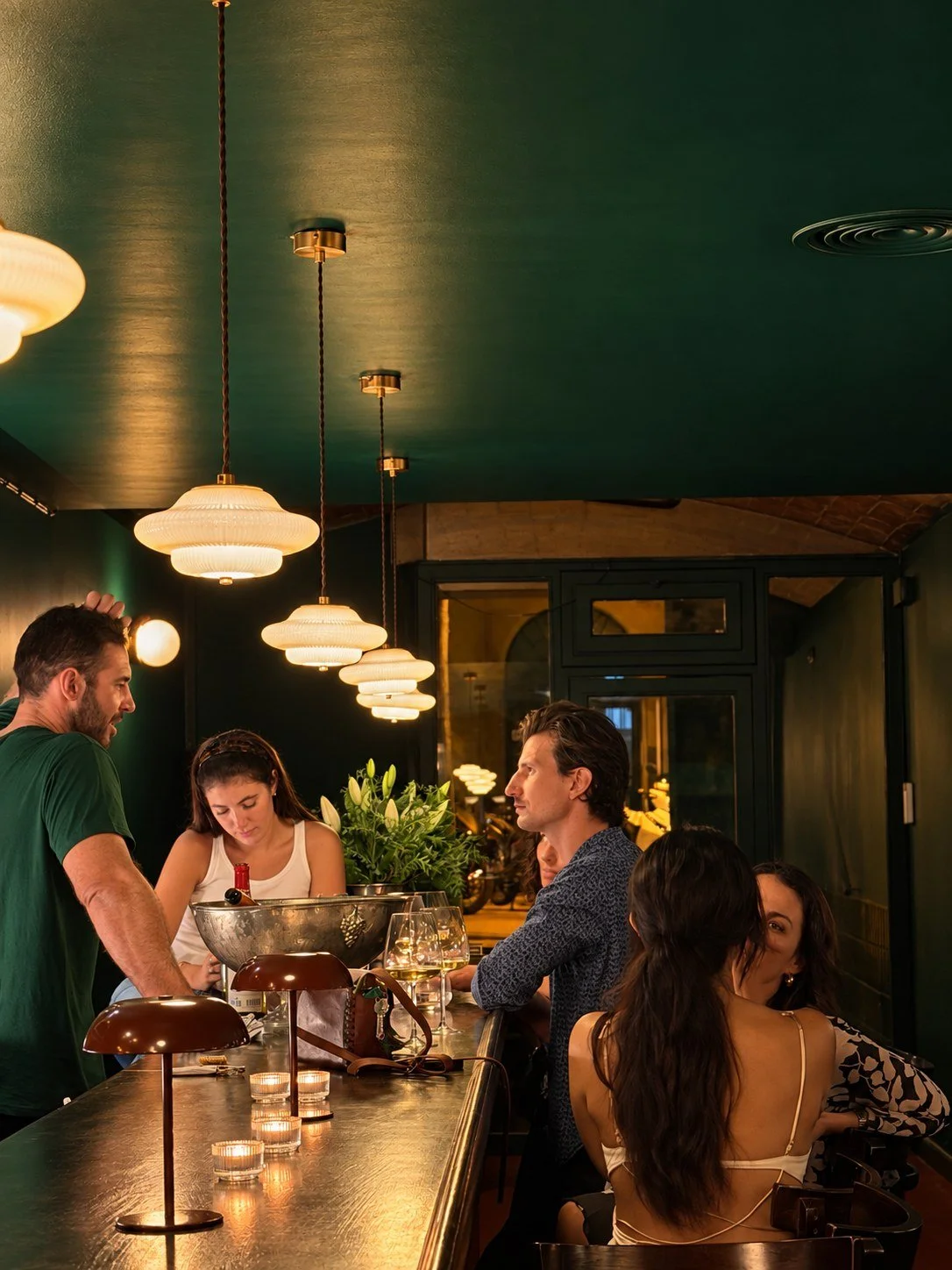
Genuine photographs show Brigitte's bottle green, dark wood, mirrors and room details. They connect a French dessert craving with a particular Barcelona address. Whether coming as a couple, meeting friends or seeing colleagues, assess whether the setting suits the occasion. The menu gives culinary possibilities; the room provides a context for the time together. Looking at both allows a complete evening to take shape instead of choosing only a dessert name from a list. An appealing plate is a reason to consider a place, while atmosphere helps explain whether it fits the visit you are planning.
Tell the team about an organised occasion. Birthdays, larger groups and private hire involve different arrangements. Brioche on the individual menu does not confirm every event format. If you want it included in a menu agreed beforehand, explain and wait for a response. Inform guests using an actual agreement. This distinction between preference and confirmation avoids promising a dish or service not yet accepted for the date and numbers. The food can give the event a personal note while practical details remain grounded in the project the team has genuinely had the opportunity to discuss with you.
Check details and book your visit
Ask directly about ingredients, allergies or dietary needs before ordering. A name does not answer every situation, and an adjustment needs agreement. Check availability and current price if brioche determines your plans. An older publication is not service confirmation. These enquiries can stay simple while giving each person relevant information rather than expectations built on a general recipe or unrelated photograph. Good preparation leaves freedom around the rest of dinner while making important requirements explicit. It supports enjoyment instead of turning the first part of the meal into a conversation about assumptions nobody had checked.
Explore Brigitte's menu and photographs, then request a table through the reservation page on the official website. Include date, arrival time, guest count and essential questions. Read the conditions and wait for confirmation. Meet your companions at 91 Carrer d’Enric Granados with practical details settled and enjoy choosing dinner. Caramel brioche French toast can take its place according to appetite, as an appealing end to a French evening in Brigitte's Parisian setting. The food you wanted becomes part of time shared with people you were pleased to see, in Barcelona, without needing identical choices throughout the meal.
Plan your visit
Brigitte welcomes members and their guests aged 18 and over at 91 carrer d’Enric Granados, Barcelona. Stated hours are Tuesday to Saturday, 6 pm to 2 am. Check current arrangements and wait for your reservation confirmation.